
Chefchaouen Travel Guide: Exploring Morocco’s Blue City
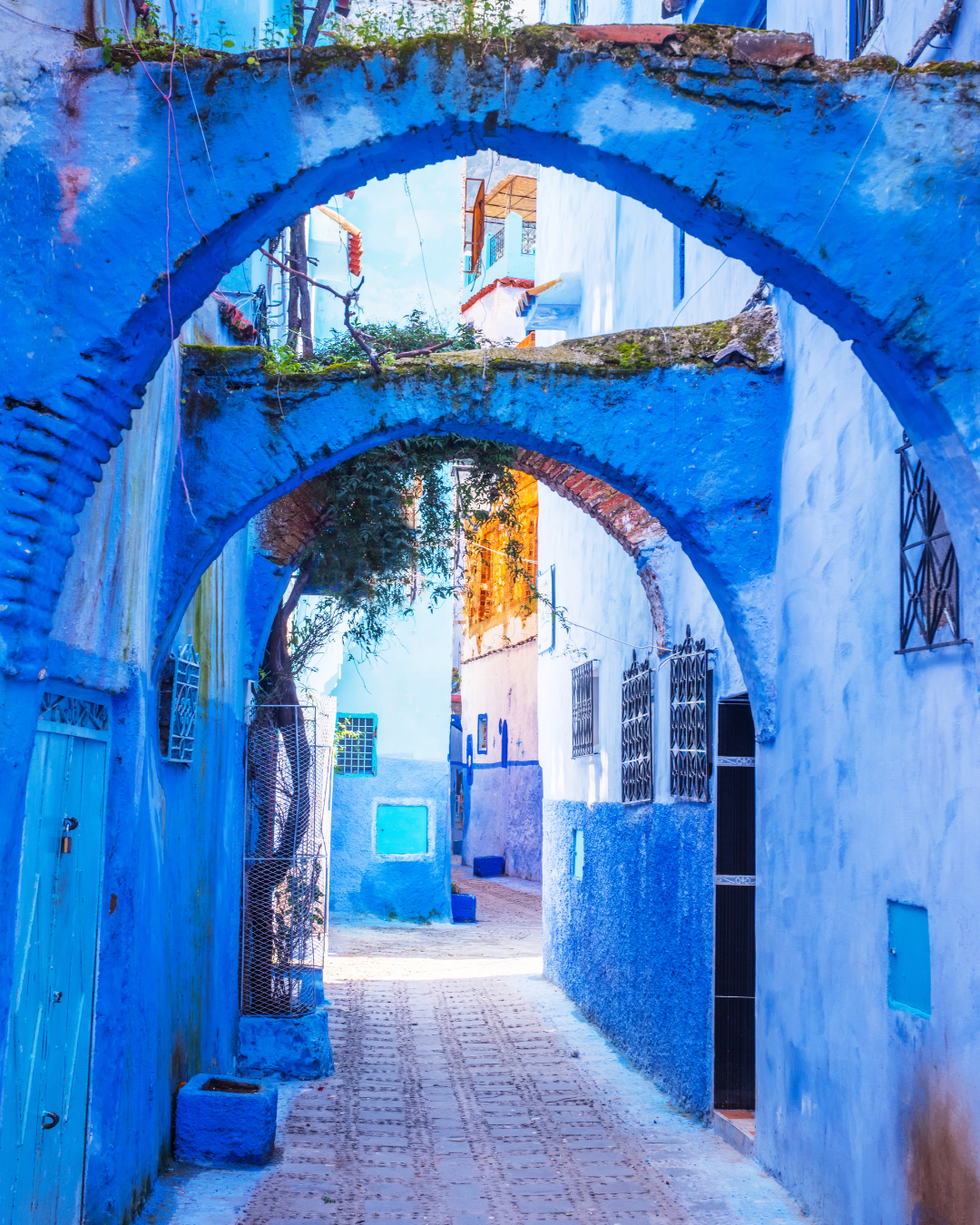
Step through the arched gateway of the medina and the world shifts. Walls the colour of a cloudless afternoon rise on either side of a narrow lane. A tabby cat stretches across a doorstep painted in powder blue. Somewhere above, a woman hangs laundry on a terrace where pots of geraniums spill crimson against indigo plaster. This is Chefchaouen — a small mountain city that feels, from the very first minute, like wandering inside a painting.
Perched at roughly 600 metres above sea level in the foothills of Morocco’s Rif Mountains, Chefchaouen (often shortened to “Chaouen” by locals) is one of North Africa’s most photogenic destinations. But beyond the blue walls lies a city of genuine depth: centuries of layered history, a thriving food culture rooted in the Rif, and some of the best day hikes in the country — all packed into a medina you can cross on foot in twenty minutes.
This guide covers everything you need to plan a rewarding visit, from verified travel logistics to the kind of neighbourhood-level tips you’d get from a friend who lives here.
A Brief History: Why Is Chefchaouen Blue?
Chefchaouen was founded in 1471 by Moulay Ali Ben Moussa Ben Rached El Alami as a fortress to defend the region against Portuguese incursions along the northern coast. The name itself comes from the Berber word for “look at the horns,” a reference to the twin mountain peaks — Jebel ech-Chaouen — that frame the city from the south.
Over the following decades, successive waves of Muslim and Jewish refugees fleeing the Spanish Reconquista settled in the town, shaping its architecture, cuisine, and cultural identity. The Andalusian influence is still visible today in the whitewashed facades, courtyard riads, and intricate tilework that distinguish the medina from cities further south.
And the blue? The most widely cited explanation traces the tradition to Jewish residents who, beginning in the 1930s, painted their homes in shades of blue — a colour symbolising the sky and the divine in Jewish tradition. Over the decades, the practice spread across the medina. Others point to practical reasons: blue-tinted limewash is said to repel mosquitoes, and the cooler tones offer a psychological reprieve from summer heat. Whatever the full story, the result is a medina unlike any other in Morocco — an entire neighbourhood washed in every shade from pale cerulean to deep cobalt.
Top Things to Do in Chefchaouen
Wander the Medina
The medina itself is the main attraction. Unlike the sprawling souks of Fes or Marrakech, Chefchaouen’s old quarter is compact and easy to navigate. You can lose yourself comfortably here — every alley leads to a new photographic composition, and you are never more than a few turns from a landmark you recognise. Take your time. The most rewarding moments come when you step away from the central lanes and follow the quieter paths uphill, where the blue deepens and the tourist crowds thin.
Plaza Uta el-Hammam and the Kasbah
The social heart of the city is Plaza Uta el-Hammam, a tree-shaded square lined with cafes where locals and visitors share mint tea and conversation late into the evening. On its western edge stands the Kasbah, a 15th-century fortress that now houses a small ethnographic museum, a restored Andalusian garden, and a tower with panoramic views over the medina and the mountains beyond. Admission is approximately 60 MAD (around $6), and the garden alone — quiet, green, shaded by orange trees — is worth the visit.
Ras el-Maa
Follow the medina’s lanes northeast and you will reach Ras el-Maa, a natural spring where mountain water comes gushing out of the rock face at the edge of town. This has been a gathering spot for generations — local women still come here to wash clothes and rugs in the stream, and families picnic along the banks on weekends. It is also the starting point for several short walks up to the Spanish Mosque (see below).
The Spanish Mosque Hike
A well-worn trail from Ras el-Maa climbs for about twenty minutes to an unfinished mosque built during the Spanish colonial period. The mosque itself is modest, but the viewpoint is spectacular: the entire medina laid out below in a patchwork of blue, framed by green hills and the Rif peaks. This is one of the best photography spots in Chefchaouen, and the light is particularly beautiful in the hour before sunset.
Akchour Waterfalls and God’s Bridge
About thirty minutes by taxi from the centre of Chefchaouen, the Akchour area within Talassemtane National Park offers some of the finest hiking in northern Morocco. Two main trails branch in opposite directions: one leads to the Akchour Waterfalls (roughly a two-hour hike each way through a forested gorge), and the other to God’s Bridge, a dramatic natural rock arch spanning a river canyon (about two and a half hours). Both trails pass riverside restaurants where you can eat a tagine with your feet practically in the water. Bring sturdy shoes and enough water — the trails are well-marked but rocky in places.
Where to Stay in Chefchaouen
Accommodation in Chefchaouen ranges from basic hostels to beautifully restored riads, and prices remain lower than in Marrakech or Fes. A few pointers to help you choose:
Inside the medina is where you want to be. The most atmospheric riads sit in the upper medina — quieter, with better views, though you will carry your bags up some stairs. Look for properties near the Ras el-Maa end for easy access to both the medina centre and the hiking trails.
Budget travellers will find clean, simple guesthouses from around 200–350 MAD ($20–35) per night for a double room. Many include a rooftop terrace with mountain views — a genuine luxury at that price.
Mid-range riads in the 500–900 MAD range ($50–90) typically offer en-suite rooms, traditional decor, and breakfast included. These represent the sweet spot for most visitors.
Higher-end options do exist, though Chefchaouen is not a luxury-resort destination. The best upscale riads offer personalised service, hammam access, and terraces that look out over the blue rooftops to the mountains.
Food and Drink: What to Eat in Chefchaouen
Chefchaouen’s food culture draws heavily on the Rif Mountain tradition, with some distinctive local specialities you will not find as easily elsewhere in Morocco.
Rif-style couscous here is lighter than the versions served in Marrakech, often made with barley and served with seasonal vegetables from the surrounding hills. Friday couscous — the traditional weekly family meal — is especially worth seeking out if your riad offers it.
Local goat cheese is a Chefchaouen signature. The Rif region produces a fresh, tangy goat cheese that you will see in the markets and occasionally in restaurants, sometimes served simply with bread and olive oil.
Bissara, a thick fava-bean soup drizzled with olive oil and cumin, is the quintessential Rif breakfast and one of the best cheap meals in Morocco. Look for small stalls in the medina where a bowl costs just a few dirhams.
For dining out, the cafes around Plaza Uta el-Hammam offer reliable tagines and grilled meats. For a more local experience, head to the smaller restaurants along the lanes leading to Bab el-Ain, where the food tends to be simpler, cheaper, and cooked to order.
Chefchaouen is also well known for its fresh-squeezed juices — orange, avocado, and mixed fruit — which you will find at stalls throughout the medina for 10–15 MAD.
How to Get to Chefchaouen
Chefchaouen does not have a train station or airport, so you will arrive by road. Here are the most common routes:
From Fes (approximately 4 hours)
The most popular approach. CTM and other bus companies run several daily services along Highway N13 through the Rif foothills. The scenery is beautiful, with the landscape shifting from plains to forested mountains. Grand taxis (shared taxis) also run this route and can be slightly faster, though less comfortable. A private transfer is another option and gives you the flexibility to stop in the hills along the way.
If you are planning a wider Morocco itinerary, many travellers combine Chefchaouen with Fes as part of a multi-day northern circuit. Moratra’s 8-Day Morocco Tour, for instance, includes Chefchaouen as a key stop between Fes and the coast — a natural routing that avoids backtracking.
From Tangier (approximately 2.5 hours)
If you are arriving in Morocco by ferry or flying into Tangier, Chefchaouen makes an ideal first inland stop. CTM buses run the route regularly, and grand taxis from the Tangier bus station cost around 70 MAD per seat. The drive follows a scenic road through rolling farmland and into the Rif.
From Marrakech
There is no direct bus, and the journey takes 8–10 hours. Most travellers break the trip with a night in Fes or Meknes. If you are working with limited time and want to cover both the south and the north, a guided multi-day tour is the most efficient way to do it. Moratra’s 10-Day Tour and 15-Day Grand Circuit both include Chefchaouen within a carefully paced itinerary that connects it with the Atlas Mountains, the Sahara, and the imperial cities.
Practical Tips for Visiting Chefchaouen
Best time to visit: Spring (March–May) and autumn (September–November) offer the most pleasant weather, with warm days and cool evenings. Summer can be hot, though the altitude keeps it more bearable than cities at lower elevation. Winter is quiet and occasionally rainy, but the medina takes on a moody, atmospheric beauty.
What to wear: Chefchaouen is a relatively conservative mountain town. Modest clothing — shoulders and knees covered — is appreciated, especially outside the main tourist areas. Comfortable walking shoes are essential; the medina lanes are paved with uneven stone, and the hikes demand proper footwear.
Photography etiquette: Chefchaouen is one of the most photographed cities in Morocco, and locals are generally accustomed to cameras. That said, always ask before photographing people directly, and be aware that some residents — particularly older women — prefer not to be photographed. A smile and a gesture go a long way.
How long to stay: Two full days is the sweet spot for most visitors. That gives you a day to explore the medina, the Kasbah, and the Spanish Mosque, and a second day for the Akchour hikes. If you enjoy slow travel, three days allows you to soak in the atmosphere without any rush.
Money: ATMs are available in the new town (Ville Nouvelle), just outside the medina. Some riads accept cards, but bring cash for the medina shops, taxis, and small restaurants.
Language: Darija (Moroccan Arabic) and Tamazight (Berber) are the main languages. French is widely understood, and many people in the tourist areas speak basic Spanish — a legacy of the colonial period. English is increasingly common among younger residents and guesthouse owners.
Frequently Asked Questions
Is Chefchaouen safe for solo travellers?
Yes. Chefchaouen is widely regarded as one of the safest cities in Morocco. The medina is small and easy to navigate, and the local community is welcoming. Solo female travellers generally report feeling comfortable here, though standard travel awareness applies.
Can I visit Chefchaouen as a day trip?
It is technically possible from Tangier (2.5 hours each way), but not ideal. You will spend most of the day in transit and only scratch the surface. An overnight stay is strongly recommended.
Is Chefchaouen on the UNESCO World Heritage list?
Not as a World Heritage Site, though the city has received UNESCO recognition through the Global Network of Learning Cities (since 2020) and for its Mediterranean diet heritage (2010). There have been ongoing discussions about a broader heritage nomination, but nothing confirmed as of 2026.
What is the best time of day for photography?
Early morning (before 9 a.m.) and late afternoon (after 4 p.m.) offer the best light. The blue walls respond beautifully to warm, angled sunlight, and the medina is quieter at these hours.
Do I need a guide in Chefchaouen?
The medina is small enough to explore independently. However, a local guide can add real depth — especially for the Akchour hikes and for understanding the history and culture behind what you see. The Moratra team offers free personalised trip advice if you are planning a visit and want recommendations tailored to your interests and travel style.
Have questions about visiting Chefchaouen? The Moratra team specialises in authentic, tailor-made Morocco experiences and offers free personalised travel advice — just reach out and we’ll help you plan the perfect trip.
