
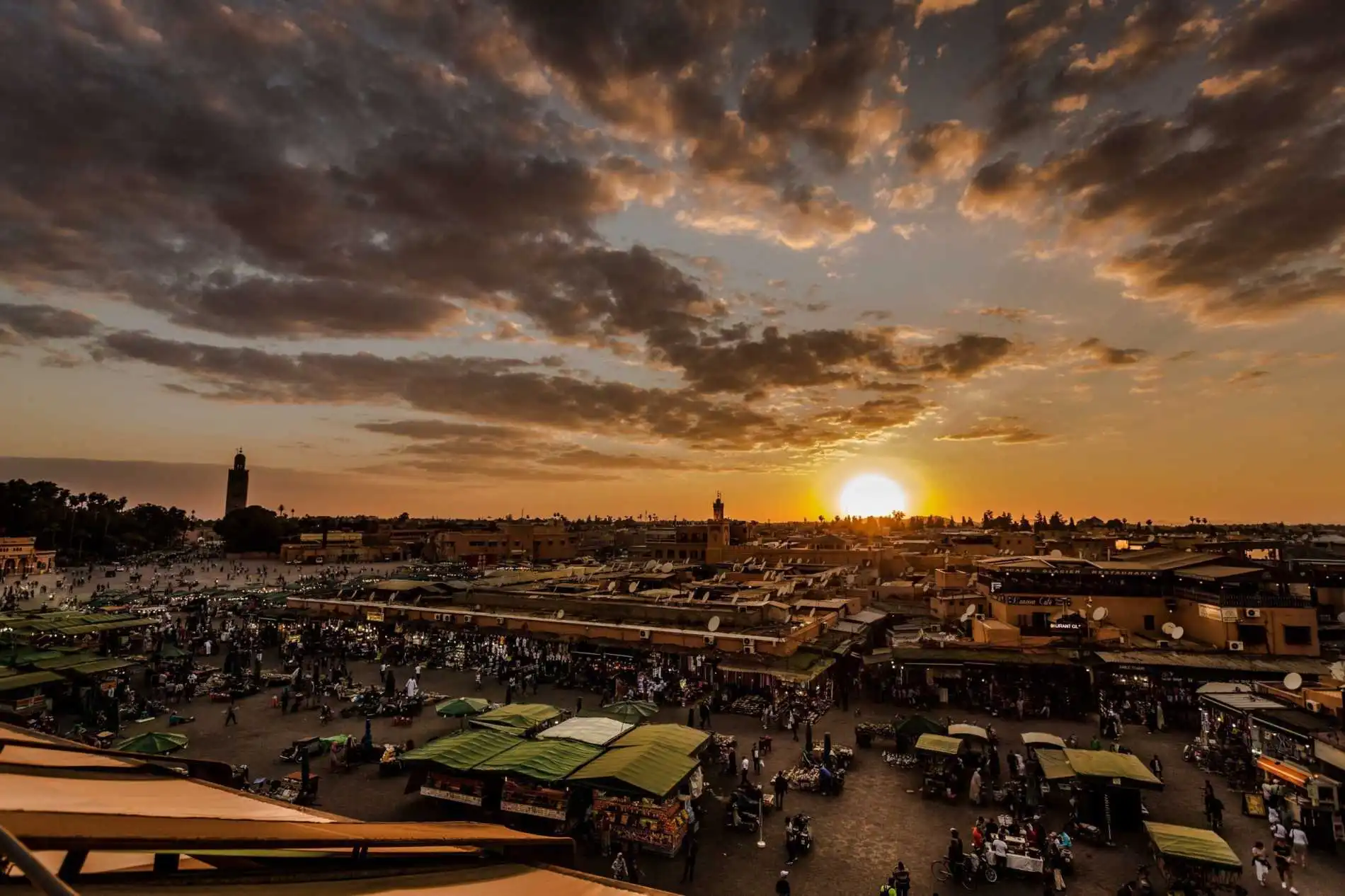
Short answer: yes, Marrakech is safe for tourists in 2026 — meaningfully safer than many international travelers assume, with a small set of specific risks that are easy to avoid once you know them. Long answer: a city of a million people is never uniformly safe or uniformly dangerous, and what “safe” means for a solo female traveler in the medina at midnight is different from what it means for a family in Hivernage at noon. This guide walks through the real 2026 picture — what the official advisories say, what travelers actually report, the scams to watch for, and how to enjoy the city without the low-grade anxiety that ruins so many first trips.
It’s a refresh of our long-running Marrakech safety guide, updated with current advisory tiers, a note on the 2023 Al Haouz earthquake (and what it means today), and the eight most common safety issues with practical avoidance strategies for each.
The 2026 verdict in one paragraph
Both the UK Foreign, Commonwealth & Development Office (FCDO travel advice for Morocco) and the US Department of State (U.S. Department of State Morocco information page) place Morocco at the lower end of their travel-advisory tiers. Both note that most visitors have a trouble-free trip. Violent crime against tourists is uncommon. The most common issues are petty — pickpocketing in crowded areas, scams from unsolicited guides, aggressive vendors, occasional verbal hassle for women. The Moroccan government has invested heavily in tourism security since the early 2010s, including a visible police presence in tourist zones and a dedicated tourist police unit (Brigade Touristique) in Marrakech that wears distinctive uniforms and speaks English and French. None of this means Marrakech is risk-free; it means the risks are predictable and manageable. Always check your own government’s most recent travel advisory before booking, as guidance is updated periodically.
What changed in the last two years
Three things travelers ask about in 2026 that didn’t exist as questions five years ago:
The September 2023 Al Haouz earthquake
On 8 September 2023, a magnitude 6.8 earthquake struck the Al Haouz province about 70 kilometers southwest of Marrakech, causing significant damage and loss of life in High Atlas mountain villages. Inside the city of Marrakech itself, damage was relatively limited — most of the medina and modern Gueliz are structurally intact, and tourism returned to near-normal levels within months. Three sections of the old city walls and a small number of older buildings sustained damage and have been progressively restored. In 2026, no part of central Marrakech is closed to visitors for earthquake-related reasons. Trips into the High Atlas (Imlil, Toubkal trekking, Ourika Valley day trips) operate normally; some specific villages have been rebuilt and others are still in progress. If you are going on a multi-day Atlas trek in 2026, ask your tour operator which villages are on the route and what their current status is — reputable operators will know in detail.
If you would like us to arrange it for you, see our guided medina and souks walking tour.
Record tourism growth
Morocco passed 17 million international visitors in 2024 and continued to grow into 2025 and 2026, with Marrakech receiving the largest share. Two practical effects on safety: the city is busier than ever (good for ambient safety in tourist zones, slightly worse for pickpocket density in Jemaa el-Fnaa), and police presence in tourist areas has been visibly increased. The medina at peak hours can feel like a high-tourist European city — busy, lively, mostly safe, occasionally annoying.
Card payments and ride-hailing
Five years ago Marrakech was almost entirely cash. In 2026, card payment is accepted at most upscale restaurants, all major hotels, and many modern shops in Gueliz. Ride-hailing apps (Careem, inDrive, and InDriver among the most active) operate across the city — useful safety tool late at night, removes the taxi-negotiation friction. The medina still runs on cash. ATMs are widely available and reliable.
What “safe” actually means in Marrakech
Travel safety has three layers, and they need to be separated when you ask “is Marrakech safe”:
- Violent crime against tourists: low. Random street violence, assault, or armed robbery affecting foreign visitors is uncommon. Both major Western travel advisories assess this risk as comparable to or lower than many southern European cities.
- Petty crime: present and worth taking seriously. Pickpocketing in Jemaa el-Fnaa, the souks, and at airport arrivals does happen. Bag-snatching from scooters has been reported in narrow medina alleys, though it is not the norm.
- Scams and hassle: common, mostly non-violent, easy to defuse once recognized. This is where most first-time visitors lose money or get rattled. The eight most common types are covered below.
People who arrive expecting a beach-resort sterility will find Marrakech intense. People who arrive expecting Marrakesh to be dangerous will be confused by how relaxed it usually is. The honest middle: it’s a working North African city with a lively centuries-old commercial culture; behave with normal urban awareness and you will be fine. Our companion guide on Marrakech travel tips covers the broader etiquette codes that overlap with safety.
The eight most common safety issues — and how to avoid each
1. Pickpocketing in crowded areas
Jemaa el-Fnaa at sunset, the spice souk on a Saturday afternoon, and the area immediately outside Bab Agnaou are the three highest-density pickpocket spots in the medina. The technique is the standard one used in any tourist city: a distraction (a vendor pulling you toward a stall, a group of children, a sudden “spilled” something) followed by a hand in your bag or back pocket. Carry your wallet in a front pocket or a cross-body bag worn in front of you. Don’t carry your passport with you in the medina — leave it in the riad safe and carry a copy. Withdraw smaller amounts of cash more often rather than a week’s worth at once.
2. The unsolicited “guide”
You’ll see this within an hour of arriving. A young man notices you looking at a map, walks up, asks where you’re going, and starts walking with you. At the destination — or, more often, somewhere different that he’s chosen — he demands payment, sometimes aggressively. The technique works because tourists feel polite or guilty and don’t push back. The fix is to refuse contact at the start: “La, shukran” (no thanks), eye contact, keep walking. If someone is already walking with you, stop, stand still, refuse to move until they leave. If you genuinely need directions, step into a shop or café and ask the owner — they have no stake in misleading you. For a real guide, your riad can book a licensed one carrying an official metal badge.
3. The henna stamp scam
A woman approaches in Jemaa el-Fnaa with a syringe-style applicator and stamps a small henna design on your hand or wrist before you’ve agreed to anything. She then demands payment, often a much larger amount than the design is worth. The henna sometimes contains black henna with paraphenylenediamine (PPD), which can cause severe allergic reactions on skin. The fix is simple: keep your hands closed, in your pockets, or behind your back when walking through the square, especially the henna-artist area on the eastern side. If someone stamps you anyway, the design wears off in 2-3 days; pay nothing, leave promptly. Reputable henna artists work seated at their stalls, show prices in advance, and use natural reddish-brown henna.
4. Aggressive vendors and the “follow technique”
Walking through the souks, a vendor pulls you toward a stall, places merchandise in your hand, follows you down the alley repeating prices. The aim is to get you to a point where backing out feels embarrassing. The fix is to never accept items into your hand until you’re seriously interested, never break stride for a vendor calling out, and to use “La, shukran” firmly and keep moving. If a vendor is genuinely aggressive — physically blocking your path, raising voice — say “Brigade Touristique” loudly. The mention of tourist police is almost always enough to defuse the situation.
5. Verbal harassment of women
This is the most consistent quality-of-life issue for female visitors, especially solo travelers and women dressed in clothing read as “tourist.” The hassle is overwhelmingly verbal — comments, persistent vendor attention, occasional follow-on-the-street — rather than physical danger. It is also overwhelmingly concentrated in the medina; Gueliz and the hotel zones are largely free of it. Strategies that work: dress modestly (shoulders, knees covered), wear sunglasses, walk with purpose, avoid extended eye contact with strangers, ignore catcalls without engaging, and use the line “Hashouma” (shame, used as a social rebuke) if someone crosses a line. Our deeper guide on solo female travel in Morocco covers this in detail.
6. Taxi overcharging and meter avoidance
Taxis are not a safety risk in Marrakech — they’re a fairness risk. Petits taxis are required by law to use a meter, and during the day most will. At night, near the airport, and any time the driver senses a tourist, the meter mysteriously breaks. Agree the price before you get in: a petit taxi across the medina is typically 20–40 dirhams, airport to medina around 100–150 dirhams during the day. If the number quoted is wildly above that, smile, refuse, try the next car. Ride-hailing apps (Careem, inDrive) eliminate the issue entirely. After dark, especially for women traveling alone, using an app is the cleaner choice.
7. Currency-exchange and ATM tricks
Two patterns to watch. First, an unsolicited “exchange” near tourist exits: someone offers a great rate and palms a fold of low-denomination notes underneath the apparent stack. Use bank ATMs (CIH Bank, Attijariwafa, Banque Populaire are the most common) or licensed bureaux only — never street exchanges. Second, ATM “skimmer” devices have been reported occasionally; use machines inside bank lobbies rather than free-standing street ATMs after hours. Cover the keypad when entering your PIN.
8. Scooter bag-snatching in narrow alleys
Less common than the other issues on this list, but it has happened, and the medina geometry — narrow alleys with motorbike traffic — makes it possible. Carry your bag on the wall side, not the street side. Use a cross-body bag rather than a shoulder bag. Don’t have your phone visibly in hand while walking, especially after dark in quieter alleys. None of this is paranoid; it’s the same rule that applies in Naples or Barcelona.
Safety by neighborhood
| Neighborhood | What it’s like | Daytime safety | Nighttime safety |
|---|---|---|---|
| Medina (old city) | Lively, intense, full of tourists and locals | Very high | High in main areas; quieter alleys are best avoided alone late |
| Gueliz (new city) | Modern, French-colonial layout, wide boulevards, cafés | Very high | Very high — the city’s most relaxed area at night |
| Hivernage | Luxury hotels, La Mamounia neighborhood, residential | Very high | Very high — quiet, well-lit, hotel zones |
| Palmeraie | Resort and villa zone north of city | Very high | Very high, but isolated — use registered transport |
| Sidi Ghanem | Industrial / artisan workshop district | High during business hours | Limited activity — not where to wander alone after dark |
| Mellah (Jewish quarter) | Atmospheric, less touristed corner of the medina | High | Quieter than main medina; group preferable late |
Specifically for solo female travelers
Solo female travelers come to Marrakech in large numbers every year and most report a positive trip. The safety picture has three layers. Physical danger: low. Verbal hassle: real, particularly in the medina, mostly manageable with the strategies above. Practical strategy: stay inside the medina in a riad with 24-hour staff (most do); use ride-hailing apps after dark; tell your riad where you’re going and when you expect back if you go on an evening walk; carry a working phone with a local SIM or roaming; dress in a way that doesn’t make you the most-visible foreigner on the street. The Gueliz neighborhood is essentially as relaxed as any modern European city. Many solo women travelers describe the medina as wonderful by day and worth being more selective about by night — that’s a fair summary.
Night safety, alcohol, and rooftop bars
Marrakech’s nightlife is real and largely safe — concentrated in licensed venues in Gueliz, Hivernage, and the rooftop bars across the city. The rule from earlier in the guide stands: don’t drink alcohol in the street (legal but rude), and don’t walk through unfamiliar medina alleys alone after midnight. Returning to your riad late at night, take a taxi or ride-hailing car to the closest medina gate rather than trying to navigate dark alleys. Most riad owners will arrange a member of staff to meet you at the gate if you message ahead. During Ramadan (Morocco’s next Ramadan begins around 7 February 2027) the night street energy shifts entirely — quieter days, lively evenings after Maghrib, restaurants busy until midnight.
Health and medical realities
Marrakech has both public hospitals and a growing private clinic sector. For tourists, the major private clinics (Polyclinique du Sud, Clinique Internationale Marrakech, Polyclinique Atlas) handle most foreign-visitor needs and accept international insurance with prior arrangement. For a minor issue — upset stomach, mild cough, scrape — a pharmacy is usually enough; pharmacies in Marrakech are well-stocked and pharmacists generally speak French. Travel insurance with medical evacuation is recommended for any Atlas Mountains trekking or Sahara excursions. The tap water is treated but the mineral content differs enough that visitors usually do better on sealed bottled water for the first few days. Mosquitos are not a meaningful disease vector in Marrakech itself but can be a nuisance at riads with open courtyards in summer.
Quick reference: safety do’s and don’ts
| Topic | Do | Don’t |
|---|---|---|
| Cash | Withdraw smaller amounts; front pocket or cross-body | Carry a week’s worth at once |
| Passport | Lock in riad safe; carry a copy | Carry the original through the medina |
| Guides | Hire a licensed guide via your riad | Follow anyone who offers help unsolicited |
| Henna | Sit at a real stall with visible pricing | Let anyone stamp your hand on the move |
| Vendors | “La, shukran” + keep walking | Take items into your hand if not interested |
| Taxis | Agree the price first; use apps after dark | Get in without a price agreed |
| Money exchange | Bank ATM or licensed bureau only | Accept street exchanges |
| Walking | Cross-body bag on the wall side; head up; phone away | Wander dark medina alleys alone late |
| Women specifically | Dress modestly; sunglasses; ignore catcalls | Engage with verbal harassment |
| Emergencies | 112 for emergencies; have riad’s number saved | Wait — go to the nearest hotel or pharmacy |
Emergency numbers to save before you arrive
- 112 — pan-European-style emergency number (works for police, ambulance, fire)
- 190 — police
- 15 — ambulance / medical emergency
- 177 — gendarmerie (outside city limits)
- Your country’s embassy or consulate — look up the Rabat or Casablanca contact
- Your travel insurer’s 24-hour assistance line
Save these in your phone before you fly and write them on a paper card in your bag. Network coverage is reliable across Marrakech but not always perfect inside thick-walled riads or remote Atlas valleys.
Frequently asked questions about Marrakech safety
Is Marrakech safe for women travelers?
Yes, with practical caveats. The physical danger to women is low and comparable to many European cities; the persistent issue is verbal hassle in the medina — comments, persistent vendors, occasional follow-on-the-street. Most solo female travelers find the experience manageable with a few habits in place: modest dress (shoulders and knees covered), sunglasses, walking with purpose, ignoring catcalls without engaging, using ride-hailing apps after dark, and staying in a riad with 24-hour staff. Gueliz and Hivernage are essentially as relaxed as anywhere else. The medina is wonderful by day and worth being a little more selective about by night, but it is far from dangerous.
Is Marrakech safe to visit after the 2023 earthquake?
Yes. The September 2023 Al Haouz earthquake caused significant damage in mountain villages southwest of Marrakech but limited damage in the city itself. By 2026, central Marrakech operates normally — tourism levels are at or above pre-earthquake numbers, and damaged sections of the city walls and a small number of older buildings have been progressively restored. Visits to the High Atlas (Imlil, Toubkal, Ourika) operate as normal; ask your tour operator about the current status of any specific villages on your route, because some are still being rebuilt and others are fully back. There are no parts of central Marrakech that are closed to visitors for earthquake-related reasons.
Is the Marrakech medina safe at night?
The main medina arteries — Jemaa el-Fnaa, the route between major gates, the main souk axes — stay lively until late and are populated enough to feel safe through about midnight. The quieter side alleys, especially in the residential quarters far from Jemaa el-Fnaa, are best avoided alone after dark. Practical strategy: return to your riad by taxi or ride-hailing app dropped at the nearest gate, and either walk the last short stretch in busier alleys or ask the riad to meet you. Travelers in groups of two or more report no issues; solo travelers, especially women, are generally more selective.
What are the most common scams in Marrakech?
The big four are the unsolicited “guide” who walks you somewhere and demands payment, the henna stamp applied without asking, the aggressive vendor who places merchandise in your hand and follows you, and the taxi that “doesn’t have a meter.” None are dangerous in a physical sense; all are about extracting money from tourists who don’t yet know the local codes. The defense is the same in each case: a polite firm “La, shukran” early and often, refuse to break stride for unsolicited approaches, agree taxi prices before getting in, and never let henna or jewelry or merchandise touch your hand until you have already decided to buy. Within 48 hours most visitors find the patterns easy to spot.
Is it safe to eat street food in Marrakech?
Generally yes, with sensible choices. The Jemaa el-Fnaa food stalls in the evening are safe in the sense that they cook on high heat in front of you, but the front-row tourist stalls (numbered roughly 1–15) are not necessarily where locals eat — the busier stalls further into the square often serve better food and similar safety. Pick stalls with high turnover; freshly cooked tagines, grilled meats, and harira soup are reliable choices. Be cautious with raw salads washed in unknown water during your first 48 hours. Avoid stalls that look quiet at a busy hour. Pharmacies sell oral rehydration salts inexpensively if your stomach reacts to anything new.
Should I travel to Marrakech with travel insurance?
Yes, always. Comprehensive travel insurance with medical and evacuation coverage is recommended for any visit to Morocco. The standard reasons apply — flight delays, lost baggage, cancellation — and a few Morocco-specific ones add weight. Atlas Mountains trekking and Sahara desert excursions take you several hours from the nearest major hospital, and the major private clinics in Marrakech accept international insurance with prior arrangement. Check whether your policy covers altitude trekking if you’re going anywhere near Toubkal (4,167 metres). Driving and motor-scooter riding in Morocco add risk that some standard policies exclude — check the small print.
Closing notes — how to enjoy Marrakech without low-grade anxiety
The mistake most first-time visitors make is treating Marrakech safety as a yes-or-no question. It is not. It is a city that rewards travelers who read the local codes, dress with respect, behave with normal urban awareness, and stay in a riad with people who know the alleys. Travelers who do those things have, on average, a wonderful and uncomplicated trip. Travelers who arrive expecting either a resort-bubble or a movie-villain medina tend to be the ones who feel rattled. The reality is between those two pictures and closer to comfortable than most people expect.
If you’d like the rest of your Morocco trip designed with the same care for the practical safety details — a vetted riad with 24-hour staff, a private licensed guide on the days you want one, transfers handled, a Sahara excursion with a reputable operator who knows the route — that’s what we do. Browse our private desert tours from Marrakech, request a quote for a tailored itinerary, or simply message us with a question — we’ll answer for free, no obligation. If this is your first Moroccan trip, our companion guides on first-time Morocco tips and Marrakech travel tips are the natural next reads. For solo women specifically, solo female travel in Morocco goes into the nuance this guide can only summarize. And for everything that goes on your body, the practical packing piece is at what to wear in Marrakech.
This guide was last refreshed in May 2026 and reflects publicly available travel-advisory guidance as of that date. Always check your own country’s most current Morocco travel advisory before booking — guidance is updated periodically and individual situations vary. The information here is intended as general orientation, not as a substitute for the most recent official advisory or for advice from a qualified travel-medicine practitioner.
