
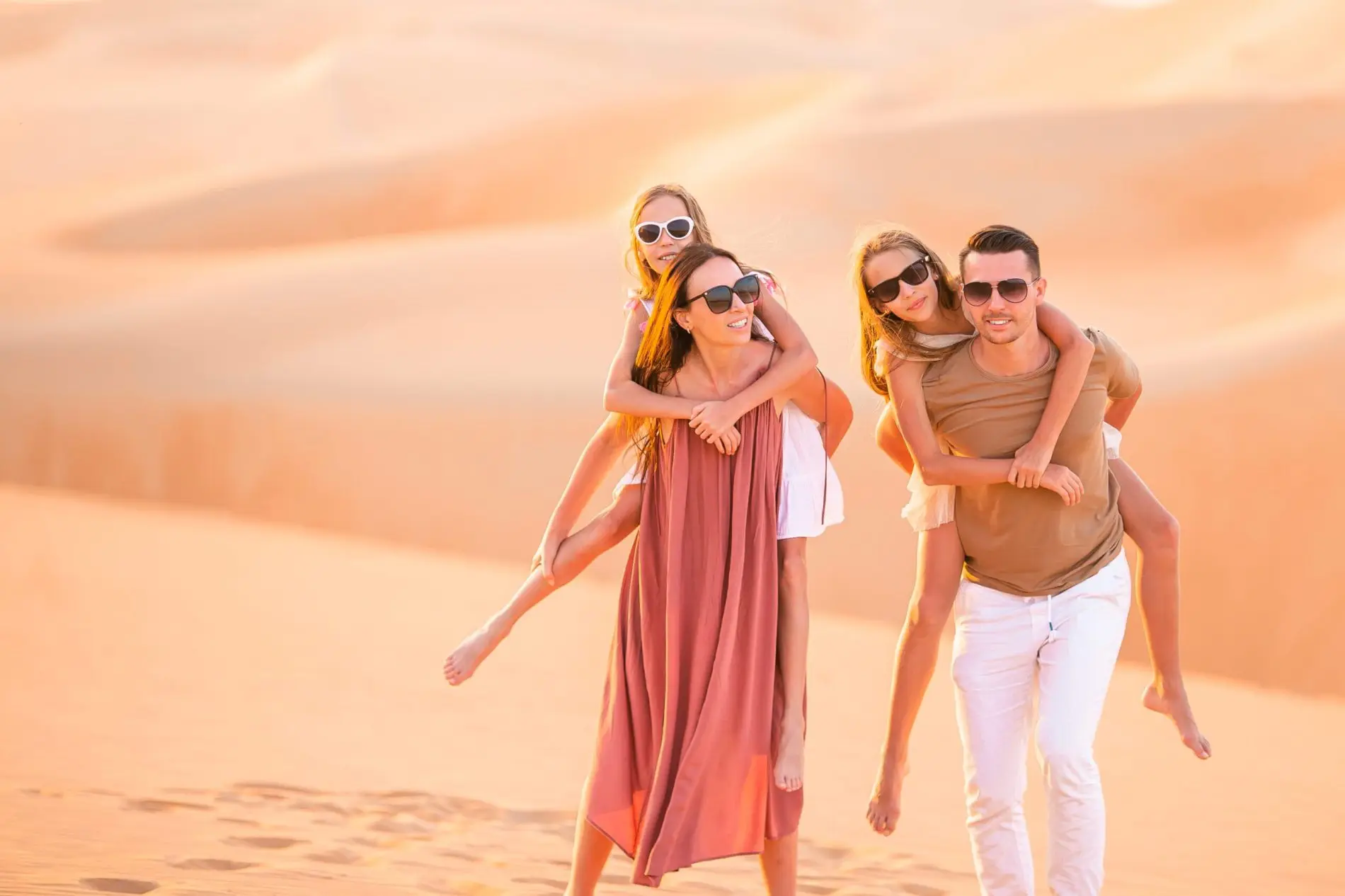
Morocco is one of those rare countries that feels exotic to children and reassuring to parents at the same time. Within a single week, a family can ride a camel over Saharan dunes, chase monkeys beside a 110-metre waterfall, knead dough in a Marrakech riad kitchen, and splash in the Atlantic off Essaouira’s flat, wind-swept beach. And because Moroccans treat children as welcome guests almost everywhere, the logistics tend to be warmer and easier than first-timers expect.
This guide pulls together what actually matters when you travel in Morocco with kids: when to go, where to base yourselves, what to book, what to skip, and the small practical details — medina mopeds, car seats, tap water, riad pools — that make the difference between a stressful trip and a magical one.
Why Morocco Works So Well for Families
Morocco is a four-hour flight from most of Western Europe and a single long-haul connection from the US East Coast. You can cross from a toddler-friendly beach town to a 300-metre canyon in half a day of driving, which is unusual for a country this compact. For parents, that means you can pack variety into a one- or two-week trip without the fatigue of a multi-stop Asia itinerary.
Culturally, Morocco is deeply child-centric. Children are openly welcomed in restaurants, on trains, at souk stalls and in riads — not merely tolerated. Shopkeepers will often hand kids a scoop of olives or a sprig of mint just because. That warmth changes the texture of the whole trip.
The other quiet advantage is infrastructure. The ONCF train network runs air-conditioned first-class carriages between Casablanca, Rabat, Tangier, Fes and Marrakech, the Al Boraq high-speed line tops 320 km/h between Tangier and Casablanca, and well-run private transfers cover the rest of the country. You can plan a smooth family itinerary without ever touching a rental car — a real plus if you’re nervous about driving with kids in the back.
To book this with a local team, see our 7-day Marrakech to Merzouga and Fes tour.
Is Morocco Safe for Families?
The short answer is yes, with sensible precautions. Morocco has a long track record of welcoming family travellers, and violent crime against tourists is rare. The genuine risks are the everyday ones you’d manage anywhere: petty pickpocketing in very crowded medinas, the occasional overcharge in a taxi, and road traffic.
Three specific things to watch:
- Medina mopeds. In the old cities of Marrakech and Fes, scooters weave through narrow lanes at speed. Hold small children’s hands, keep to the edges, and train older kids to listen for a horn.
- Car seats. Car seats aren’t standard in taxis or many private transfers. If you need one, bring your own or request one in advance from your tour operator.
- Medina navigation. Fes has roughly 9,000 alleyways and Marrakech’s souks are almost as knotted. It’s easy to lose a child’s sense of direction (and yours). Hire a licensed guide for the first half-day so the family builds confidence.
For balanced safety perspective on travelling in Morocco, our solo female travel guide covers many of the same cultural dynamics that apply to parents and is worth a read.
Best Ages for Morocco
There’s no “right” age — we’ve helped plan trips with six-month-olds and grumpy teenagers — but each life stage asks for a different itinerary.
Babies and Toddlers (0–3)
Very possible, very doable. Stick to coastal towns (Essaouira, Agadir), a Marrakech riad with a shaded pool, and short transfers. Skip the full Sahara trip with tiny children — ten-plus hours of driving for a single night under the stars rarely pays off. The Agafay Desert, 40 minutes from Marrakech, is a better swap.
Primary Age (4–10)
The sweet spot. This group is old enough to enjoy camel rides, cooking classes, Ouzoud Falls and a single-night desert camp, and young enough that the cultural newness feels like an adventure rather than an inconvenience.
Tweens and Teens (11–17)
Think bigger. Surf lessons in Taghazout, quad biking in Merzouga, a two-day hike up one of the lower Atlas peaks, sandboarding Erg Chebbi, or a photography-led medina walk. Teens also appreciate the pop-culture hook of Game of Thrones and Gladiator filming at Aït Benhaddou.
Family Itineraries That Actually Work
The Easy 5-Day Highlights Loop
Perfect for first-timers or families with young kids: Marrakech (2 nights) → Agafay Desert (1 night) → Atlas Mountains or Ouzoud Falls (1 night) → Marrakech (1 night). Short drives, big memories, no red-eye exhaustion.
The Classic 7-Day Family Adventure
Our most popular family length: Marrakech → Aït Benhaddou → Dades Valley → Merzouga (Sahara camp) → Tinghir → Ouarzazate → Marrakech. Kids get cities, canyons, and dunes. Pacing matters more than pace. Our 7-Day Morocco Tour follows a similar rhythm with Essaouira swapped in for extra beach time.
The 10-Day Variety Trip
For families who want city, desert, and coast in one bite: add Essaouira (2 nights) and a full Atlas Mountains day to the 7-day loop. Build in a rest day — poolside at the riad — every three active days.
If you want something more focused on children’s energy and attention span, Moratra’s 4-Day Family Desert Tour to Zagora condenses the most family-friendly desert experience into a shorter loop via the Draa Valley — better for younger kids than the longer push to Merzouga.
The Best Things to Do in Morocco with Kids
A few experiences earn their place on almost every family itinerary.
Camel Rides and Desert Nights
The bucket-list image — silhouettes on a dune at sunset — is real, and children take to it more readily than adults expect. Erg Chebbi near Merzouga has 150-metre dunes; Erg Chigaga near Zagora feels wilder. For under-fives, the Agafay Desert, a rocky hammada 40 minutes from Marrakech, delivers a stargazing camp night without a long drive.
Ouzoud Waterfalls and the Barbary Macaques
About 150 km from Marrakech, the Cascades d’Ouzoud plunge roughly 110 metres into a series of turquoise pools, and wild Barbary macaques forage in the olive groves on the descent. There are shaded footpaths, a short boat crossing at the base, and plenty of tagine stops on the way down. It’s a full day out, but one that children talk about for months.
Atlas Mountains and Ourika Valley
For a gentler mountain taste, the Ourika Valley is an hour from Marrakech and offers cool streams, Berber village visits, and easy walks to small waterfalls. Older kids can ride mules up a terraced valley or try a short trek from Imlil.
Cooking Classes and Pottery Workshops
Hands-on is the magic word. A two-hour riad cooking class — rolling msemen, layering a tagine, stirring mint tea — turns kids into proud co-chefs. Pottery workshops in Safi or Marrakech are equally sticky: they leave with a painted bowl they made themselves.
Jemaa el-Fnaa at Sunset
Marrakech’s main square becomes an open-air theatre in the late afternoon: snake charmers, storytellers, acrobats, drummers, orange juice stalls. Go when the heat eases, hold hands, and plan on ice cream afterwards. It’s sensory overload in the best possible way.
Essaouira Beach and Kite-Surf Lessons
Essaouira’s wide, flat Atlantic beach is safer and calmer than reputation suggests, and the car-free medina means children can actually run ahead without anxiety. The town is famously windy, which is perfect for older kids learning to kite-surf at Sidi Kaouki.
Beyond the Big Hits
- Hot air balloon at sunrise over the palm groves outside Marrakech (minimum age typically 6). See our balloon-booking guide for what to expect.
- Argan oil cooperatives between Marrakech and Essaouira, where kids can watch women crack argan nuts by hand.
- Beach horseback riding at low tide along Essaouira Bay.
- Tanneries of Fes for teens (younger kids may struggle with the smell).
For a fuller menu of bookable family-friendly experiences in the Red City, browse our activities in Marrakech page.
Practical Concerns Every Parent Asks About
Health and Vaccinations
Morocco requires no mandatory vaccines for most travellers — yellow fever is only checked if you’re arriving from a country where it’s endemic. The CDC and WHO commonly suggest being up to date on routine childhood vaccines (MMR, Tdap, polio, chickenpox) and adding hepatitis A and, depending on your itinerary, typhoid. Speak to your pediatrician four to six weeks before travel and bring a digital copy of vaccination records.
Food and Water Safety
Tap water is not considered potable for visitors. Stick to bottled or filtered water — including for brushing teeth in the first few days — and skip ice in drinks you didn’t see poured. For food, kids do well with tagines, grilled chicken, couscous, fresh bread and cooked vegetables. Go easy on very spicy harissa-based dishes. Hand sanitiser before meals prevents most traveller’s tummy issues.
Heat and Sun
Marrakech and the inland south can top 40°C (104°F) in July and August. With children, plan outdoor activities for early morning and late afternoon, and build in a long midday pool or siesta window. Hats, high-SPF sunscreen and refillable water bottles are non-negotiable.
Strollers, Car Seats and Gear
Modern city streets (Gueliz in Marrakech, new Casablanca) are stroller-friendly. Old medinas are not — cobblestones, steps and moped traffic make a lightweight umbrella stroller or baby carrier the better choice. Car seats are rare in taxis and standard transfers; bring your own if you need one, or ask your operator to supply one. Nappies, formula and baby food are widely available in supermarkets like Carrefour and BIM.
Money, Plugs and Connectivity
Cash is king in medinas; cards work in hotels and upscale restaurants. ATMs are everywhere in cities. Morocco uses Type C and Type E plugs at 220V — the same as most of continental Europe. Local SIMs from Maroc Telecom, Orange or Inwi are cheap, and most riads have reliable Wi-Fi.
Where to Stay with Kids
Three styles of accommodation tend to work best for families:
- Riads with a plunge pool. Traditional courtyard houses, usually 6–12 rooms, often with family suites. The splash pool alone can save an afternoon. Ask about steep stairs before booking with toddlers.
- Resort hotels on the coast. Agadir and the Taghazout coast have full kids’ clubs, big pools and beach access. Good for decompression days.
- Family desert camps. The best operators in Merzouga and Agafay now offer two- and three-bed tents with private bathrooms and child-sized camel saddles.
When booking a riad, ask three questions: is there an accessible ground-floor room, is the pool safe for young swimmers, and can breakfast times flex for toddlers?
Budget: What a Morocco Family Trip Actually Costs
A week in Morocco for a family of four typically runs from around $1,800 (mid-range riads, private driver, group activities) to $6,000+ (five-star riads, luxury desert camps, private guides everywhere). Ballpark daily costs once you’re on the ground:
- Mid-range riad family room: $80–180 / night
- Luxury riad or desert camp: $250–600 / night
- Meals at local restaurants: $6–15 per person
- Private driver with 4×4: $120–180 / day (split across the family)
- Guided cooking class for four: $100–160
- Camel ride + sunset: $15–35 per person
Children under a certain age (usually 3–6, operator-dependent) often go free or half-price on guided tours. It’s worth asking directly.
Best Time to Visit Morocco with Kids
Spring (March to May) and autumn (September to November) are the gold standard: warm days, cool nights, light crowds outside school holidays. Summer (July–August) is hot inland but lovely on the coast — Essaouira stays breezy thanks to the Alizee winds. Winter (December–February) is excellent for the south and desert, with crisp clear nights that are perfect for stargazing, though evenings in the dunes drop to near freezing — pack warm layers.
Ramadan is not a bad time to visit with children — tourist restaurants stay open and hotels still serve full meals — but the rhythm of the country shifts. If cultural immersion matters more than convenience, lean in. If you want simplicity, book either side.
Travelling with grandparents as well? Our Morocco for seniors guide covers gentler pacing, shorter driving days and where the comfortable stops are.
Frequently Asked Questions
Is Morocco safe for families with young children?
Yes. Morocco is considered one of the more family-friendly countries in North Africa, and violent crime against tourists is uncommon. The real concerns are everyday traffic (including medina mopeds), heat management in summer, and standard petty-theft precautions in very crowded markets. With sensible planning, families travel here safely every week of the year.
What’s the best age to take kids to Morocco?
Ages 4 to 10 tend to be the easiest and most rewarding. Younger toddlers do best on coastal and riad-heavy itineraries with short transfers. Teens thrive on adventure-focused routes with surfing, trekking or desert quad biking. All ages are welcome — it’s the itinerary that should adjust, not the destination.
Can children do the Sahara Desert camel ride and camp?
Most reputable desert camps accept children from around age 4 for camel rides, with guides leading the animals on foot. For under-fives, the Agafay Desert near Marrakech delivers a similar stargazing camp experience without the 9–10-hour drive to Merzouga.
Is the food in Morocco okay for kids?
Generally, yes. Tagines, couscous, grilled meats, fresh bread and fruit are mild, nourishing and universally available. Keep away from very spicy harissa and unpeeled raw salads in the first days, stick to bottled water, and carry a few familiar snacks for picky eaters — peanut butter and cereal can be worth the suitcase space.
Do we need a rental car to travel Morocco with kids?
Not usually. Morocco’s ONCF trains and a private driver between cities are far less stressful than driving yourself, particularly in unfamiliar mountain roads. Most families on our itineraries travel with a dedicated driver-guide in an air-conditioned SUV or minivan, which doubles as a safe space for naps and snacks.
How many days do you need for a family trip to Morocco?
Five days is the realistic minimum for a Marrakech-plus-one-region trip (desert or coast or mountains). Seven days lets you comfortably combine Marrakech, the Sahara (or Agafay), and Essaouira. Ten days is ideal and lets you add Fes or Chefchaouen without rushing.
Planning Your Family Trip
Every family is different. A trip that works beautifully for a surf-obsessed 14-year-old is not the same trip that works for a 2-year-old who naps at 1pm. The joy of tailor-made travel is that you get to keep the best bits of Morocco and edit out the rest — the long drives, the over-scheduled days, the mid-afternoon heat.
If you’d like a second pair of hands on the planning, the Moratra team designs family itineraries with kids’ energy levels and attention spans built in: shorter drives, pool afternoons, hands-on experiences, and pacing that respects jet lag. Tell us your children’s ages, your travel dates, and what you’re hoping for — we’ll come back with a free, personalised plan. No pressure, no obligation. Just helpful advice from people who know Morocco with kids, because we live here with ours.
Plan Your Morocco Trip with Moratra
Ready to turn the ideas in this guide into a real trip? Browse Moratra’s most-booked private experiences across Morocco — handpicked itineraries, luxury riads and local guides:
- Morocco Family Tour Packages — private, kid-paced itineraries with your own driver, family-friendly riads and flexible days.
- Luxury Morocco Tours — multi-day private itineraries across Marrakech, the Sahara, Fes and the imperial cities.
- Morocco Sahara Desert Tours — VIP private journeys from Marrakech to Erg Chebbi and Merzouga.
- Agafay Desert Day Trips — luxury camps and dinner-under-the-stars experiences just 30 minutes from Marrakech.
- Activities and Day Tours in Marrakech — cooking classes, hammams, walking tours and hot air balloon flights.
Need help choosing? Reach out anytime — our local team offers free, no-obligation Morocco trip advice.
