
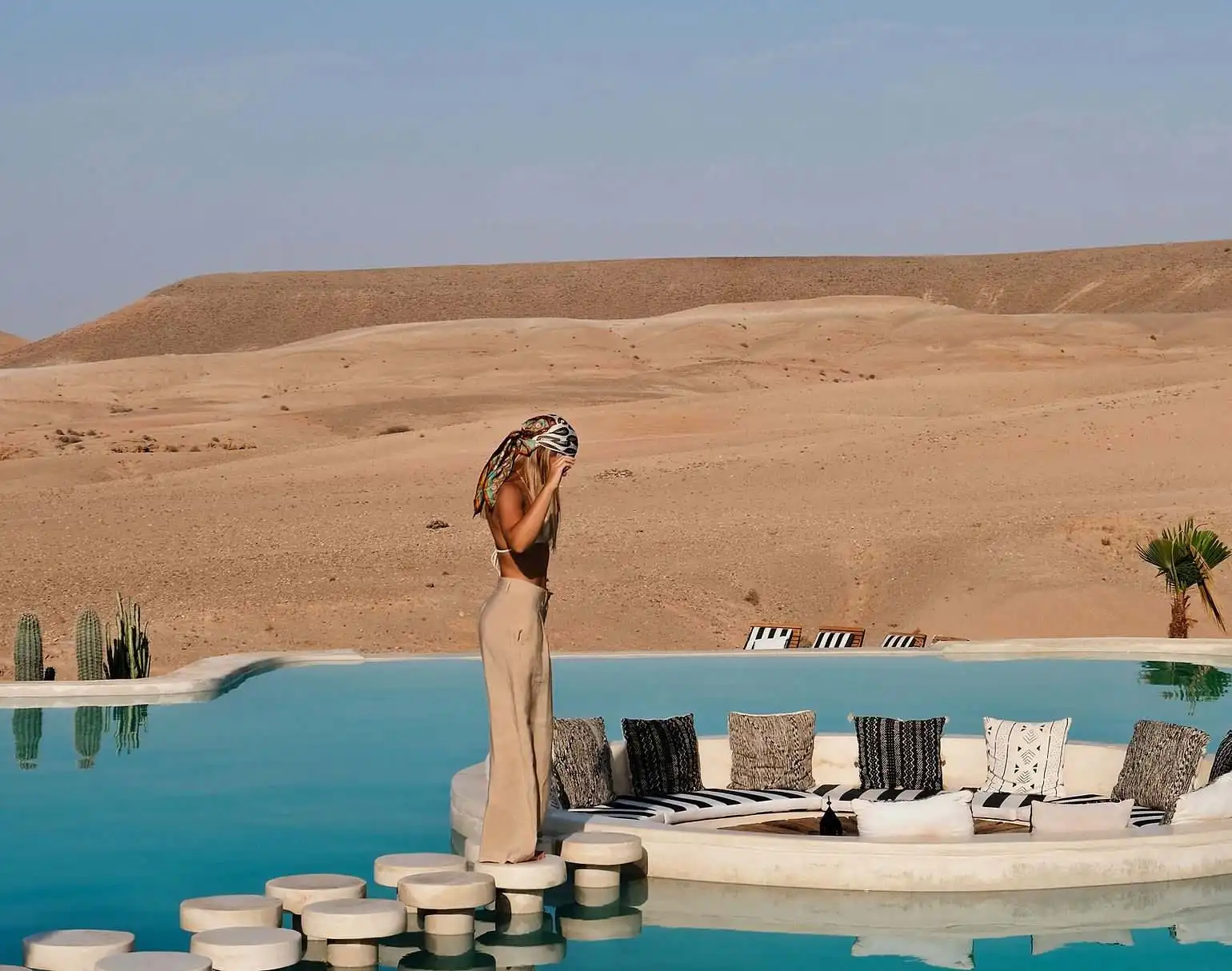
Let’s start with the question every woman asks before booking: is Morocco safe for solo female travelers? The honest answer — yes, with preparation. Tens of thousands of women travel Morocco alone every year, and the overwhelming majority leave with stories about hospitality, mint tea, and Atlas sunsets, not stories about danger. But “safe” doesn’t mean “the same as home.” Morocco asks for a little cultural fluency, a calm sense of self, and a few simple habits that take the friction out of the experience.
This guide is written for the woman who wants the real picture — not a sanitized brochure, not a fear-based warning. We’ll cover what the data actually says, what to wear in different parts of the country, how to handle unwanted attention with grace and firmness, the cities where solo women feel most at ease, and the practical logistics (transport, accommodation, scams) that make the difference between a stressful trip and a magical one.
The Honest Safety Picture
Morocco is consistently ranked the safest country in Africa for travelers. The U.S. State Department currently lists Morocco at Level 1 — Exercise Normal Precautions, the same advisory tier as most of Western Europe. Violent crime against tourists is rare. The most common issues solo women report are not violence but rather verbal attention — comments, persistent vendors, the occasional follow-down-an-alley by someone trying to sell a tour or guide service.
That distinction matters. The risks you need to plan for in Morocco are mostly atmospheric (catcalls, being noticed) and transactional (overpaying, getting “guided” somewhere you didn’t ask to go). They’re real, they can be tiring, but they’re not the same category as a personal-safety threat. Once you internalize that, your shoulders drop and you start noticing the country itself.
If you would like us to arrange it for you, see our guided medina and souks walking tour.
That said — Morocco is a Muslim-majority country with conservative norms outside of major tourist zones, and your experience will be smoother and warmer if you travel with that in mind rather than against it.
What to Wear: A Realistic Dress Guide
There’s no legal dress code for tourists in Morocco. There is, however, a practical one. The less skin you show, the less attention you attract, the more comfortable your day. This isn’t about hiding who you are — it’s about meeting the country halfway.
The Working Rule: Cover Shoulders and Knees
In cities, medinas, and rural areas, aim to cover shoulders and knees. Loose long pants, midi or maxi skirts, and tops with at least short sleeves are ideal. Linen, cotton, and lightweight viscose handle the heat well. Black is a bit of a furnace in summer; off-white, sand, terracotta, and soft blues are practical and locally appropriate.
By Setting
- Marrakech & Fes medinas: Long pants or midi skirt, sleeved top, scarf in your bag for mosques and rural side trips.
- Chefchaouen & Atlas villages: Slightly more conservative — keep arms covered, no shorts, no tank tops in the streets.
- Essaouira & coastal towns: The most relaxed atmosphere in the country. A little more leeway, but bikinis stay at private pools, not the public beach.
- Sahara desert camps: Long sleeves and pants for sun protection more than modesty. Bring a cotton scarf — it will save your face from sun and sand.
- Hotels, riads, beach resorts, rooftop bars: Anything goes. Western swimwear is the norm at private pools.
The Scarf Is Your Best Friend
One lightweight cotton scarf does more work than any other item in your bag. It covers your hair when entering certain religious spaces, shields your shoulders if a top suddenly feels too short, blocks Sahara sun, doubles as a beach blanket, and elevates a basic outfit. Buy one in the souk on day one — it’s also a great first practice run for friendly haggling.
Handling Unwanted Attention
This is the part most women want concrete advice on. Here is what works, gathered from years of feedback from women who travel with us.
1. Walk With Purpose
Body language matters more than clothing. Walking briskly, head up, with a clear sense of direction signals you’re not lost and not available for a “guided” detour. If you genuinely don’t know where you are, duck into a shop or café to check your map rather than standing still in the middle of an alley.
2. Don’t Engage
The single most useful technique is non-engagement. A polite “la, shukran” (no, thank you) and continued walking ends most interactions. Eye contact, smiles, and stopping to explain are interpreted as openness to conversation. This isn’t rudeness — it’s the local norm with strangers in the street.
3. Useful Darija Phrases
- La, shukran — No, thank you. Your default.
- Safi — Enough. Said in a firm, even tone, this is the universal “we’re done here.” It’s a word every Moroccan uses dozens of times a day, so no one will be offended.
- Baraka — Stop / that’s enough. A stronger version of safi, used when you mean it.
- Imshi — Go away. Use only when needed; it’s blunt.
- Hshouma — Shame on you. The most powerful word a woman can deploy in public if someone crosses a line. It invokes social shame, and bystanders will often back you up.
4. The Bystander Strategy
Moroccan culture has strong codes of public conduct. If a man is genuinely making you uncomfortable, raising your voice and using hshouma in front of others usually shuts the situation down quickly — older women in particular tend to step in on your behalf. Shopkeepers will often help if you step inside and explain what’s happening.
5. Trust Your Gut
If a “guide” attaches himself to you in the medina, if someone insists on walking you somewhere, if a taxi takes a route that feels wrong — say no, get out, change direction. Politeness is not a debt you owe a stranger.
Best Cities and Towns for Solo Female Travelers
Chefchaouen — The Calmest
If it’s your first trip to Morocco and you want to ease in, fly into Tangier and head straight to Chefchaouen. The blue-washed mountain town in the Rif is small, walkable, and has the most relaxed energy of anywhere in the country. Solo women consistently describe it as the city where they felt most at ease. (For more on what to do there, see our Chefchaouen travel guide.)
Essaouira — The Bohemian Coast
Two and a half hours from Marrakech, Essaouira is windswept, artistic, and refreshingly low-pressure. The fishing port, the medina ramparts, and a steady ocean breeze make it a favorite for solo travelers who want sensory richness without the intensity of Marrakech.
Marrakech — Manageable, Not Mellow
Marrakech is the most overwhelming city for first-timers, but it’s far from unsafe. You’ll get more attention here than anywhere else, and the medina is genuinely confusing. Stay in a riad inside the medina near a recognizable landmark, take taxis after dark, and you’ll be fine. Day two feels easier than day one. Day three feels easier than day two.
Fes — Beautiful, Bring Patience
Fes el-Bali has roughly 9,400 alleys and is the world’s largest car-free urban area. It is genuinely possible to get turned around for an hour. A licensed local guide for your first day pays for itself many times over. After that you’ll have your bearings.
Atlas Villages and the Sahara
Surprisingly relaxing for solo women. Berber communities in the High Atlas and Sahara are among the most hospitable on Earth, and the energy is the opposite of the urban souks. Going with a small organized trip is the easiest way to access them — see our desert tours if that interests you.
Where to Stay: Riads vs. Hotels vs. Hostels
For solo women, accommodation choice has an outsized effect on the trip.
- Riads are traditional Moroccan houses converted to small guesthouses, usually 6–10 rooms, often family-run. They are the warmest, safest, most enriching option. The host typically knows your face by day two, helps with restaurant bookings, arranges trusted taxis, and acts as a soft safety net.
- International hotels outside the medina are convenient but isolating. You’ll experience less of Morocco. Best as a one-night transit stay.
- Hostels exist in Marrakech, Essaouira, and Chefchaouen and can be wonderful for meeting other solo travelers. Choose female-only dorms when available, and check recent reviews specifically from solo women.
Whatever you choose, ask the staff to call you a taxi after dark. They will, and the driver will treat you correctly because the riad knows him.
Transportation, Honestly
- Petit taxis (city taxis, color-coded by city — red in Marrakech, blue in Rabat) are safe. Insist on the meter. If they refuse, walk away and flag another.
- Grand taxis (shared intercity Mercedes wagons) are functional but cramped. As a solo woman, paying for two seats to avoid being squeezed between strangers is a small luxury worth the price.
- ONCF trains are the gold standard. Book first class for the women-friendly compartments and air conditioning. The Al Boraq high-speed line between Tangier, Rabat, and Casablanca is genuinely excellent.
- CTM and Supratours buses are reliable, comfortable, and recommended over local buses.
- Private drivers are common, well-priced compared to Europe, and worth it for desert and mountain routes. Booking through a reputable agency ensures the driver is vetted.
Things That Surprise Solo Women (in a Good Way)
- Older Moroccan women will mother you — offering tea, fixing your scarf, scolding men on your behalf.
- Restaurants and cafés are completely comfortable to sit in alone, even in the evening.
- Riad owners often become your unofficial fixers for the entire stay.
- The food scene is far more interesting than the international tagine cliché suggests.
- You’ll likely meet other solo female travelers daily — there is a quiet, supportive network of women doing exactly what you’re doing.
Things to Be Real About
- Some days you’ll be tired of being noticed. That’s normal. Plan a “quiet day” in your riad mid-trip.
- Late nights alone outside the medina aren’t smart in any city. Take a taxi.
- Drinking in the street is culturally unacceptable. Alcohol is available in licensed restaurants, hotels, and bars.
- Public displays of affection draw stares; keep things low-key in public.
- The first 48 hours are the hardest. Push through. The country opens up after that.
FAQ: Solo Female Travel in Morocco
Is Morocco safe for solo female travelers in 2026?
Yes. Morocco is one of the safest countries in Africa for travelers, and the U.S. State Department currently lists it at Level 1 (Exercise Normal Precautions). Violent crime against tourists is rare. The main considerations for solo women are verbal attention and tourist-targeted scams, both of which are manageable with basic preparation.
What should I wear as a solo female traveler in Morocco?
Loose clothing that covers shoulders and knees is the practical baseline. Long pants or midi/maxi skirts, sleeved tops, and a lightweight scarf work everywhere. Coastal towns like Essaouira are slightly more relaxed; rural and mountain areas are more conservative. Save bikinis and shorts for private pools and beach resorts.
Which cities are best for solo female travelers in Morocco?
Chefchaouen is the calmest and most welcoming for first-time solo women. Essaouira is bohemian, breezy, and low-pressure. Marrakech and Fes are exciting but more intense — they’re best appreciated after you’ve found your footing in a smaller town first.
How do I handle catcalling and unwanted attention?
Walk with purpose, avoid eye contact with strangers, and don’t stop to engage. A firm “la, shukran” (no, thank you) handles most situations. Safi (enough) and hshouma (shame) are stronger phrases that work when you mean them. Step into a shop or café if someone is following you — staff will help.
Is it safe to take taxis alone at night in Morocco?
Generally yes, especially when arranged by your riad or hotel. Always insist on the meter for petit taxis, or agree on a price before getting in. After dark, ask reception to call you a taxi rather than flagging one in the street.
Can I drink alcohol or wear what I want in tourist areas?
Alcohol is served in licensed restaurants, bars, hotels, and riads — not in the street and not in most local cafés. Inside private accommodations, beach resorts, and rooftop venues, dress codes are essentially Western. The medina and traditional neighborhoods are where modest dress matters.
One Final Thought
Morocco is a country that rewards travelers who arrive curious rather than anxious. Most solo women we host start the week tentative and end it talking about coming back. The trick is the right preparation, the right rhythm, and ideally a local team in your corner who can call ahead, suggest the riad with the kind owner, and pair you with a female guide for the medina if that helps.
If you’d like a hand thinking through your itinerary, accommodation choices, or a custom route designed around solo travel, the Moratra team — including experienced female guides — offers free personalized advice. Tell us your dates, your travel style, and what’s on your mind. No pressure, no sales pitch — just honest guidance from people who plan trips like this every week.
Plan Your Morocco Trip with Moratra
Ready to turn the ideas in this guide into a real trip? Browse Moratra’s most-booked private experiences across Morocco — handpicked itineraries, luxury riads and local guides:
- Luxury Morocco Tours — multi-day private itineraries across Marrakech, the Sahara, Fes and the imperial cities.
- Morocco Sahara Desert Tours — VIP private journeys from Marrakech to Erg Chebbi and Merzouga.
- Agafay Desert Day Trips — luxury camps and dinner-under-the-stars experiences just 30 minutes from Marrakech.
- Activities and Day Tours in Marrakech — cooking classes, hammams, walking tours and hot air balloon flights.
Need help choosing? Reach out anytime — our local team offers free, no-obligation Morocco trip advice.
