
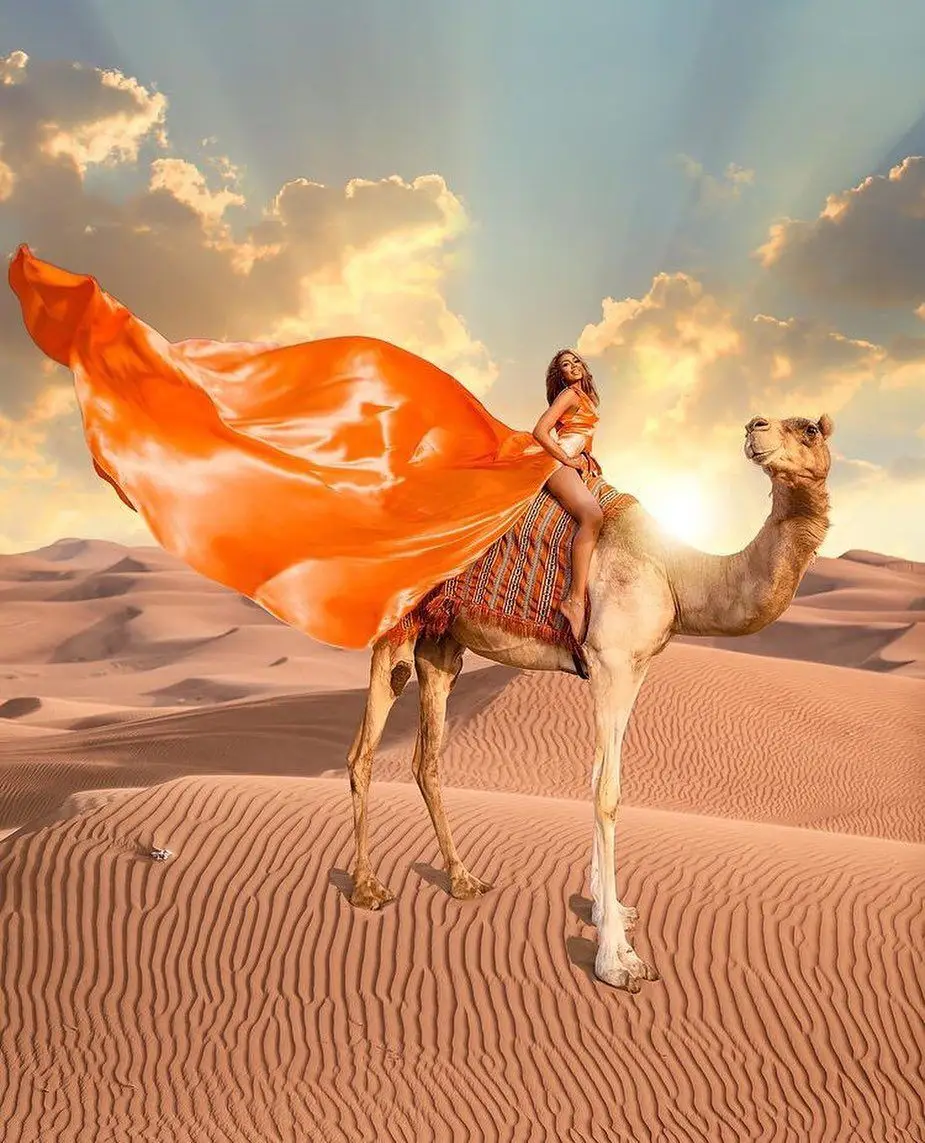
Your Sahara desert packing list comes down to one fact: the desert is hot by day and cold by night, so you pack in layers. Bring light, breathable clothes for scorching afternoons, warm layers for chilly evenings, closed shoes for the dunes, and serious sun protection. Everything else is comfort. This guide breaks it down by season, with a checklist you can pack straight from and answers to the questions travellers ask us most.
Travelling beyond the dunes? Our complete Morocco packing list by season covers what to bring for the cities, mountains and coast as well.
What should you pack for a Sahara desert trip?
Morocco’s Sahara swings hard between day and night. Around Merzouga and Erg Chebbi, July afternoons average about 41 to 43°C, while winter nights can fall to 3 to 6°C, according to long-term climate averages. Rain is almost never a factor. Only about 53mm falls in a whole year.
So your bag needs two wardrobes in one. You want cool, covered clothing for the sun and genuine warm layers for after dark. The trick is to pack light fabrics you can add to, not bulky items you can wear only once. Loose beats tight, and covered beats bare in both the heat and the cold.
To book this with a local team, see our 4-day desert tour from Marrakech to Merzouga.
The essential Sahara desert packing list
Here is the core kit, grouped by what each item does. Use it as your master list, then trim it to your season and the length of your trip.
| Category | What to pack | Why it matters |
|---|---|---|
| Day clothing | Loose long-sleeve shirts, light trousers, a sun hat | Covers skin from sun and blowing sand; loose fabric stays cooler |
| Night clothing | Fleece or warm jacket, long trousers, a scarf | Desert nights cool down fast, even after a hot day |
| Footwear | Closed trainers or light boots, plus sandals for camp | Hot sand fills open shoes; closed shoes protect your feet on the dunes |
| Sun protection | SPF 50 sunscreen, lip balm, sunglasses, a scarf or turban | Sunlight is intense and shade is scarce |
| Health and comfort | Refillable water bottle, wet wipes, basic medicines, a power bank | Shops and power points are limited once you leave town |
| Documents and money | Passport, cash in dirhams, cards, a printed booking | Card payment is patchy in remote desert areas |
What to wear in the Sahara by season
Match your bag to the month you travel. The day and night figures below are averages for the Merzouga area, so treat them as a guide rather than a promise. Individual days can run hotter or cooler.
| Season | Months | Typical day | Typical night | What to wear |
|---|---|---|---|---|
| Summer | June to August | 40 to 43°C | 25 to 29°C | Lightest breathable cottons, strong sun cover, extra water |
| Autumn | September to November | 24 to 35°C | 14 to 21°C | Light layers by day, a warm top after sunset |
| Winter | December to February | 17 to 20°C | 3 to 6°C | Pleasant days, but a real coat, hat and gloves for the night |
| Spring | March to May | 28 to 34°C | 14 to 18°C | Light clothing plus one solid warm layer |
Summer is the hardest season to pack for, because the heat is relentless and shade is rare. If you are set on those months, read our honest take on the Sahara in summer before you commit.
How to layer for big temperature swings
The desert can shift from hot to cold in under an hour after sunset. Layering is how you handle that without packing a second suitcase. Start with a breathable base you can wear all day. Add a light mid-layer, such as a long-sleeve shirt or a thin fleece, for the evening. Keep one warmer outer layer, like a packable jacket, for the coldest part of the night and the dawn camel trek.
Three thin layers beat one thick coat. They trap warmth better, and you can peel them off one at a time as the sun climbs. Choose natural fabrics or technical materials that breathe. Avoid anything heavy that you will wear only once.
Sun protection is not optional in the desert
The sun does the most damage of anything in the Sahara, and it works quietly. There are few trees and little cloud, so ultraviolet exposure stays high for most of the day. Pack a high-factor sunscreen and reapply it through the afternoon. Add a wide-brimmed hat or a wrapped scarf, good sunglasses, and a lip balm with sun protection.
Covering up is often smarter than stripping down. A loose long-sleeve shirt keeps the sun off your arms and traps a little cool air. Local guides wear a light scarf or turban for exactly this reason. It shields the face from both glare and sudden gusts of sand.
What to pack in your desert day bag for the camel trek
You will not carry your main bag into the dunes. Instead, you pack a small day bag for the sunset camel trek and the night at camp. Keep it to the essentials:
- A scarf or light turban to shield your face from sand and sun.
- Sunglasses, sunscreen and lip balm for the ride out.
- A warm layer for the moment the sun drops below the dunes.
- Your phone or camera, plus a power bank, since charging at camp is limited.
- A refillable water bottle.
- A small torch or head-lamp for moving around after dark.
- Any personal medication and a few wet wipes.
What Moratra provides, so you can pack lighter
A well-run tour shortens your packing list on its own. On a fully private Sahara desert tour with us, every trip is private and includes hotel pickup in Marrakech, a licensed local guide and desert-camp accommodation. All meals from dinner on day one to lunch on your final day are included too. That means no tent, no sleeping gear and no food to carry. The camp beds and kitchen are already waiting for you.
If you would rather not ride a camel to camp, a private vehicle transfer to the dunes is available for a small supplement. Distances are long, so we build in regular stops. Zagora sits about 360km from Marrakech, a drive of five to six hours. Merzouga is farther, roughly 560km, or nine to ten hours. One recent guest, James R. from London, said after his five-day Grand Sahara trip in November 2024: “The silence in the desert at dawn is something I will carry forever.”
A few honest trade-offs before you zip your bag
Two mistakes come up again and again. First, people overpack warm gear for summer, then still shiver in winter because they under-packed for the cold nights. The season matters more than the destination. Second, they bring stiff new boots. Trainers you have already broken in are far kinder on soft sand.
You can also buy a scarf or turban cheaply in Marrakech before you set off. It doubles as sun cover and a dust mask. If you are unsure how covered to dress in the city first, see our guide to dressing in Marrakech. For the drive itself, the five-day Marrakech to Merzouga desert tour spaces out comfort stops every 1.5 to 2 hours, so you can layer up or down as the temperature shifts. You can compare formats and lengths on our Morocco desert tours page.
Frequently asked questions about Sahara desert packing
These are the packing questions our team hears most often before a desert trip.
What should I wear in the Sahara Desert?
Wear loose, breathable clothing that covers your skin by day, and add a warm layer for the night. Long sleeves and light trousers protect you from sun and sand better than shorts. Bring a scarf for your face and closed shoes for the dunes.
Is it cold in the Sahara at night?
Yes, and it often surprises people. Winter nights near Merzouga can drop to around 3 to 6°C, and even summer nights cool to the mid-twenties. A fleece or a light jacket earns its place in your bag in every season.
What shoes are best for a desert tour?
Closed trainers or light boots that you have already worn in. They keep hot sand off your feet and give you grip on the dunes. Pack sandals as well for relaxing around camp, where the sand cools down in the evening.
Do I need to bring my own water and food?
Bring a refillable bottle for the road. On our Sahara tours, though, all meals from dinner on day one to lunch on your last day are included, so you do not need to carry food or a stove. Water is provided along the way.
How much should I pack for a Sahara trip?
Less than you would think. You leave your main bag in the vehicle or at camp and carry only a small day bag into the dunes. One layered outfit per day, plus sun and warm gear, covers most trips of two to five days.
What should I avoid bringing to the desert?
Skip hard-shell suitcases, stiff new shoes, and valuables you would hate to get sandy. Rigid cases are awkward on soft sand and on a camel. A soft duffel or a backpack is much easier to carry and to load.
Still unsure what to pack for your exact dates? Tell us when you plan to travel and we will send a tailored packing list for your trip. Contact our Morocco team and we will answer for free, with no obligation, and reply within 24 hours.
