
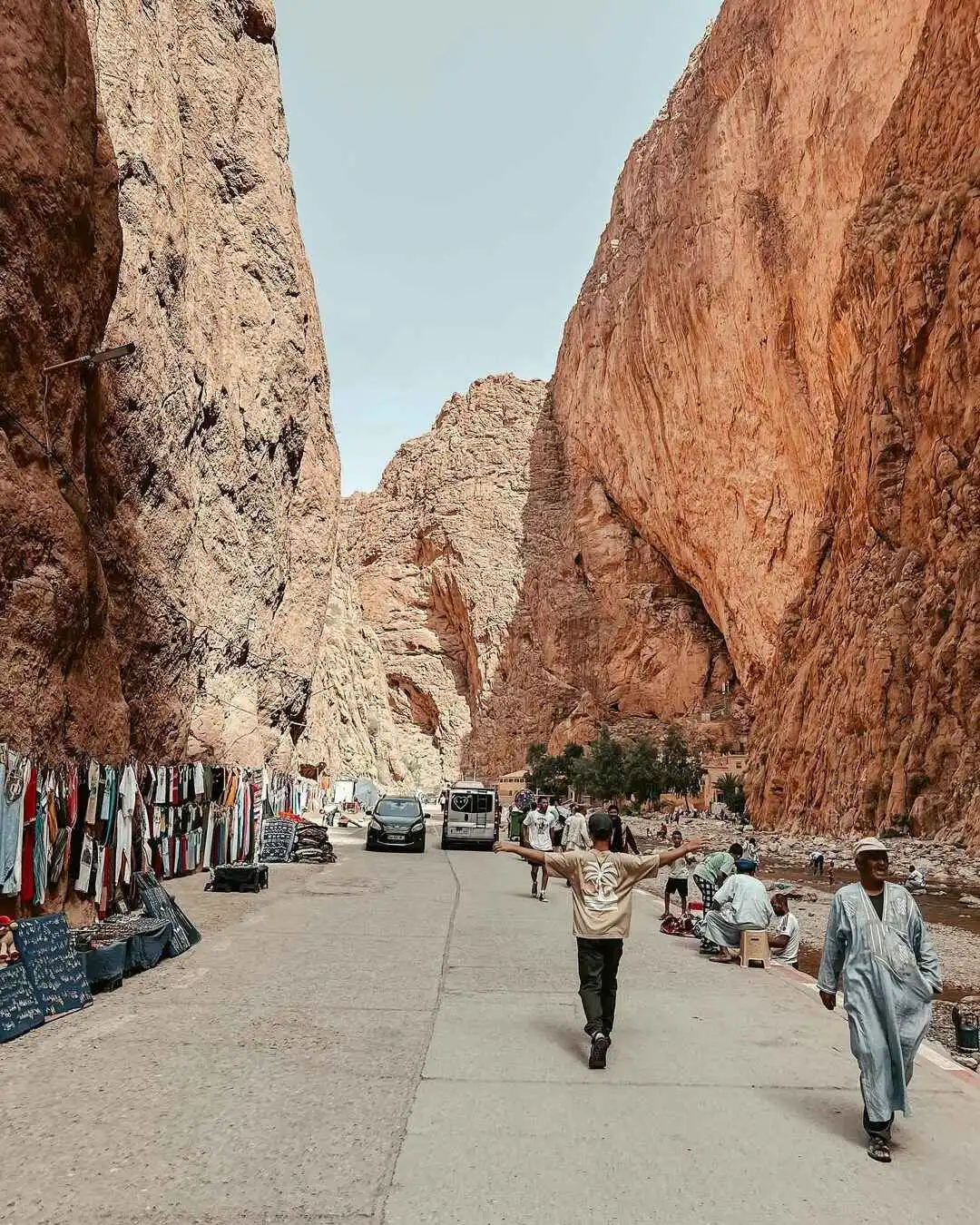
Morocco’s Grand Canyon: Where Towering Cliffs Meet Ancient Trails
Somewhere between the snow-dusted peaks of the High Atlas and the golden silence of the Sahara, the earth splits open. Rust-red limestone walls soar hundreds of metres into a pale blue sky, and a narrow river threads through a canyon so tight you could almost touch both sides at once. This is Todra Gorge — and together with its western neighbour, Dades Valley, it forms one of the most dramatic landscapes anywhere in North Africa.
Unlike Morocco’s famous medinas, these canyons reward slow exploration. Whether you are a casual walker looking for a scenic morning stroll or an experienced trekker planning a multi-day route through Berber villages, this guide covers everything you need to organise a visit to Todra Gorge and Dades Valley — including trail options, difficulty ratings, where to sleep, and how to weave both gorges into a wider Moroccan itinerary.
Todra Gorge: A Geological Masterpiece
Todra Gorge stretches roughly 40 kilometres through the eastern High Atlas, carved over millions of years by the Todra River. The full canyon is impressive, but the section that draws visitors from around the world is a 600-metre stretch where the limestone walls narrow to just 10 metres apart and rise up to 300 metres overhead. Standing at the base and looking up, you feel the scale of deep geological time — these cliffs began forming during the late Paleozoic era, when this part of Morocco lay beneath a shallow sea. Look closely and you may spot marine fossils, shell imprints, and traces of ancient coral embedded in the rock.
The gorge sits near Tinghir, a pleasant oasis town of around 40,000 people at an elevation of approximately 1,340 metres. Tinghir itself is worth a wander — its palmery stretches along the riverbed, and the old Jewish quarter (mellah) offers a quiet glimpse of Morocco’s multicultural past.
To book this with a local team, see our 4-day desert tour from Marrakech to Merzouga.
Hiking Routes in Todra Gorge
The beauty of Todra is that it caters to all fitness levels. Here are the main options:
- Canyon Floor Walk (Easy, 1–2 hours): The most popular route follows the paved road and then a dirt path through the narrowest section of the gorge. It is flat, accessible, and stunning. Families with children can manage it comfortably. The best light for photography is in the morning, when sunlight streams between the canyon walls.
- Todra Gorge Loop Trail (Moderate, 3–4 hours): This circuit climbs above the gorge rim via a marked trail on the northern side, offering panoramic views of the canyon and the palmery below before descending back to the road. Expect some steep sections and loose gravel — sturdy footwear is essential.
- Tinghir Oasis to Gorge Hike (Easy to Moderate, 4–5 hours): Starting from the edge of Tinghir’s palmery, this half-day walk follows the river upstream through villages, irrigated gardens, and walnut groves before arriving at the gorge. It is one of the most rewarding ways to experience the transition from oasis to canyon.
- Multi-Day Trek to Aït Hani (Challenging, 2–3 days): For experienced hikers, a route continues beyond the gorge into the High Atlas, passing through remote Berber villages like Aït Hani. You will need a local guide, adequate supplies, and proper gear. Elevation gains can exceed 1,000 metres.
Rock Climbing at Todra
The gorge is one of Morocco’s premier climbing destinations, with over 400 sport routes bolted into the canyon walls. Routes range from beginner-friendly 5a grades to demanding 8b overhangs. The main climbing area is concentrated in the narrowest section of the gorge, and several local operators rent equipment and offer guided sessions. The best climbing season runs from October to May, when temperatures are manageable and the rock is dry.
Dades Valley: The Road of a Thousand Kasbahs
About 50 kilometres west of Todra, the Dades River has carved its own gorge through the Atlas foothills. Where Todra is defined by a single dramatic slot canyon, Dades Valley offers a longer, more varied landscape — think winding roads, fortified mud-brick kasbahs crumbling elegantly against red cliffs, and rock formations that look like they belong on another planet.
The Monkey Fingers
Around 9 kilometres north of Boumalne Dades, the valley reveals one of its most peculiar features: the Monkey Fingers (Pattes de Singe). These strange, tubular rock pillars were shaped by millennia of wind and water erosion, and they rise from the canyon floor like petrified organ pipes. The formations are visible from the road, but a short walk brings you closer to appreciate their scale and texture.
The Famous Hairpin Road
Continuing north, the road through Dades Gorge climbs through a series of tight switchbacks carved into the mountainside. This stretch — often photographed from above — is one of Morocco’s most iconic driving routes. The hairpin bends are dramatic but well-maintained, and the views from each turn open onto deeper layers of canyon, kasbah ruins, and terraced agriculture. If you are driving yourself, take it slowly; if you are with a driver, sit back and absorb one of the most cinematic roads in the country.
Kasbahs and Villages
The nickname “Valley of a Thousand Kasbahs” is barely an exaggeration. Along the route between Ouarzazate and Tinghir (the N10 highway), you pass dozens of fortified earthen structures — some beautifully restored, others gently returning to the landscape. The kasbahs tell the story of the region’s Berber communities, who built them as homes, granaries, and defences against rival clans and harsh weather.
Best Hikes in Dades Valley
- Dades Gorge Walk (Easy, 1.5–2 hours): A flat walk along the river from the main bridge into the gorge, passing beneath red cliffs and through small settlements. Ideal as an afternoon activity.
- Monkey Fingers Circuit (Moderate, 2–3 hours): A loop trail from the rock formations that climbs to a ridge with views over the valley, then descends through a Berber village. Some scrambling is required near the top.
- Ait Arbi to Ait Oudinar Trek (Moderate to Challenging, full day): This point-to-point route follows a high trail between two villages, passing through juniper forests and pastoral land. A guide is recommended, as the trail is not always marked.
Where to Stay: Tinghir and the Gorges
Accommodation in this region is refreshingly varied and generally excellent value. You will not find large chain hotels — instead, expect family-run guesthouses, converted kasbahs, and canyon-side auberges where dinner is home-cooked and the terrace overlooks the stars.
In Tinghir: The town offers the widest range of options. Budget travellers can find clean guesthouses from around €20 per night, while mid-range riads with pools and garden courtyards run between €50 and €120. For a more immersive experience, several guesthouses in the palmery put you within walking distance of the river trail to the gorge.
Inside Todra Gorge: A handful of auberges sit right at the entrance to the narrow canyon. Staying here means you can hike or climb in the golden early-morning light before the day-trippers arrive. Rooms are simple but atmospheric, and prices typically range from €25 to €70.
In Dades Gorge: Several kasbahs and guesthouses line the road north of Boumalne Dades. Some perch directly above the river with views of the canyon walls. A night here is well worth it for the sunset light on the red cliffs alone.
When to Visit Todra Gorge and Dades Valley
Timing matters here more than in coastal or city Morocco. The gorges sit at elevation, and the climate swings between extremes.
Best months: March to May and September to November. Spring is particularly rewarding — the almond trees bloom in the valleys, the rivers run full from snowmelt, and daytime temperatures hover between 20°C and 30°C. Autumn offers similar conditions with fewer visitors.
Summer (June to August): Temperatures can exceed 40°C in the valleys. Hiking becomes uncomfortable by mid-morning, and the heat radiates off the canyon walls. If you must visit in summer, start before dawn and rest during the afternoon.
Winter (December to February): Nights can drop below freezing at altitude, and occasional snow may close higher passes. However, daytime temperatures are pleasant for hiking (10°C to 18°C), and you will have the trails almost to yourself.
How to Get There: Part of the Desert Circuit
Most travellers reach Todra and Dades as part of a larger loop between Marrakech and the Sahara. The standard desert circuit follows the N10 highway through Ouarzazate, then east along the “Road of a Thousand Kasbahs” to Boumalne Dades and Tinghir, before continuing to the dunes at Merzouga or Zagora.
From Marrakech: The drive to Tinghir takes approximately six hours via the Tizi n’Tichka pass and Ouarzazate. Most desert tours from Marrakech include stops at both gorges as part of the journey to the Sahara.
From Ouarzazate: Tinghir is around 2.5 hours east on the N10. If you have visited Aït Benhaddou and Ouarzazate, the gorges make a natural next stop.
By bus: CTM and Supratours operate daily services from Marrakech, Ouarzazate, and Errachidia to Tinghir. From Tinghir, shared taxis (grands taxis) run to the gorge entrance. For Dades, you will need to reach Boumalne Dades on the same bus route and arrange local transport into the gorge.
Many travellers find it easiest to visit both gorges as part of an organised tour. Moratra’s 7-Day Morocco Tour threads through both Dades and Todra on the way to the Sahara dunes, with time built in for hiking and exploration. For those focused specifically on the desert circuit, the private desert tours page offers flexible itineraries that can be adjusted to include extra hiking days in the gorges.
Practical Tips for Canyon Hiking
- Footwear: Sturdy hiking shoes or boots with ankle support. The canyon floors can be rocky and uneven, especially on the loop trails above the gorge.
- Water: Carry at least 1.5 litres per person. There are small shops at the Todra Gorge entrance but nothing on the trails themselves.
- Sun protection: A hat, sunscreen, and sunglasses are essential. The canyon walls reflect heat and there is minimal shade on ridgeline hikes.
- Navigation: Download offline maps (Maps.me or OsmAnd) before you arrive. Mobile signal is unreliable inside the gorges.
- Guides: For the easy canyon walks, a guide is not strictly necessary. For anything above the gorge rim or multi-day treks, hiring a local guide improves both safety and the experience — they know the unmarked trails and can introduce you to Berber families along the route.
- Respect: If you pass through villages, dress modestly and ask permission before photographing people. A few words of Tamazight or Darija go a long way.
Frequently Asked Questions
Is Todra Gorge worth visiting?
Absolutely. The narrow canyon section — where 300-metre cliffs rise on either side of a 10-metre gap — is one of Morocco’s most spectacular natural sights. Even if you are not a hiker, the flat walk through the gorge floor takes only an hour and is accessible to all fitness levels.
How long do you need at Todra Gorge?
A half-day is enough for the main canyon walk and some photography. If you want to hike the loop trail or trek to surrounding villages, plan for a full day. Climbers often stay two to three days to explore different routes.
Can you visit both Todra and Dades Gorge in one day?
Yes, if you have a car or are on an organised tour. The two gorges are about an hour apart by road. A typical plan is to spend the morning in one and the afternoon in the other, though staying overnight near one of them is far more rewarding.
Is Todra Gorge safe?
The gorge is safe for visitors. The main canyon walk is straightforward, and the area sees steady tourist traffic. Flash floods are rare but possible in autumn — avoid hiking in the riverbed during heavy rain. For climbing and advanced hikes, standard mountain safety applies: tell someone your route, carry supplies, and use a guide if you are unsure.
What is the best time to visit Todra Gorge?
Spring (March to May) and autumn (September to November) offer the best balance of comfortable temperatures, good trail conditions, and manageable crowds. April and October are particularly pleasant.
Do I need a guide for Todra Gorge?
Not for the main canyon floor walk, which is clearly defined and well-travelled. For hikes above the rim, multi-day treks, or rock climbing, a local guide is strongly recommended for safety and route-finding.
Need help choosing the right canyon trek? Moratra’s adventure specialists offer free route recommendations based on your fitness level and interests — just reach out and we will help you plan the perfect gorge experience.
Plan Your Morocco Trip with Moratra
Ready to turn the ideas in this guide into a real trip? Browse Moratra’s most-booked private experiences across Morocco — handpicked itineraries, luxury riads and local guides:
- Luxury Morocco Tours — multi-day private itineraries across Marrakech, the Sahara, Fes and the imperial cities.
- Morocco Sahara Desert Tours — VIP private journeys from Marrakech to Erg Chebbi and Merzouga.
- Agafay Desert Day Trips — luxury camps and dinner-under-the-stars experiences just 30 minutes from Marrakech.
- Activities and Day Tours in Marrakech — cooking classes, hammams, walking tours and hot air balloon flights.
Need help choosing? Reach out anytime — our local team offers free, no-obligation Morocco trip advice.
