
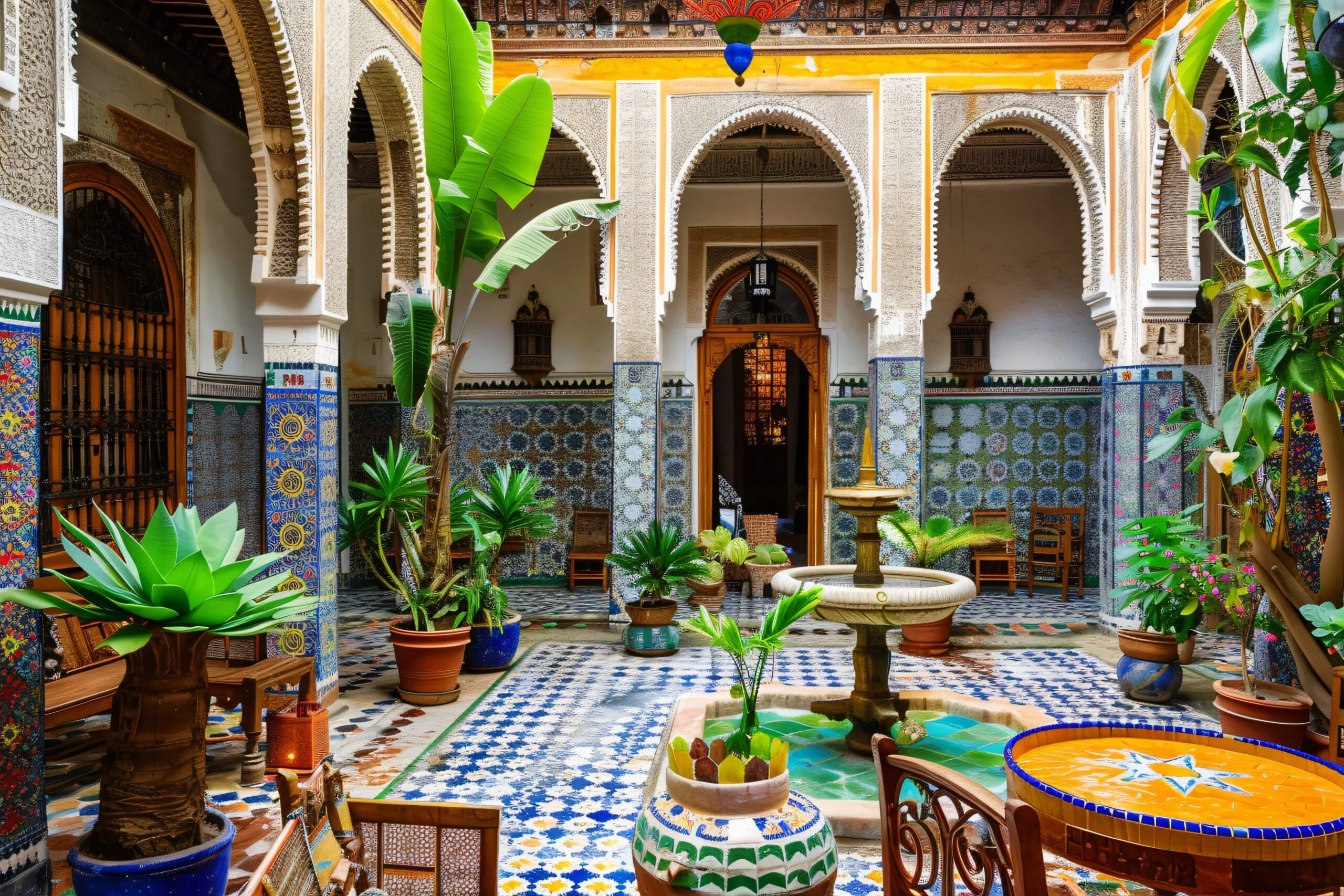
Deciding where to stay in Marrakech comes down to one honest choice: the historic Medina, for atmosphere and courtyard riads, or Gueliz, the modern new town, for wide streets and easy taxis. First-time visitors who want the classic feel should base themselves in the Medina, while those who prefer contemporary comfort lean to Gueliz or Hivernage. Palmeraie, out among the palm groves, suits a quieter resort escape.
This guide compares all four areas, explains who each one suits, and shows how to pick the right riad. We arrange handpicked riads in every one of these neighbourhoods, so we will be straight about the trade-offs rather than talk up one area over another.
Where to stay in Marrakech: the quick answer by traveller type
Marrakech is compact, and no neighbourhood is more than a short taxi ride from the next. The airport sits about 4 km from the medina, roughly a 15-minute drive, so your choice is about atmosphere and pace rather than distance. Here is the fast version, by the kind of traveller you are.
| Neighbourhood | The feel | Best for | Getting around |
|---|---|---|---|
| Medina (old town) | Historic walls, souks, riads, Jemaa el-Fna | First-timers, couples, culture lovers | Mostly on foot; taxis stop at the nearest lane |
| Gueliz (new town) | Wide boulevards, cafes, galleries, shopping | Modern comfort, longer stays, repeat visitors | Flat, walkable streets; taxis to the door |
| Hivernage | Leafy avenues, big hotels, spas, nightlife | Hotel and pool lovers, night owls | Walk to Gueliz and the medina edge; easy taxis |
| Palmeraie | Palm groves, resorts, large pools, quiet | Families, honeymooners, slow escapes | Taxi or transfer needed for every outing |
Where is the Medina, and who should stay there?
The Medina is the walled old city, a UNESCO World Heritage Site since 1985. Its heart is Jemaa el-Fna, the square whose cultural space UNESCO proclaimed a Masterpiece of the Oral and Intangible Heritage of Humanity in 2001, then inscribed in 2008.
Inside the walls you sleep in riads, traditional houses built around a planted courtyard. You wake to birdsong and the call to prayer, then step straight out into the souks. This is the Marrakech most people picture, and you can walk to almost everything.
The trade-offs are real. Taxis cannot always reach your door, so you finish the last stretch on foot with a porter for the bags. The lanes are busy and easy to get turned around in, though the distances are short.
For most first-timers, the atmosphere earns its keep. Design riads such as Riad BE and Riad Jardin Secret suit couples and creatives, while classic addresses like El Fenn and Riad Kniza lean romantic. You can browse our handpicked riads in Marrakech arranged by area.
Is Gueliz, the new city, a better base?
Gueliz is the Ville Nouvelle, built in the French era on a grid of wide boulevards. Expect boutiques, art galleries, coffee shops and some of the city’s best restaurants, with the Majorelle Garden and the Yves Saint Laurent Museum on its edge.
The practical wins are clear: taxis pull up to your door, pavements are flat and stroller-friendly, and modern rooms are easy to find. You trade a little old-city romance for comfort and quiet. It is a walk of around 20 minutes, or a short taxi ride, to Jemaa el-Fna.
Gueliz suits repeat visitors, longer stays, late arrivals and anyone who values an easy night’s sleep.
Planning to work remotely from the city for a month or more? Our guide to Morocco for digital nomads covers visas, internet and the best areas for long stays.
What about Hivernage?
Hivernage sits between Gueliz and the medina walls. It is leafy and upmarket, with large hotels, spas, clubs and a casino, and taxis are easy to hail.
You are within walking distance of both the new town and the edge of the old city. This is the pick for travellers who want a full-service hotel, a pool and some nightlife without sleeping inside the maze of the medina. The mood is upscale and calm, and it is an easy base if you are splitting your evenings between a hotel pool and dinners in the old city.
Is Palmeraie worth it?
The Palmeraie is a belt of palm groves about a 15-minute drive north of the centre. Here you find resort hotels with big pools, gardens and room to breathe, calm and green and a world away from the souks.
The catch is simple: you are out of town. Every meal in the medina or trip to a sight means a taxi or a transfer.
Several properties also offer golf, tennis and full spa facilities, which makes the area a destination in itself. Palmeraie works best for families who want a pool, honeymooners after downtime, or a split stay.
What about the Kasbah and other medina quarters?
The Medina is not one place but many small quarters, and a few are worth knowing by name. The Kasbah, in the south of the old city, is the historic royal district, home to the Bahia Palace, the El Badi Palace and the Saadian Tombs. It is quieter than the central souks and home to ultra-luxury addresses such as La Sultana.
To the northwest, the Mouassine and Dar el Bacha quarters are handsome, slightly calmer pockets full of design-led riads, boutiques and rooftop cafes. Wherever you land inside the walls, ask your riad to send someone to meet your taxi, because the lanes rarely show up cleanly on a map or a driver’s sat-nav.
Medina vs Gueliz: which should first-timers choose?
If this is your first trip and you want the postcard Marrakech, choose the Medina. You will step straight into the souks, the squares and the riad courtyards that make the city memorable.
If you value modern comfort, easy transport and calmer evenings, choose Gueliz. Light sleepers should note that the medina can be loud, with early calls to prayer and late-night restaurant noise.
Plenty of travellers do both: two or three nights in the medina for the atmosphere, then a switch to Gueliz, Hivernage or Palmeraie to unwind. It also helps to settle the building type before the area, and our guide to the riad-versus-hotel choice and our roundup of the best riads for every budget both make that call easier.
“Marrakech rewards people who match the neighbourhood to their trip, not just their budget,” say the riad specialists at Moratra, who send every traveller a personal shortlist within 24 hours.
How much does it cost to stay in Marrakech?
Price follows style more than postcode. Budget guesthouses and simple riads are the cheapest way in, mid-luxury riads sit in the middle, and palace-grade addresses top the scale. What you pay reflects location, room size and level of service more than the neighbourhood alone.
Across our own collection, handpicked riads run from €110 to €1,400 per night, so there is a real option at most budgets. Riads typically include a homemade breakfast, and most can arrange an airport transfer, which softens the gap with a conventional hotel. Use the table below to match a riad style to an area and a type of traveller.
| Riad style | Typical area | Best suited to |
|---|---|---|
| Design and boutique | Central medina | Couples and creatives (for example Riad BE, Riad Jardin Secret) |
| Classic mid-luxury | Medina | First-time luxury and romance (for example El Fenn, Riad Kniza) |
| Ultra-luxury | Kasbah and medina | Once-in-a-lifetime stays (for example La Sultana) |
| Family-friendly | Calmer northern medina | Families with children (for example Riad el Aaiún) |
| Quiet and lesser-known | Medina back lanes | Second-time visitors seeking calm (for example Riad 42) |
How do you choose the right riad in Marrakech?
Once you have settled on an area, five quick questions narrow the shortlist:
- How far will you carry your bags? Deep-medina riads mean a short walk from the taxi, while Gueliz and Hivernage hotels offer door access.
- Do you want a pool? Riad plunge pools are small and shaded; Palmeraie resorts have large ones.
- How central do you need to be? Steps from Jemaa el-Fna is lively, while the northern medina is calmer.
- What is your nightly budget? With rates from €110 to €1,400, it helps to set a range before you look.
- Do you want the stay woven into experiences? If so, ask about riad-and-experience bundles.
Prefer a shortcut? Tell us your dates, group size and the vibe you want, and our riad specialists send a personal shortlist within 24 hours. We also weave stays into experiences, pairing a riad night with a sunrise hot-air-balloon flight over the Atlas foothills, a private Agafay sunset dinner, or a multi-night Sahara expedition to the dunes at Erg Chebbi.
If you would rather have the whole trip handled, see our private luxury Morocco tours, or start with handpicked riads sorted by neighbourhood.
Is Marrakech a safe and popular place to visit?
Marrakech is both safe for the usual city-break precautions and hugely popular. Morocco welcomed a record 17.4 million visitors in 2024, according to the Ministry of Tourism, and the pace held into 2025 with 13.5 million arrivals by the end of August, up 15% year on year. Its neighbourhoods are well used to hosting travellers of every style.
For more options, browse all our Marrakech tours and excursions.
Frequently asked questions
Which area is best for first-time visitors to Marrakech?
The Medina, ideally within walking distance of Jemaa el-Fna. It puts you inside the atmosphere most people come for, with riads, souks and squares on your doorstep. If you would rather have modern comfort and quiet nights, base yourself in Gueliz instead.
Is it safe to stay in the Marrakech Medina?
For most visitors, yes. The medina is busy and well travelled, and riads keep staff on hand day and night. Take the usual city-break precautions, keep valuables close in crowded souks, and expect to get gently lost, since the lanes are a maze but the distances are short.
Do I need a car in Marrakech?
No. The city is compact and taxis are cheap and plentiful, so most visitors never need to drive. A car is a liability inside the medina, where the lanes are pedestrian, and Palmeraie stays are better served by taxis or private transfers.
How far is Marrakech airport from the city?
Marrakech Menara Airport is only about 4 km from the medina, a drive of roughly 15 minutes in normal traffic. A pre-booked transfer or an official airport taxi will have you at your riad quickly.
How many nights should you spend in Marrakech?
Three to four nights is a comfortable first visit, enough for the medina, the gardens and a day trip to the Atlas Mountains or Agafay. Add a night or two if you want to slow down by a Palmeraie pool or fit in a longer desert trip.
Which neighbourhood is best for families?
Palmeraie resorts offer pools and space that suit children well. In the old city, a family-friendly riad in the calmer northern medina, such as Riad el Aaiún, keeps you close to the sights at a gentler pace.
Where should couples stay in Marrakech?
A design or mid-luxury riad in the medina is hard to beat for romance, with private courtyards and rooftop dinners. Couples who want hotel facilities and nightlife often prefer Hivernage.
Is the Medina or Gueliz better for food and nightlife?
Gueliz and Hivernage have the city’s liveliest bars, clubs and modern restaurants. The medina leans towards rooftop dinners, traditional Moroccan tables and earlier nights, though its food scene is growing fast. For a mix of both, stay on the medina edge closest to Hivernage.
Still unsure which Marrakech neighbourhood fits your trip? Tell us what you are planning and we will point you to the right area and the right riads, and we answer for free, with no obligation.
