
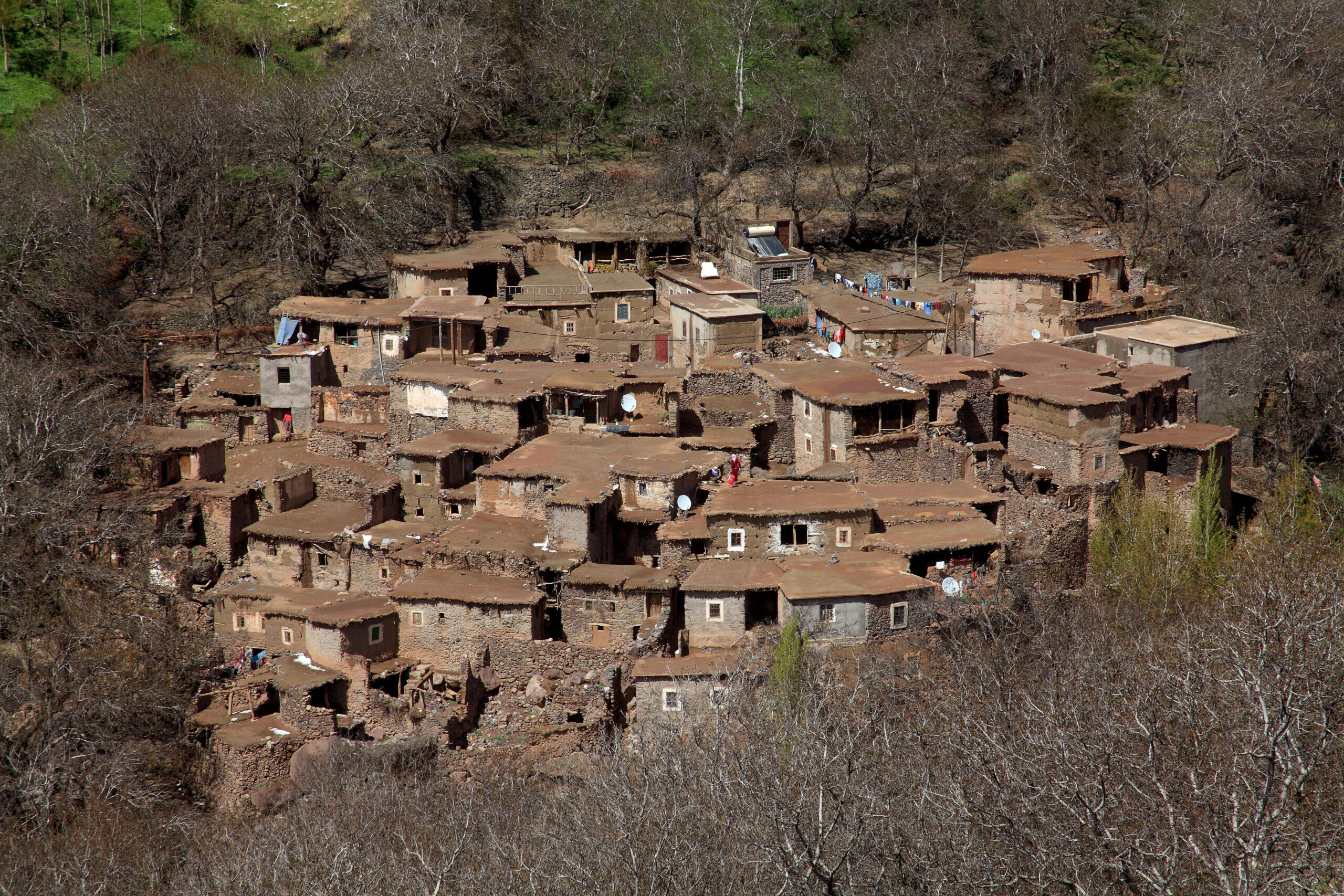
A Berber village experience from Marrakech means leaving the city for the High Atlas foothills to spend a few hours with an Amazigh (Berber) family. In practice, that is a guided walk through a mountain hamlet, sweet mint tea in a family home, and a simple home-cooked lunch. The best day trips reach the Ourika Valley, the Imlil area below Mount Toubkal, or a wider loop through the Atlas valleys.
All of these sit within about one to two hours of the city, so they work as an easy day out. This guide, written from a local operator’s point of view, explains where the trips go, what really happens, and the honest trade-offs, so you know what you are booking before you set out.
What is a Berber village experience from Marrakech like?
At its simplest, it is a half or full day in the mountains built around meeting people, not ticking off sights. A guide drives you out of Marrakech, the land turns green and terraced, and you walk into a village of flat-roofed earthen houses. You are welcomed with mint tea, shown how bread, argan oil or crafts are made, and often share a tagine lunch.
The pace is slow and the highlight is human, not scenic. Expect terraced fields, walnut and fruit trees, a river or waterfall nearby, and wide mountain views. If you want the booking details, our Berber village experience page lists the options; this article focuses on what the day feels like on the ground.
Where do Berber village day trips from Marrakech go?
Three areas take most visitors, and each is close enough for a day trip. They have slightly different characters, so the right one depends on how far you want to drive and what you want to see.
| Area | Drive from Marrakech | Landscape | Cultural highlight | Best for |
|---|---|---|---|---|
| Ourika Valley (to Setti Fatma) | ~1 to 1.5 hours (up to ~60 km) | River, waterfalls, green terraces | Roadside villages, tea houses, a weekly souk | An easy first visit; families |
| Imlil & the Toubkal foothills | ~1.5 hours (63 km) | Walnut & apple terraces at ~1,800 m | Working mountain hamlets, mule paths | Walkers wanting the most authentic feel |
| The wider Atlas valleys (Asni, Oukaïmeden) | Full-day loop | Mountain passes, plateaus, markets | Several villages and views in one day | Seeing more in a single trip |
The Ourika Valley is the closest and greenest, and our Ourika Valley guide covers its waterfalls and roadside stops in detail. For higher, quieter hamlets, the Imlil area sits at about 1,800 metres and is the gateway to Mount Toubkal, North Africa’s highest peak at 4,167 metres, according to Wikipedia’s Toubkal entry. A dedicated Imlil day trip from Marrakech or a broader Atlas Mountains day trip from Marrakech both reach these villages.
Who are the Berbers, and why does it matter?
The people you meet are Amazigh, the indigenous inhabitants of North Africa. “Berber” is the older outside name, while “Amazigh” (plural Imazighen) is what many prefer today. They are far from a minority footnote.
Minority Rights Group estimates Morocco’s Amazigh population at roughly 13.3 to 20 million people, about 40 to 60 per cent of the country, with a 2016 census recording 28 per cent as Tamazight speakers. Tamazight became an official language under the 2011 constitution, a change many Amazigh had long campaigned for. Their culture runs through daily Moroccan life, in food, crafts, music and place names.
As Amazigh community leader Adil Adasko told Al Jazeera of the Amazigh new year, “This day is an occasion to highlight our strong attachment to the land and pay tribute to those who defended our freedom.” A village visit is a small, warm window into that living identity. For deeper background, see our guide to Berber culture in Morocco.
How a village day usually unfolds
No two visits are identical, but most follow a familiar rhythm. Here is how a typical Ourika or Imlil day runs, from start to finish:
- Morning pickup in Marrakech and a scenic drive into the foothills, with a photo stop as the plains give way to mountains.
- A guided walk into a village, often with a local resident, past terraced fields, irrigation channels and fruit trees.
- Mint tea in a family home, where you see everyday life up close and can ask questions through your guide.
- A home-cooked lunch, usually a tagine or couscous, with bread baked in a wood-fired oven.
- Free time by a river or waterfall, or a short onward walk, before the drive back to the city by late afternoon.
How to be a respectful guest
A village visit is someone’s real home, not a stage set, and a little care makes the day better for everyone. A few simple habits go a long way:
- Ask before photographing people, especially women; a smile and a gesture are enough.
- Dress modestly, with shoulders and knees covered, out of respect for a conservative rural area.
- Accept the mint tea. Sharing it is the heart of Amazigh hospitality, and turning it down can feel cold.
- Buy something small if you can, such as argan oil, a rug or crafts, since tourism income matters here.
- Learn two words: “azul” (hello) and “tanmirt” (thank you) in Tamazight. They are always appreciated.
Is it authentic, or just a tourist show?
This is the honest part. Some “Berber village” stops are lightly staged: a quick tea, a firm sell on rugs or argan oil, then back in the van. Others are genuine visits to working hamlets where tourism is only one income among several.
The difference is usually the guide and the pace. A rushed half-day with three “workshops” and a sales table leans commercial, while a slower day with time to walk and talk tends to feel real. Before booking, ask how long you spend in the village, whether lunch is with a family, and how many stops are planned.
When is the best time to visit?
Spring, from March to May, is the finest window, when the valleys are green, rivers run full from snowmelt, and fruit trees blossom. Autumn, from September to November, is also mild and clear. Summer days are hot in the city but cooler in the mountains, so an early start helps.
Winter brings snow to the high peaks and cold nights, though lower villages such as those in Ourika stay accessible. It is also worth timing your visit for a weekly souk, or market day, when villagers trade produce and livestock. A souk adds a layer of everyday life that a set-piece visit cannot match.
Planning your visit
If you would like to meet a Berber family on a day trip, the simplest path is to tell us what you want. Share your dates, how far you are happy to drive, and the kind of village you have in mind, from an easy valley visit to a higher mountain hamlet. We will suggest a route and send a tailored plan.
For more ideas, browse all our day trips from Marrakech. When you are ready to plan, or if you have any questions, reach us through our contact page — we answer for free, with no obligation.
Frequently asked questions
What is a Berber village experience from Marrakech?
It is a day trip from the city into the High Atlas foothills to visit an Amazigh (Berber) village. A typical visit includes a guided walk through the hamlet, mint tea in a family home, and a home-cooked lunch, with mountain scenery along the way. It is more about meeting people than seeing monuments.
How far is the Berber village from Marrakech?
It depends on the area you choose. The Ourika Valley is about one to one and a half hours away, up to roughly 60 kilometres to Setti Fatma, while the Imlil area is about 63 kilometres and 1.5 hours south. All three areas are comfortable to reach and return from in a single day.
Is a Berber village day trip suitable for families?
Yes, and the Ourika Valley in particular suits families, with short walks, a river and waterfalls, and easy access. Children are usually welcomed warmly in the villages, which can be a highlight of the trip. For higher, longer walks around Imlil, weigh the distance against your children’s stamina and start early in summer.
What should I wear and bring?
Dress modestly, with shoulders and knees covered, out of respect for rural communities, and wear sturdy shoes for uneven paths. Bring a hat, sunscreen, water and a light layer, as mountain villages are cooler than Marrakech. A little cash is useful for crafts, tips or a small market purchase.
Do I need a guide, or can I visit independently?
You can reach the Ourika Valley by grand taxi, but a guide adds far more to the day. A local guide handles the driving, translates, and, most importantly, opens doors to family homes you could not enter alone. For the Imlil area and remoter hamlets, a guide also keeps the walking safe and the pace comfortable.
Is the experience authentic?
It can be, but the quality varies from trip to trip. Some stops are lightly staged around souvenir sales, while others are genuine visits to working villages, and the pace and guide make the difference. Ask how long you spend in the village, whether lunch is with a family, and how many stops are planned before you book.
