
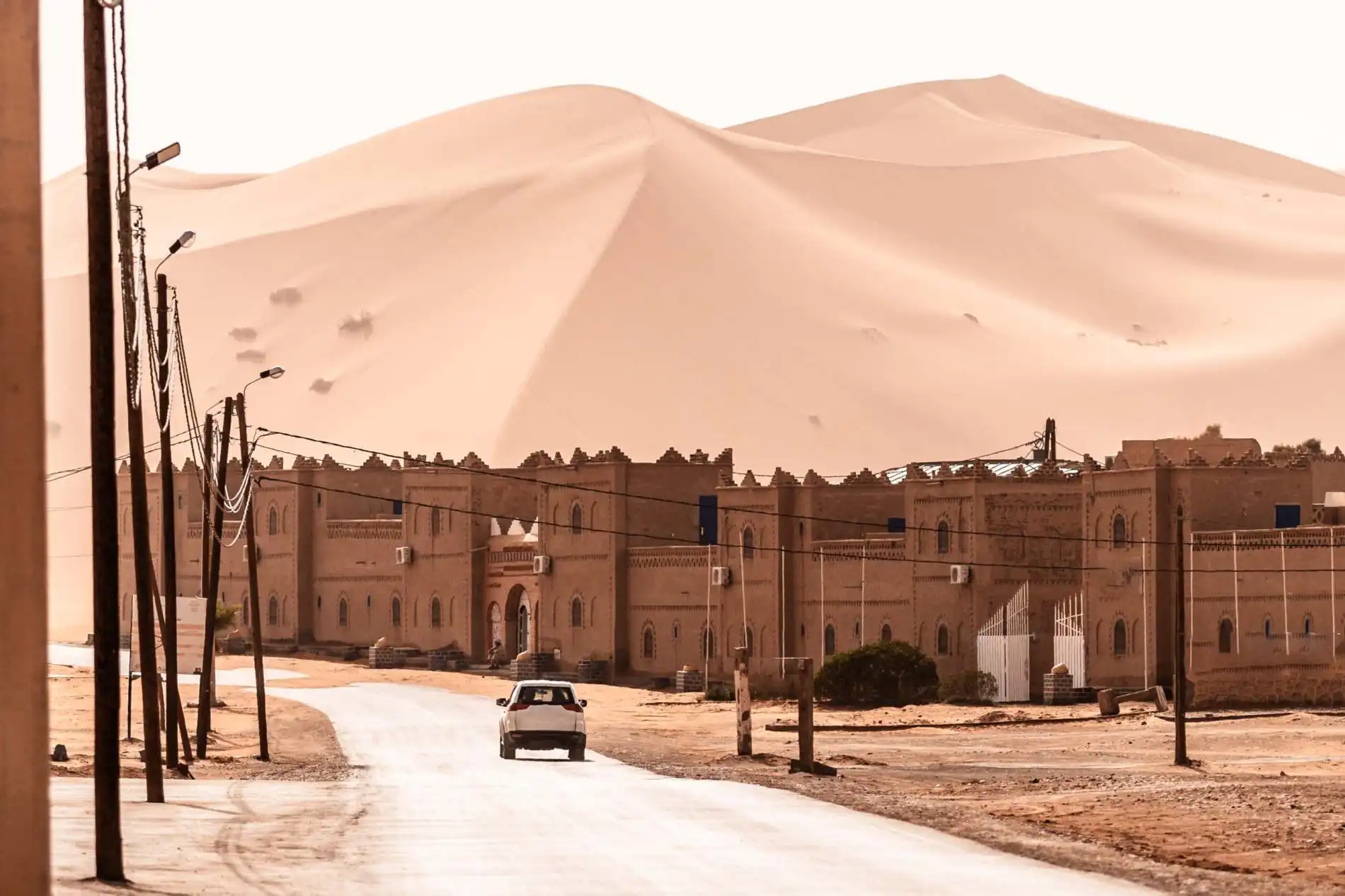
The drive from Marrakech to Merzouga is one of those journeys where the road itself is half the holiday. You start in the pink-walled chaos of Marrakech, climb over the High Atlas on a pass that tops out higher than almost anywhere else you can drive in North Africa, then watch the landscape unravel into oasis valleys, film-set kasbahs, and finally a sea of orange sand on the edge of the Sahara. It’s roughly 560 km (348 miles) of constantly changing scenery, and doing it under your own steam gives you the freedom to stop wherever the view demands it.
This guide walks you through the whole route stop by stop: how long it really takes, where to break the journey, what the driving is actually like, and how to time it so you arrive at the dunes for sunset rather than in the dark. Every distance and figure below is drawn from official and well-established sources, so you can plan with numbers you can trust.
The Marrakech to Merzouga route at a glance
The classic route follows the N9 highway southeast out of Marrakech, over the Tizi n’Tichka pass, down to Ouarzazate, then east along the N10 through the Dades and Todra valleys before turning south to Merzouga and the Erg Chebbi dunes.
Here are the numbers worth memorising before you set off:
- Total distance: about 560 km (348 miles) one way.
- Pure driving time: 9–10 hours nonstop — but nobody should do it nonstop.
- Marrakech to Ouarzazate: roughly 200 km, about 4–5 hours over the pass.
- Recommended pace: two days minimum, three days if you want to actually see the stops.
Could you grind it out in a single very long day? Technically yes. Should you? No. The mountain section is slow, the photo stops are irresistible, and arriving exhausted at a desert camp defeats the point. Treat the drive as a two- or three-day adventure and the trip transforms from an endurance test into the best part of your Morocco itinerary.
If you would like us to arrange it for you, see our 4-day desert tour from Marrakech to Merzouga.
So which split is right for you? A two-day version works if your main goal is simply to reach the dunes: drive hard on Day 1 to around the Dades Valley, then finish the run to Merzouga on Day 2 with a single big stop. A three-day version turns the journey into the trip itself, giving you unhurried time at Aït Benhaddou, a proper walk through Todra Gorge, and a relaxed final afternoon at the sand. If this is your first time in southern Morocco, the extra day is the easiest money you’ll spend — the region rewards lingering far more than rushing.
Should you self-drive or take a guided tour?
Self-driving suits travellers who like setting their own rhythm, stopping for an unplanned mint tea in a Berber village, or lingering an extra hour at a viewpoint. A hire car gives you total flexibility, and the main roads on this route are paved and in good condition.
That said, this isn’t a motorway cruise. You’ll handle hairpin bends on the Atlas climb, share the road with trucks and the occasional flock of sheep, and navigate towns where signage can be patchy. If you’d rather watch the scenery than the satnav — or you simply don’t want to drive after a long-haul flight — a private driver removes all of that friction. Both approaches get you to the same dunes; it’s purely a question of how you want to spend your energy.
If you do hire a car, a few practical notes. Most rentals in Morocco are manual transmission, so reserve early if you specifically need an automatic. A compact car is fine for this route — you don’t need a 4×4 for the main roads — but check that the spare tyre and jack are present before you leave the depot. Confirm exactly what your insurance excess is and whether it covers the desert pistes (it usually doesn’t, and you won’t need them anyway). Keep small change for guarded parking, where an attendant in a high-visibility vest will watch your car for a few dirhams, and never leave valuables visible inside.
Day 1: Marrakech over the Tizi n’Tichka to Aït Benhaddou
Leave Marrakech early. The first big milestone is the Tizi n’Tichka, the mountain pass that carries the N9 across the High Atlas at roughly 2,260 metres (7,415 feet) — the highest major mountain pass in North Africa. The road has been widened and improved in recent years, but it’s still a winding climb, so allow more time than the distance suggests. Pull over at the marked viewpoints near the summit; the panorama back across the mountains is worth every minute.
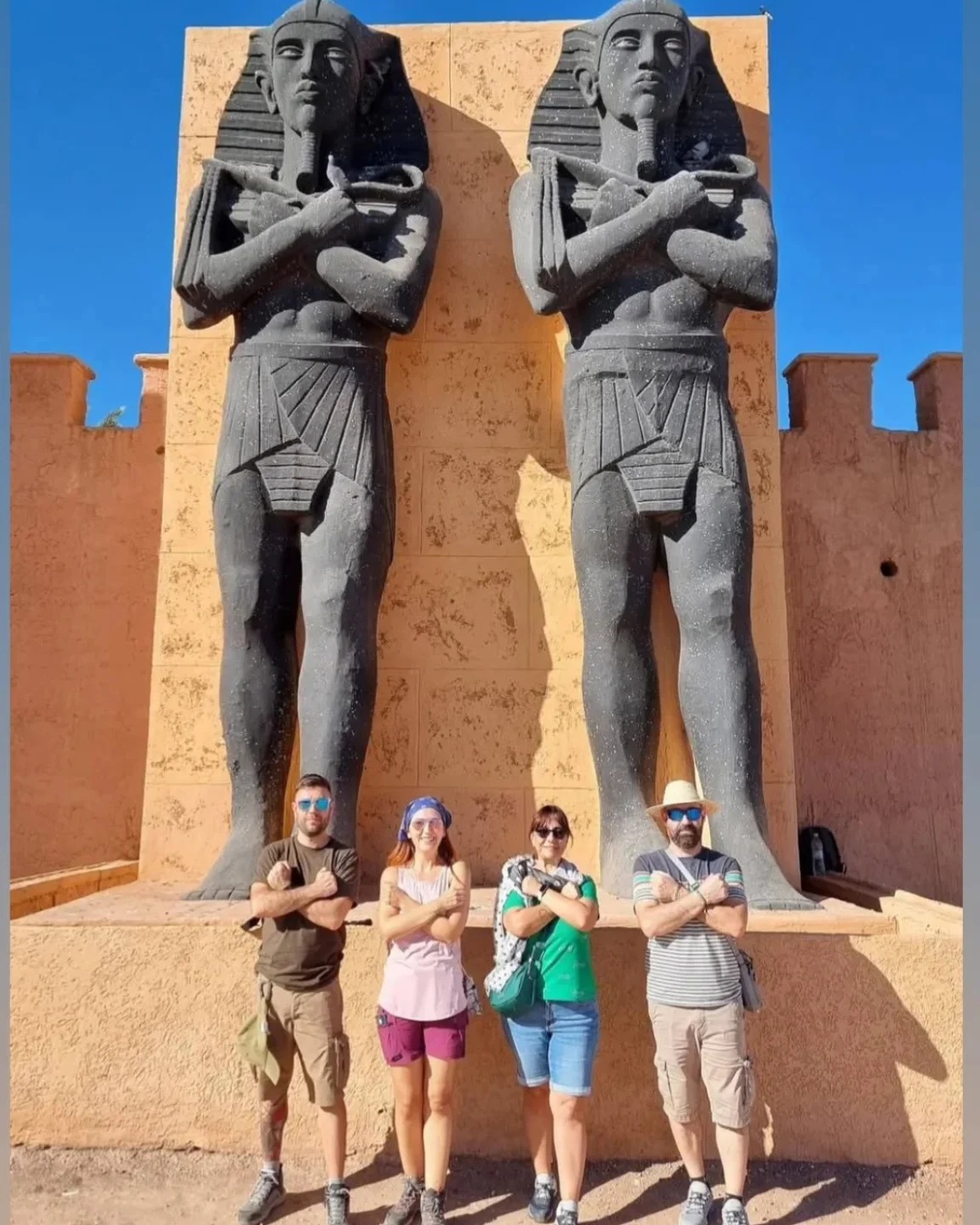
Drop down the southern slopes and the world changes colour. About 200 km and four to five hours from Marrakech you reach Ouarzazate, the “Hollywood of Morocco,” home to Atlas Studios and a launchpad for the desert. Just before it, detour to Aït Benhaddou, the fortified earthen village that has stood in for ancient cities in countless films. It’s been a UNESCO World Heritage Site since 1987, and walking up through its crowded clay towers to the granary at the top is one of the route’s highlights. If you want the full backstory on the ksar and the studio town next door, our Aït Benhaddou and Ouarzazate guide covers both in detail.
Ouarzazate itself is worth an hour even if you don’t stay. Film buffs can tour Atlas Studios, one of the largest film studios in the world by surface area, and the restored Kasbah Taourirt on the edge of town gives a sense of how these mud-brick strongholds once worked. From here the palm-lined road east already feels like the desert is pulling you in.
A comfortable Day 1 ends around Ouarzazate or pushes a little further east into the Skoura palm grove or the Dades Valley, where kasbah guesthouses make a peaceful first overnight. Skoura’s oasis hides several beautifully restored kasbahs among the palms, and waking up to birdsong in the greenery is a lovely contrast to the dry country on either side of it.
Day 2: Through the Dades and Todra gorges
Day 2 is the canyon day. Heading east on the N10 you pass through the Valley of Roses around Kalaat M’Gouna — famous for the rosewater distilled here each spring — and the dramatic switchbacks of the Dades Gorge, where the road folds back on itself in a series of tight loops that photograph beautifully from the lookout above.
Further east near Tinghir lies the showstopper: the Todra Gorge (Todgha Gorge). Here a shallow river runs through a limestone canyon whose sheer walls rise as high as 160 metres (525 feet) and narrow to as little as 10 metres across at the tightest point. You can park and walk along the canyon floor in the cool shade between the cliffs — a welcome break from the car and a favourite with rock climbers, who you’ll often spot clinging to the walls overhead. The light is best in the late morning, when the sun reaches down between the cliffs.
From Todra it’s a steady run southeast through Tinejdad to Erfoud, Morocco’s fossil capital, where workshops cut and polish the marine fossils embedded in the local black rock — reminders that this baking desert was once an ocean floor. By now the horizon has flattened and the first hints of sand appear at the roadside. You’re nearly there.
If the gorges are the part you care about most, our Dades Valley and Todra Gorge guide covers the walks, the timing and where to stop.
Day 3: Rissani, Merzouga and the Erg Chebbi dunes
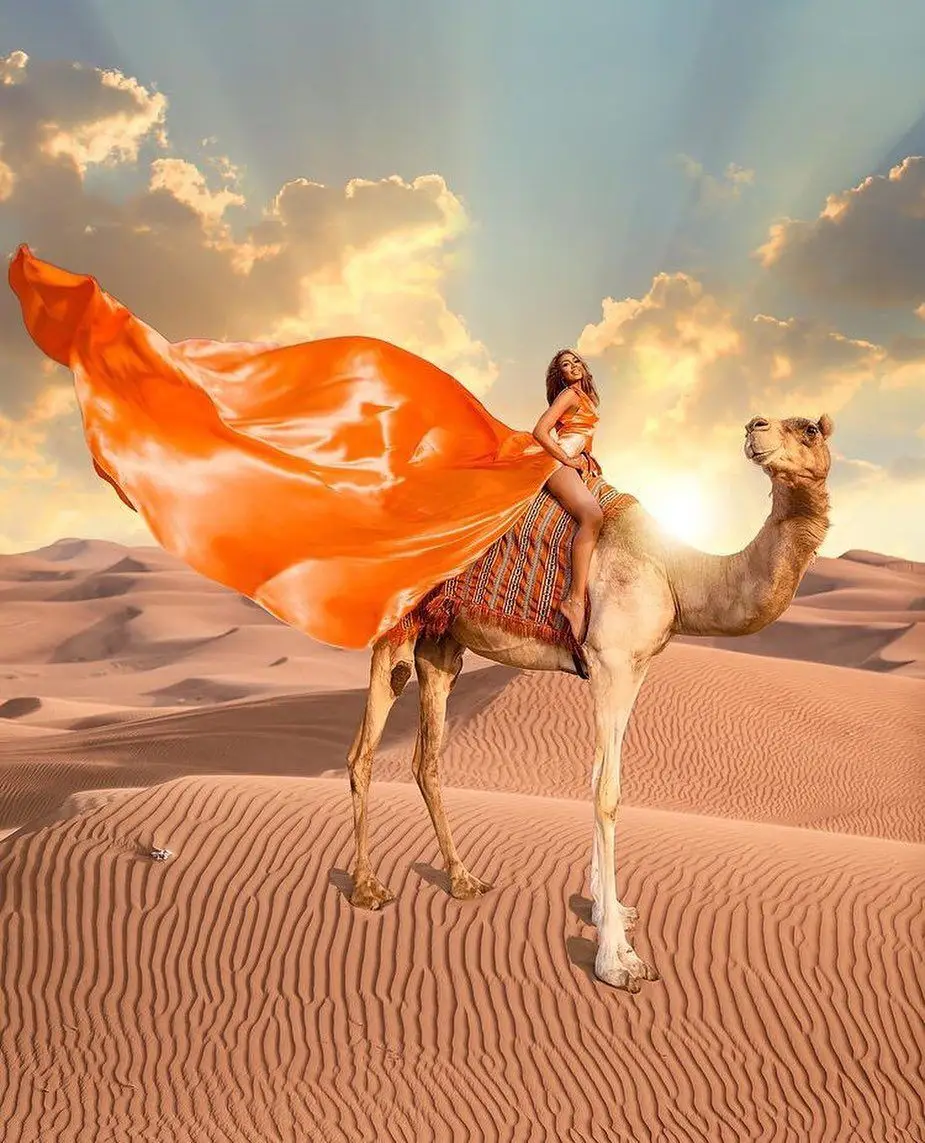
The last leg runs through Rissani, an old caravan town with one of the region’s liveliest markets, before the tarmac delivers you to Merzouga and the edge of Erg Chebbi. This is the postcard Sahara: a band of wind-sculpted dunes that rise to around 150 metres above the surrounding plain and stretch roughly 28 km from north to south along the Algerian frontier.
Beyond the sunset camel ride, Merzouga has more to offer than most people expect. You can try sandboarding down the dune faces, visit the Khamlia village to hear Gnaoua music, look for desert wildlife around the seasonal Dayet Srji lake, or simply climb the highest dune behind your camp for a dawn that’s worth setting an alarm for. Give yourself a full evening and morning here rather than treating it as a quick photo stop — the silence and the night sky are the whole point.
Time your arrival for mid-to-late afternoon. That gives you space to check into a desert camp or auberge, swap the car for a camel or a 4×4, and be up on the sand for sunset, when the dunes turn from gold to deep amber. If planning the desert nights feels like a lot after a long drive, it’s exactly the part most travellers hand over to a specialist — a fully arranged Erg Chebbi desert experience takes care of the camp, the camels and the guide so all you do is enjoy it. Short on time? You can also do it as a 2-day Sahara trip instead of the full three-day drive.
Driving in Morocco: rules and road conditions
A few essentials before you take the wheel. Morocco drives on the right-hand side of the road. Seat belts are mandatory, using a handheld phone while driving is prohibited, and the legal blood-alcohol limit is effectively zero — so don’t drink and drive at all.
Your foreign licence is accepted as long as it’s in the Latin alphabet and carries a photo, but the official advice is to also carry the 1968 version of the International Driving Permit; Morocco no longer recognises the older 1949 permit. Keep your insurance documents (including a green card from your insurer), licence and car registration in the vehicle at all times. The current rules and any security notes are kept up to date on the UK FCDO Morocco travel advice page — worth a glance before you go. Fill up whenever you can on the long desert stretches, watch your speed through villages where radar checkpoints are common, and avoid driving the mountain section after dark.
Best time to make the drive
Spring (March to May) and autumn (September to November) are the sweet spots: mild days, cool desert nights, and clear mountain views. Summer is punishing in the south, where daytime heat near Merzouga can be extreme, while winter brings genuinely cold desert nights and the occasional dusting of snow on the Tizi n’Tichka — check pass conditions in December and January before you climb. Whenever you go, the dunes are best at dawn and dusk, so plan your overnight around those two windows.
Where to stay along the route
Accommodation on this drive is part of the experience, not just a bed. Around Ouarzazate, Skoura and the Dades Valley you’ll find restored kasbah guesthouses — thick clay walls, shaded courtyards and rooftop terraces made for watching the sunset over the palms. They’re atmospheric, often family-run, and a world away from a generic hotel.
At the desert end, you choose between a comfortable auberge on the edge of Merzouga village or a tented camp out among the dunes. The village option keeps your car close and is easy if you arrive late; the camp option trades convenience for the real magic — dinner under the stars, drums by the fire and silence you can almost hear. Camps range from simple to genuinely luxurious, with en-suite tents, proper beds and hot showers at the higher end. Whichever you pick, book the dune-side camp in advance during spring and autumn, when the best ones fill quickly.
What to pack for the road
Bring more water than you think you need, sunglasses and high-factor sunscreen, a light layer for cold desert evenings, and a paper map or offline navigation in case signal drops in the gorges. A scarf doubles as dust protection on the dunes, and small cash denominations make roadside stops and parking tips easier. If you’re driving, keep the fuel tank topped up and stash snacks — stretches between towns can be long and shops sparse.
A couple of comfort items make a real difference too: a phone car-mount for navigation, a charging cable that actually reaches, and a reusable bottle you can refill rather than buying plastic. Footwear matters more than you’d think — you’ll want something you can slip off easily for the sand but that also handles the uneven canyon floor at Todra. And keep your camera or phone somewhere quick to reach, because the best light on this drive rarely waits for you to pull over and dig through a bag.
Frequently asked questions
How long does it take to drive from Marrakech to Merzouga?
Pure driving time is about 9 to 10 hours nonstop over roughly 560 km, but almost no one drives it in one go. Most travellers split the route over two or three days so they can stop at Aït Benhaddou, the Dades and Todra gorges, and arrive at the dunes rested rather than wrecked.
Is the drive from Marrakech to Merzouga safe and easy?
The roads are paved and generally in good condition, including the upgraded N9 over the Tizi n’Tichka. The main challenges are winding mountain bends, trucks, and patchy town signage. Drive in daylight, keep your speed sensible through villages, and the route is well within the comfort zone of a confident driver.
Do I need a 4×4 to reach Merzouga?
No. The tarmac runs all the way to Merzouga village, so an ordinary car reaches the edge of the dunes without trouble. You only need a 4×4 (or a camel) for the soft sand beyond the village to reach a desert camp, and camps almost always arrange that transfer for you.
What’s the best stop to break the journey overnight?
The most popular first-night bases are Ouarzazate, the Skoura palm grove, or the Dades Valley, all roughly half the distance. On a three-day plan, a second night near Tinghir or Todra Gorge sets you up for an easy final morning run into Merzouga in time for sunset.
When is the best time of year to do this road trip?
Spring and autumn offer the most comfortable mix of mild days and cool nights. Summer is very hot in the desert south, and winter nights are cold with possible snow on the high pass. Aim for March to May or September to November for the easiest conditions and clearest mountain views.
Plan the desert end with people who live it
However you tackle the road, the dunes deserve a proper finish. If you’d like the desert half of your trip handled with the same care you’d give it yourself — the right camp, a private guide, camels at sunset and a clean handoff from car to sand — that’s what we do. Browse our Marrakech-to-Erg Chebbi desert journey, request a quote, or simply message us with a question — we’ll answer for free, no obligation. Either way, drive safe, stop often, and save your camera battery for that first crest of orange sand.
Distances and driving times are based on the standard N9/N10 route and may vary with road works, weather and traffic. Verify pass and border conditions locally before travelling.