
4-star riads and hotels
Rabat1 night
A four-star riad or hotel near the Kasbah of the Udayas, a calm first night after the flight.
Casablanca · Rabat · Chefchaouen · Fes · Midelt · Merzouga · Dades Valley · Ait Ben Haddou · Marrakech · Essaouira · Agadir
A private tour from Casablanca to Agadir over 13 days, built around double nights: two in Fes, two in the Erg Chebbi dunes at Merzouga and two in Marrakech, plus a night at Ait Ben Haddou. It adds Volubilis, Moulay Idriss, Khamlia, Skoura, Telouet and the Atlantic coast. 2,245 km, twelve nights. It can also start at another airport - Marrakech, Tangier or Fes - and we run the route from there so no road is driven twice.
This is the slow one. It is our longest route and yet it drives the least - 2,245 km against 2,462 on the twelve-day - because it stops twice in the places that deserve it. Two nights in Fes, so you get a full guided day in the medina instead of a rushed morning. Two nights on the Erg Chebbi dunes, so the desert becomes somewhere you stayed rather than somewhere you slept. Two in Marrakech. And a night inside Ait Ben Haddou, which almost no itinerary includes, so you see the ksar at sunset and again at sunrise with nobody else in it. The extra days buy time, not distance.
Your driver-guide meets you at Casablanca airport. On the way out of the city you stop at the Hassan II mosque, whose minaret stands directly over the Atlantic surf, and then run north up the coast to Rabat. You arrive at the Kasbah of the Udayas as the light turns gold - a walled quarter of blue-and-white lanes above the mouth of the Bou Regreg, quieter and gentler than anywhere else you will sleep on this trip.
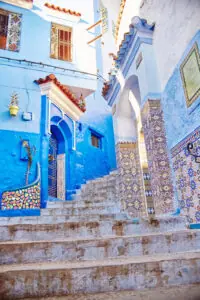
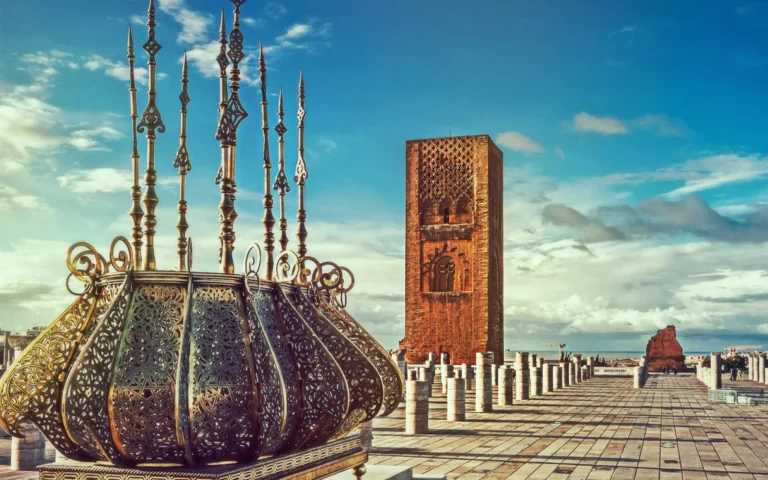
The morning is Rabat: the Chellah, a Roman ruin the Merinids turned into a necropolis and the storks have since turned into a rookery, then the Hassan Tower and the mausoleum of Mohammed V with its ceremonial guards. Then north through cork-oak forest and the hill town of Ouezzane into the Rif. Chefchaouen appears in the late afternoon, the blue medina softening into dusk, and you sleep in a guesthouse inside it.
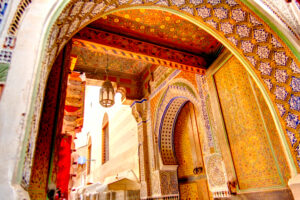
Climb to the Spanish Mosque viewpoint for a last look down over the blue rooftops, then head south. Volubilis is a Roman city standing in open farmland, its mosaic floors and columns still tracing the shape of a forum. Four kilometres away, Moulay Idriss Zerhoun spills down two hillsides, a pilgrimage town with green-tiled roofs. Then Meknes and the vast Bab Mansour gate, and finally Fes in the early evening.
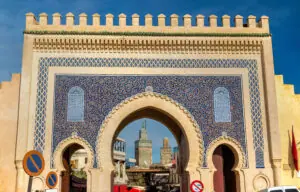
A full day on foot with a licensed local guide, which is the only sensible way into Fes el-Bali - the largest car-free urban area in the world. The Al-Qarawiyyin quarter, the carved cedar and stucco of the Bou Inania madrasa, the Chouara tanneries seen from a terrace above their bowls of dye, the Mellah and the gates of the royal palace. Then you go back to the same riad, which is the point of a second night.
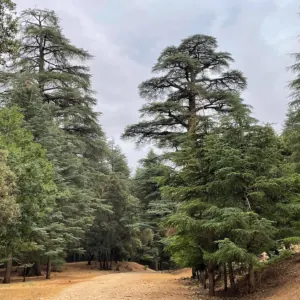
South out of Fes and up onto the Middle Atlas plateau. Ifrane first, an incongruous pocket of alpine architecture with pitched roofs and cool air, then the cedar forest above Azrou where Barbary macaques move through the branches at the roadside. The road runs on to Midelt, a plateau town at the foot of the eastern High Atlas, arriving as the afternoon light settles.
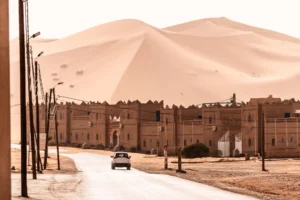
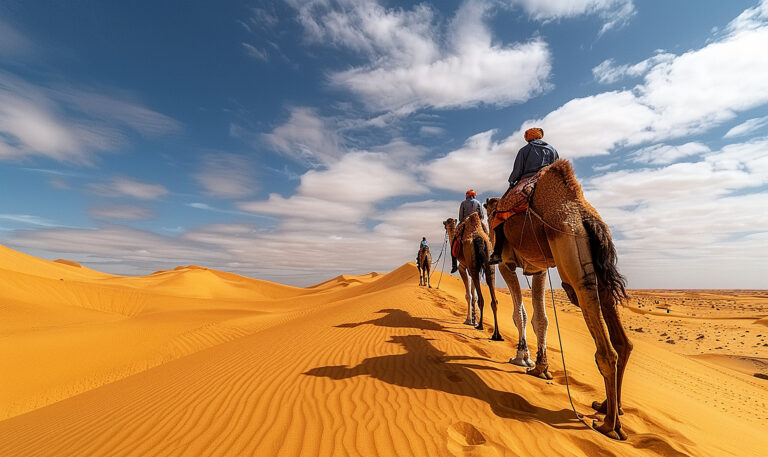
Over the Tizi n Talghemt pass, the road unwinding through folded red hills, then down into the Ziz gorges, where cliff walls give way to a palm sea running to the horizon - one of the great oases of Morocco. Errachidia, then Erfoud, the last town before the sand. At Merzouga camels carry you into the Erg Chebbi dunes for sunset, and the night is spent in a camp with dinner and music beneath the stars.
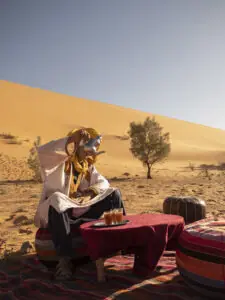
A day in the desert instead of a day crossing it. In the morning you sit in a house in Khamlia while the families there play Gnaoua - drums, metal qraqeb, call and response - a tradition carried north along the trans-Saharan trade routes and kept alive here rather than staged for anyone. Then the old caravan market at Rissani, and back to camp with the afternoon free as the dunes turn from gold to deep amber.
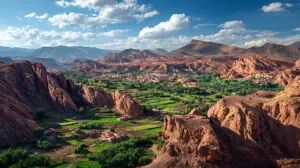
The sunrise you stayed a second night for: the light spreads across the erg in about ten minutes and there is no sound at all. Then west across the desert plain through Tinejdad to the Todgha Gorge, where limestone walls rise three hundred metres above a river narrow enough to step across. Through the palm oasis of Tinghir and on to the Dades Valley, arriving as the light deepens over its wind-carved rock.
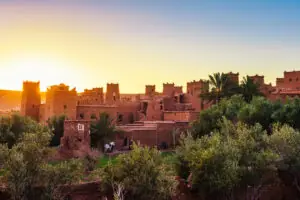
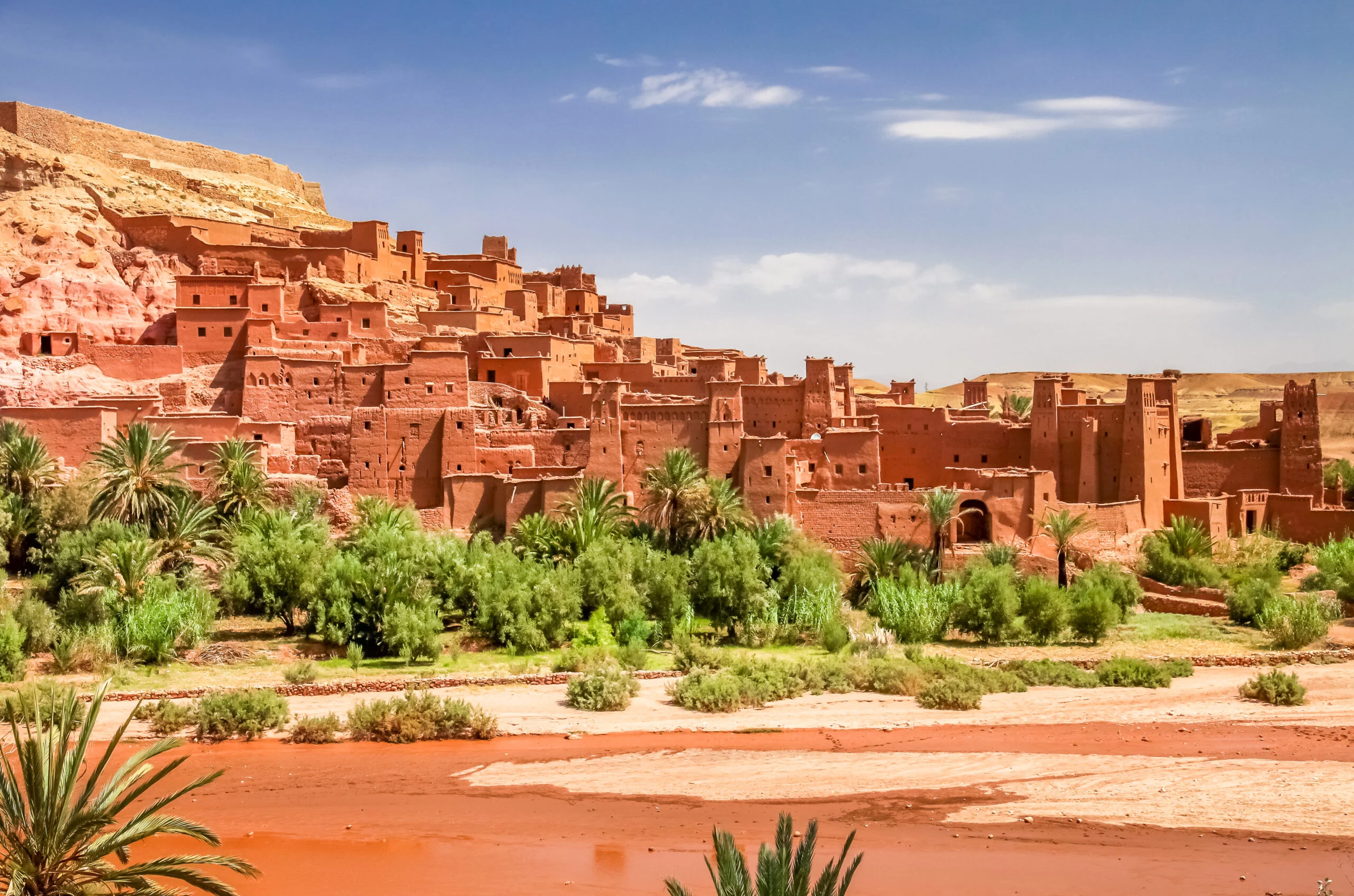
Morning viewpoints over the hairpins of the Dades Gorge and the rock formations locals call monkey fingers. Then Kelaa M Gouna in the Rose Valley, and Skoura, a palm oasis with old earthen kasbahs standing among the trees. In Ouarzazate you visit Kasbah Taourirt, once a seat of the Glaoui lords. And then Ait Ben Haddou, with a local guide, at golden hour - and you stay, which is the difference.
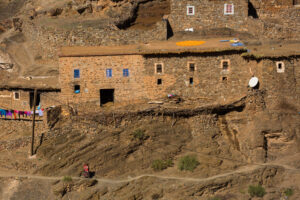
Watch the sunrise catch the ksar before anyone else arrives, then take the old road instead of the new one. The Ounila valley runs north through Tamdaght and Anmiter to Telouet, where the Glaoui kasbah stands half-ruined on the outside and, inside, still holds rooms of painted cedar ceilings and zellij in full colour. Rejoin the highway at the Tizi n Tichka pass at 2,260 metres and descend into Marrakech with the Koutoubia against the evening sky.
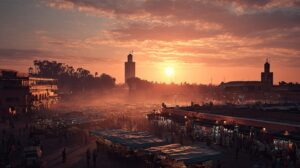
A guided day through the medina: the Koutoubia, the Bahia Palace with its painted ceilings and courtyards, the Saadian Tombs that were sealed for two centuries, and the Jardin Majorelle. Then the souks, which are best entered with someone who knows where the streets come out. The day ends at Jemaa el-Fna as the square fills with smoke, food stalls and drummers at nightfall.
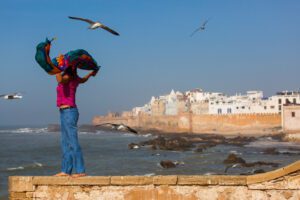
West across the Chichaoua plain and the silver argan groves to the Atlantic. Essaouira is a fortified port with ramparts open to the wind, a harbour full of blue boats and gulls, and a medina of white walls and blue shutters small enough to walk in an afternoon. After eleven days inland the sea air is the point. The night is in a riad inside the walls.
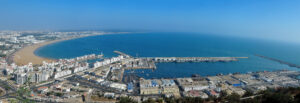
A last morning on the coast road south. Sidi Kaouki, a wide windswept beach where kitesurfers work the Atlantic swell. Imsouane, a crescent bay of fishing boats and one of the longest waves in the country. Taghazout, a surf village of boards and cafes. Then Agadir, where the journey ends with a private drop-off - or, if you are flying from elsewhere, we keep driving and take you to your airport.
A four-star riad or hotel near the Kasbah of the Udayas, a calm first night after the flight.
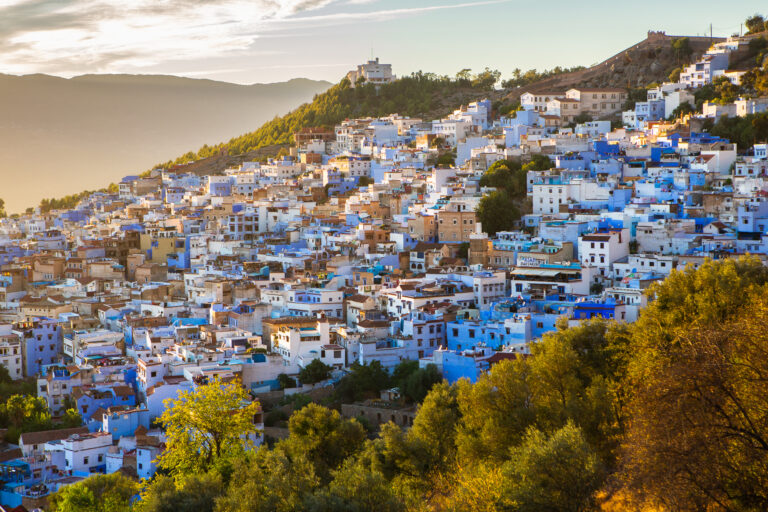
A guesthouse inside the blue medina itself, so the alleys are outside the door at first light before the day visitors arrive.
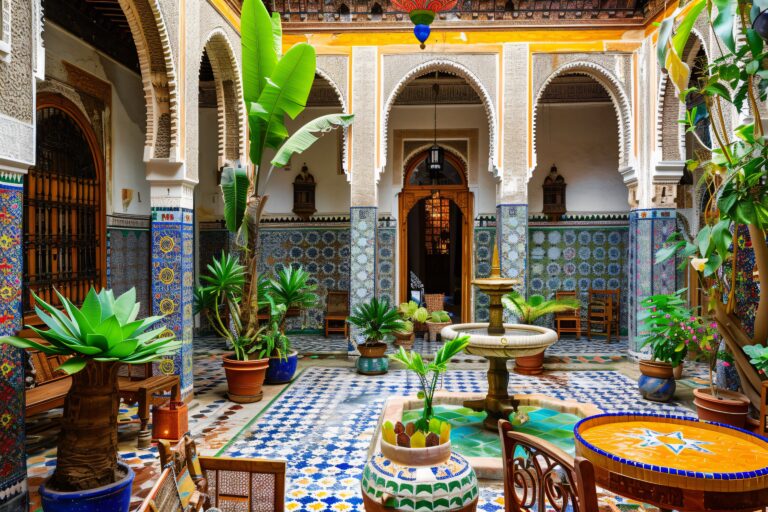
A four-star riad within walking distance of the medina gates, for two nights - the difference between seeing Fes and staying in it.
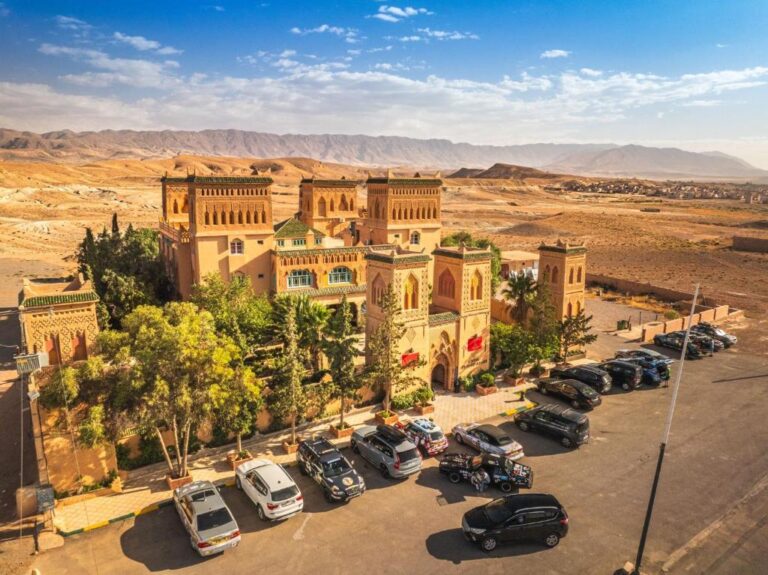
A comfortable guesthouse at the foot of the eastern High Atlas. Midelt is a staging post rather than a destination, and this is an honest, restful stop.
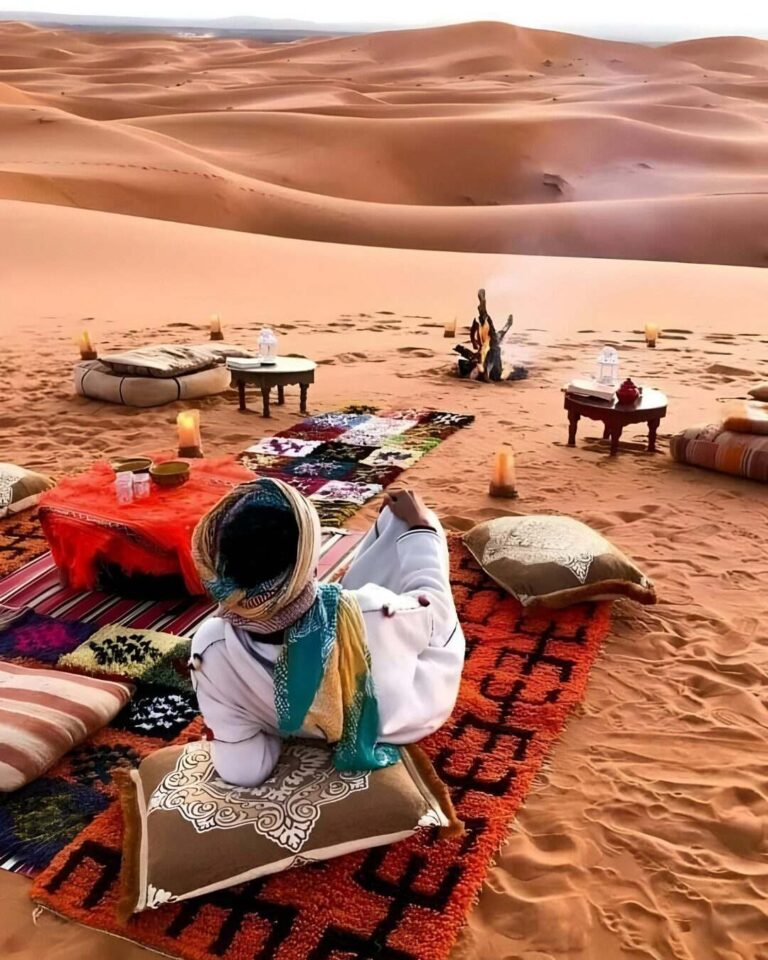
A luxury camp on the edge of the Erg Chebbi dunes for two nights, with private ensuite tents, proper beds, dinner under the stars and a fire circle.
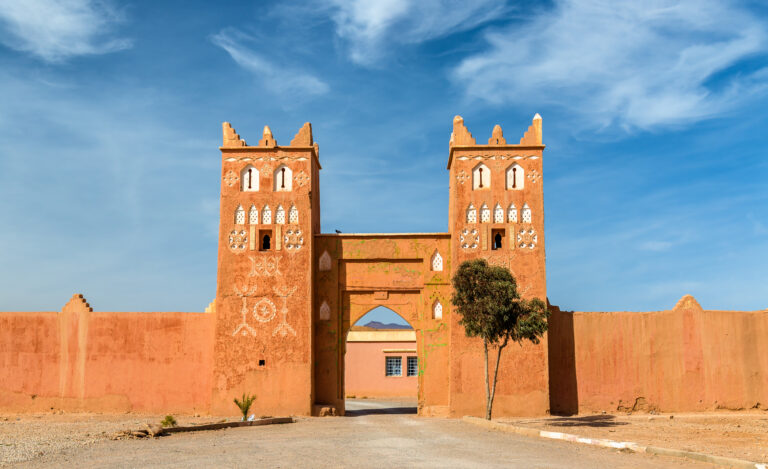
A guesthouse set against the red rock of the gorge, chosen for its terrace and the view down the valley at dusk.
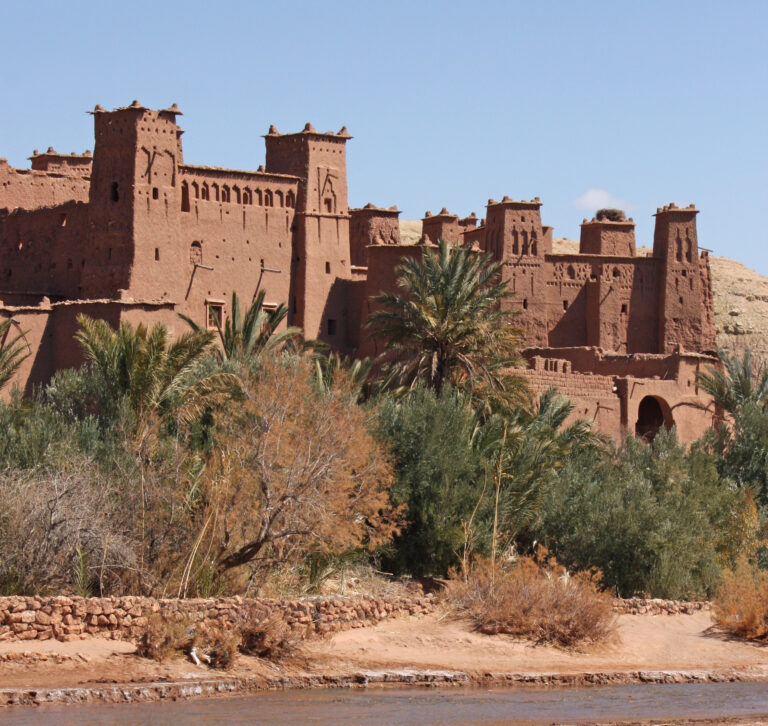
A kasbah guesthouse facing the ksar across the riverbed. Staying here is why you see the site at sunset and at sunrise with no one else in it.
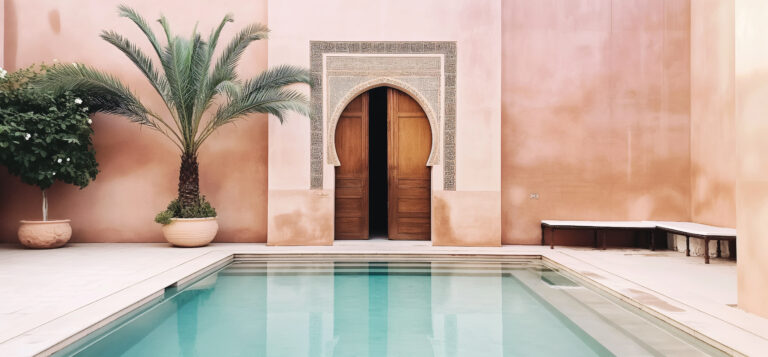
A four-star riad inside the medina for two nights - a courtyard, a roof terrace, and the souks at the end of the lane.
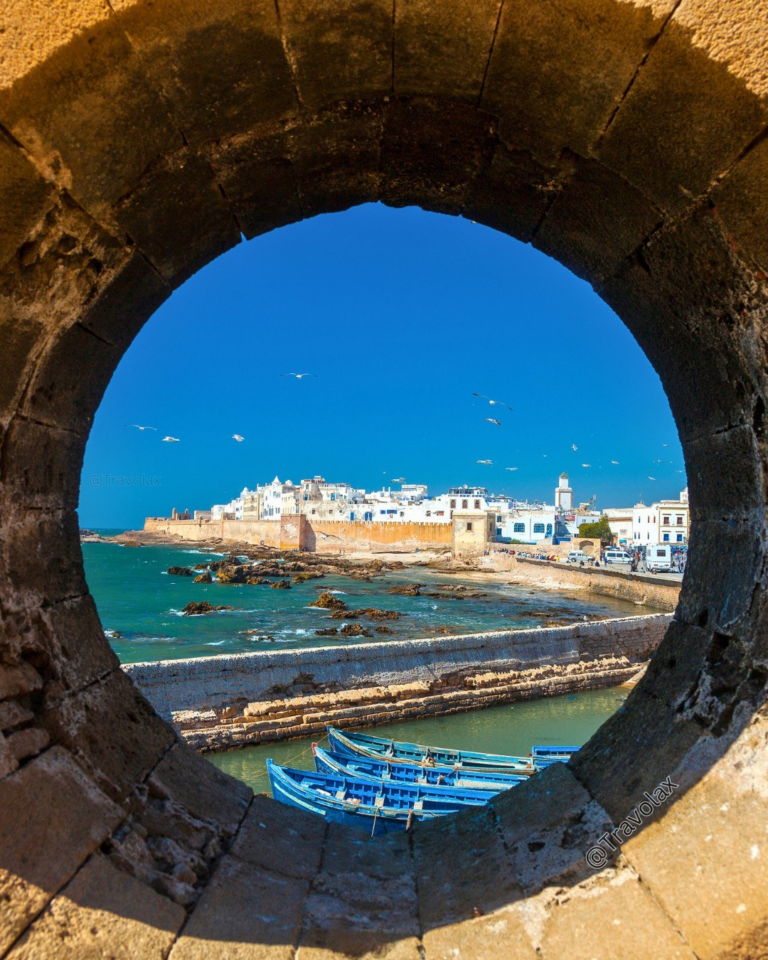
A riad inside the walled town, a few minutes from the ramparts and the fishing port.
March to May and September to November are the best months across this whole route; the desert nights are coldest from December to February and the Atlantic coast stays mild all year
English, French, Spanish, Arabic
2,245 km in total. No driving on days 4 and 11.
Straight answers about the route, the hotels and the deposit. Anything else, ask us on WhatsApp.
Because the extra days are spent staying, not moving. This route covers 2,245 km, which is less than our twelve-day at 2,462 km and our eleven-day at 2,341 km, and it spreads that over more days. Four of the thirteen days involve two hours of driving or less. The longest single day is five hours and ten minutes. Nothing here is a marathon.
In Fes it means a full guided day inside the medina rather than an afternoon - the Al-Qarawiyyin quarter, the Bou Inania madrasa, the Chouara tanneries, the Mellah. At Merzouga it means a whole day in the desert: Gnaoua music at Khamlia, the market at Rissani, and both a sunset and a proper sunrise on the dunes instead of one of each. In Marrakech it means a guided day and then a day of your own.
Almost every itinerary passes through it at midday, which is the worst possible hour. Staying means you cross the riverbed at golden hour with a local guide, and again at sunrise the next morning when the earthen towers catch the first light and the site is empty. It is the single change on this route that guests mention most.
A small village south of Merzouga founded by descendants of people brought north along the trans-Saharan trade routes. Its families keep the Gnaoua musical tradition alive and play it in their own house, not on a stage. It is half an hour of drumming and metal qraqeb in a room with mint tea, and it is one of the few cultural stops on any desert route that is not staged for tourists.
In Agadir on the Atlantic, on day thirteen, after a morning down the surf coast through Sidi Kaouki, Imsouane and Taghazout. There is no night included in Agadir - it is a drop-off. If you would rather fly out of Marrakech, Casablanca, Fes or Tangier, we drive you there instead and the transfer is included. The start is just as flexible: the tour can begin in Marrakech, Tangier or Fes instead of Casablanca, and we then run the route from there without driving the same road twice.
Rabat, Fes and Marrakech are four-star riads and hotels. Chefchaouen, Midelt, the Dades Valley and Ait Ben Haddou are three to four-star guesthouses and kasbah houses, which in those places are better than any hotel would be. Merzouga is a luxury camp with private ensuite tents, for two nights. Essaouira is a riad inside the walls.
Private throughout. The vehicle and the driver-guide are yours alone for thirteen days. The vehicle is chosen for the size of your group.
Lunches, drinks, tips, and entrance fees to the monuments. Volubilis, the Bahia Palace, the Saadian Tombs, the Bou Inania madrasa and the Telouet kasbah each charge a modest entry fee paid on the day. We would rather list them than surprise you with them.
A 50 percent deposit confirms the booking and the balance is due 5 days before departure. We confirm your dates and the availability of the desert camp and the Ait Ben Haddou guesthouse first, then send you a secure Stripe payment link.
Yes. The route finishes in Agadir, but we will drive you on to any airport in Morocco and that transfer is included in the price - Marrakech, Casablanca, Fes or Tangier, or anywhere else you are flying from. Tell us your flight when you book so we can set the departure time: some airports are an hour or two from Agadir and others are most of a day on the road, so the earlier we know, the better the last day works.
Marrakech to Casablanca by way of Tangier and Asilah, with hand-picked luxury riads and a luxury desert camp, instead of south to Agadir.
From $4,750 per person
Change the order, add a night, slow the pace. Every Moratra journey is private, so the route can be yours.
Change the order, add a night, slow the pace. Every departure is private.
A member of our team will be in touch shortly, usually on WhatsApp.
Your reference
Every Moratra journey is confirmed personally before it is booked. Nothing is charged until you have approved the details.