
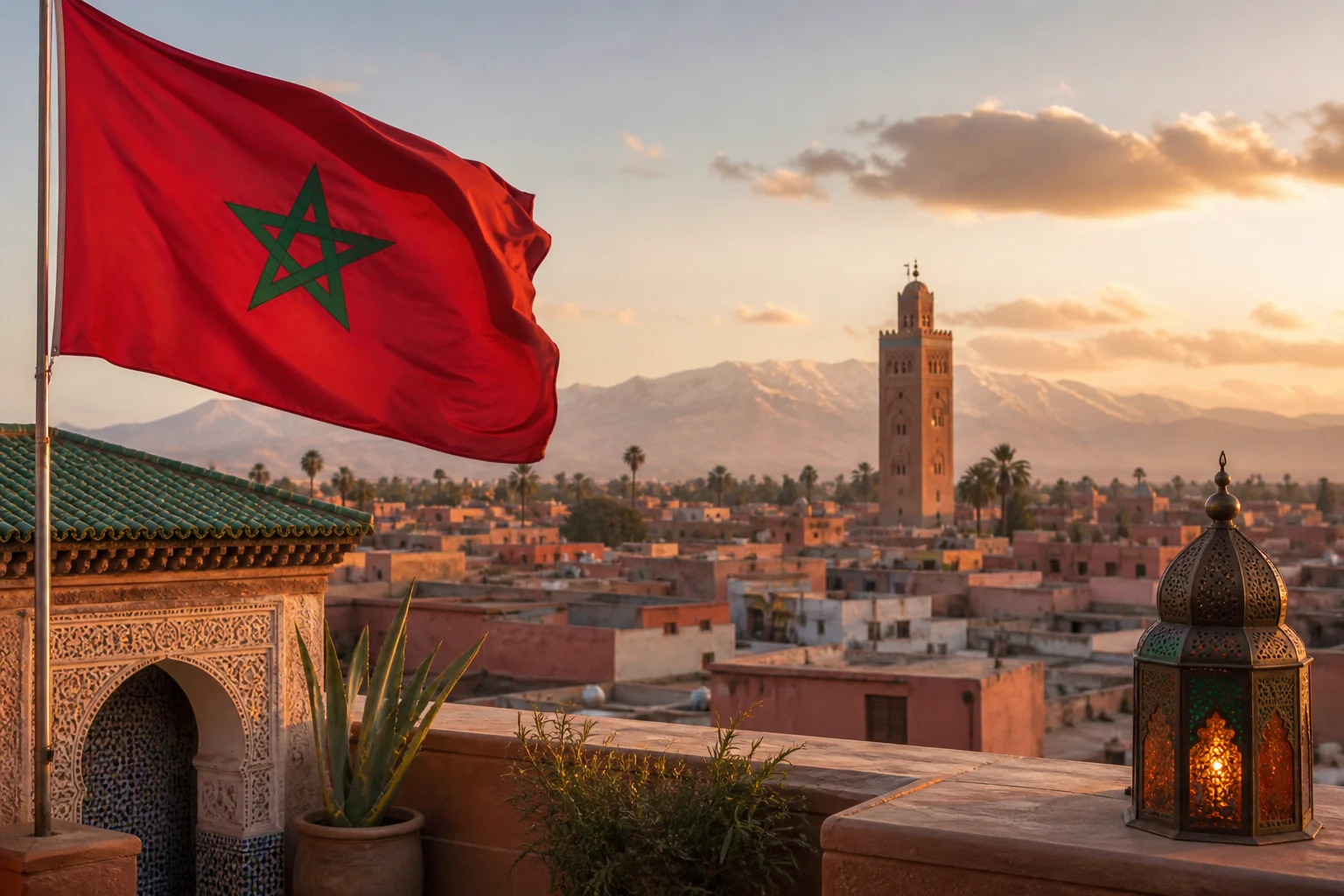
Morocco rewards travellers who arrive prepared — and gently humbles those who don’t. After helping hundreds of first-time visitors plan trips here, we’ve seen the same handful of stumbles trip up newcomers again and again. None of them are catastrophic. Most are easy to avoid once someone tells you. Consider this our friendly heads-up before you land in Casablanca or Marrakech: the 15 mistakes first-timers make most often in 2026, why they matter, and exactly how to sidestep each one — plus five bonus rookie errors and a quick pre-trip checklist at the end.
If you’re still in the early-research stage, it’s worth pairing this guide with our Marrakech travel tips and our Marrakech safety guide — together they cover almost everything a first-timer worries about before booking.
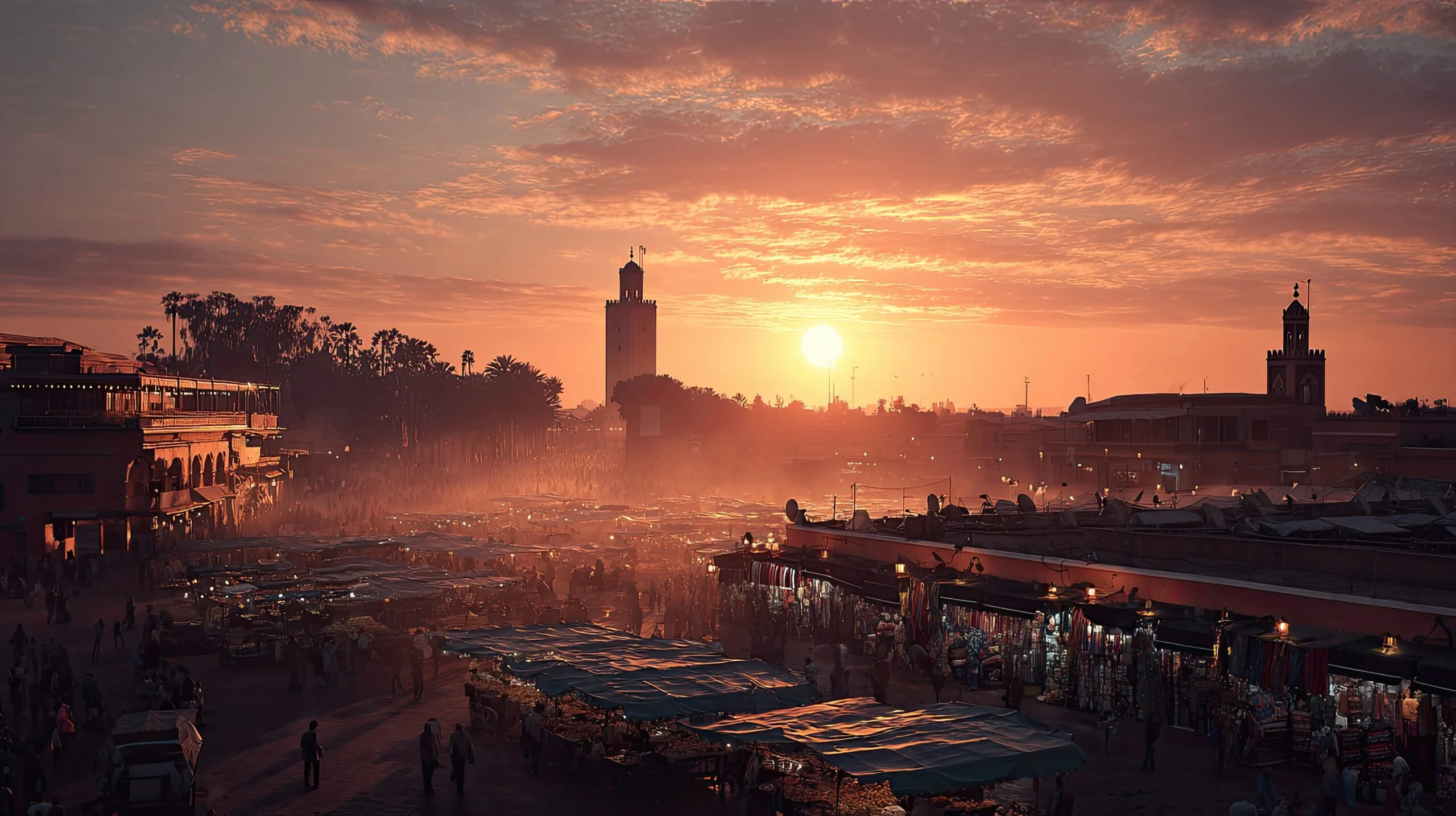
1. Trying to “do” Morocco in five days
The mistake: Squeezing Marrakech, Fes, Chefchaouen and the Sahara into a long weekend.
Why it matters: Morocco is roughly the size of California. Marrakech to Merzouga (the Sahara dunes) is a 9–10 hour drive. Marrakech to Fes is around 6 hours by car or about 7 hours by train. Pack too many cities into one trip and you’ll spend your holiday on the road instead of in the medina.
The fix: Allow at least 7 days for a Marrakech–Sahara–Fes loop, and 10 days if you want Chefchaouen too. Pick fewer places, stay longer, see more. If your dates are fixed and short, base yourself in one city and use day trips rather than hauling a suitcase across the country every 36 hours.
2. Only visiting Marrakech
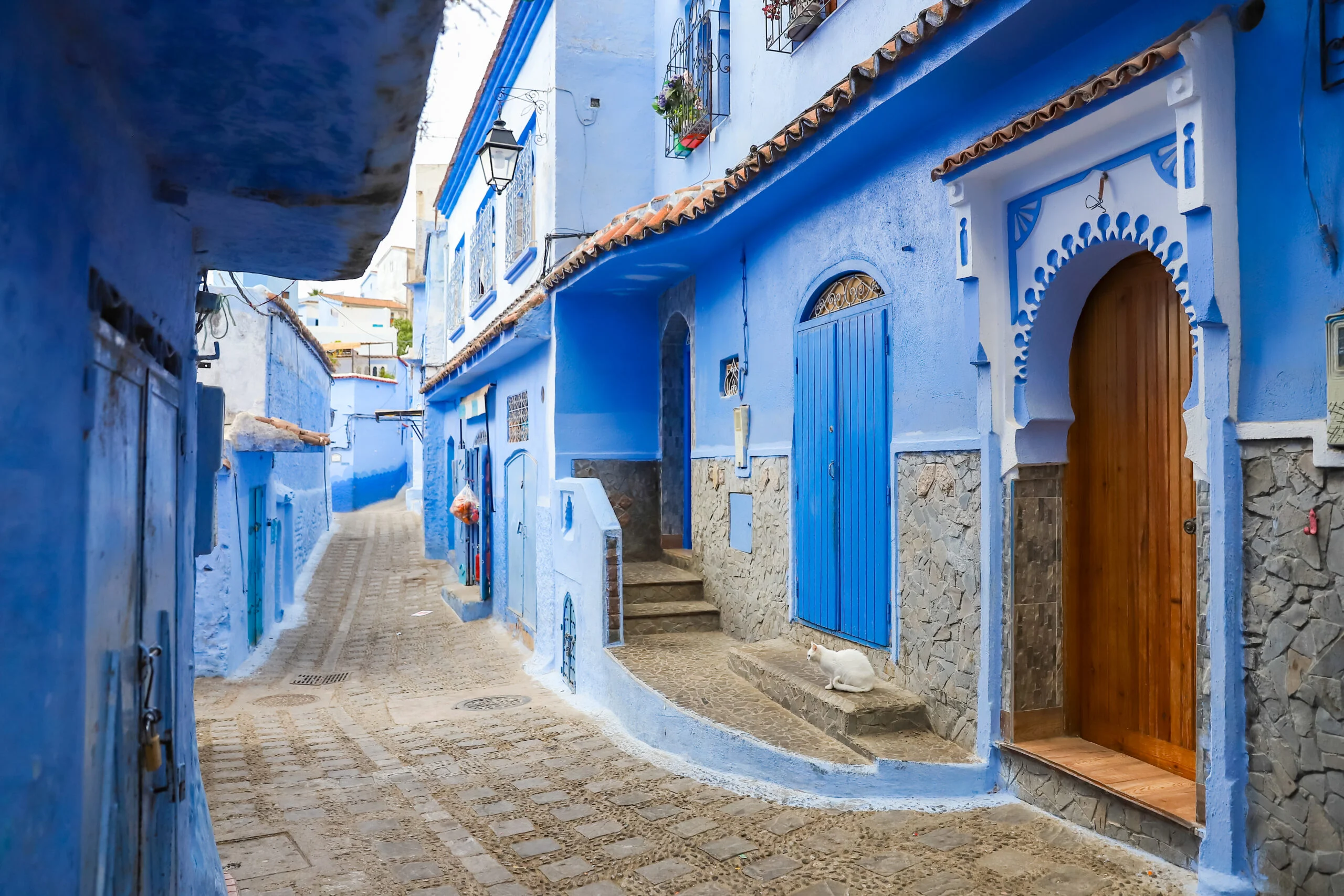
Marrakech is intoxicating, but it’s not Morocco’s whole story. Skipping the Atlas Mountains, the blue lanes of Chefchaouen, the Atlantic breeze of Essaouira or a single night under the Sahara stars means leaving the country with one chapter of a much longer book. Even adding two extra days to step outside Marrakech changes the entire trip. Our Chefchaouen guide is a good place to start when you’re ready to plan beyond the Red City.
3. Underestimating the dress code
The mistake: Packing the same shorts-and-tank-top wardrobe you’d take to Spain.
When you are ready to plan, browse all our Morocco tour packages.
Why it matters: Morocco is a Muslim-majority country. There’s no legal dress code for tourists, but knees and shoulders covered is the unspoken norm — especially in medinas, smaller towns and rural Berber villages. Dressing modestly isn’t about hiding; it’s about blending in and being treated with more warmth.
The fix: Pack loose linen trousers, midi dresses, light long-sleeve shirts and a scarf. Save the swimwear for the riad pool or Essaouira’s beach. The same lightweight layers also handle Morocco’s big day-to-night temperature swings, which catch a lot of first-timers off guard.
4. Falling for the “your hotel is closed” line
One of Morocco’s most enduring scams: a friendly stranger tells you your riad, the tannery or the main square is shut, and offers to lead you somewhere “better.” It almost always ends in a cousin’s carpet shop. Smile, say “la, shukran” (no, thank you), and keep walking. If you really are lost, step into a café or shop and ask the owner — most will help without expecting anything in return. When in doubt, message your riad and ask them to send someone to meet you at a known landmark.
5. Hiring unofficial guides
Morocco has cracked down on faux guides since 2007, when unlicensed paid guiding was outlawed under Law 05-12. Real guides carry a Ministry of Tourism badge. Hiring an unlicensed guide can mean inflated prices, forced shopping detours and missed historical context. If you want a guide, book one through your riad, your tour operator or a verified platform — not the man waving at you outside Bab Boujloud. The official tourism board, ONMT (visitmorocco.com), is a useful reference point for what legitimate, licensed tourism looks like.
6. Not haggling — or haggling like a bully
In the souks, the first price is theatre. Expect openings 2–5× the fair price. Counter-offer at around 30–40% and meet somewhere in the middle. Two important caveats: don’t haggle if you have no intention of buying (it’s considered rude), and don’t grind a craftsman down on a hand-knotted rug that took weeks to make. A good rule: pay a price you’re genuinely happy with and that lets the seller smile too. Walking away calmly is your strongest, most polite negotiating tool — and it’s often when the real price appears.
7. Drinking the tap water
Tap water in major Moroccan cities is treated, but the mineral profile is different from what most visitors are used to. Even many locals drink bottled. A small bottle costs 5–10 MAD; a 5-litre jug for your riad room is around 15 MAD. Brushing your teeth with tap water is generally fine — it’s drinking it by the glass that catches travellers out. A reusable bottle with a built-in filter is a tidy way to cut plastic and still stay settled.
8. Eating only at tourist-trap restaurants
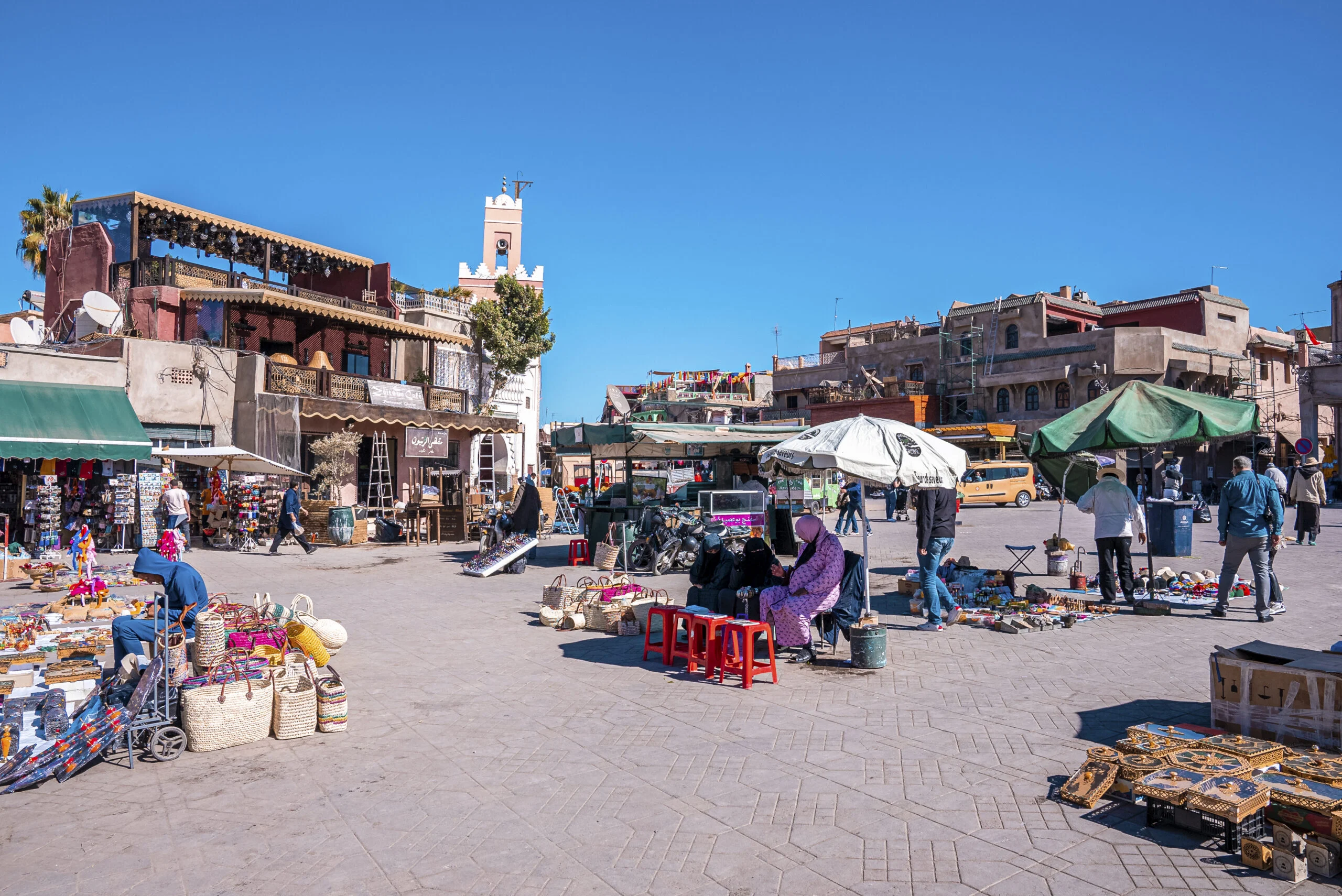
The places with picture menus and touts on Jemaa el-Fnaa are convenient, not memorable. The best Moroccan food hides on side streets, in family-run diffas, and in the homes of riad owners who’ll happily organise a couscous dinner if you ask. Try a local lunch spot where Moroccans eat — order tagine of the day, not the page-one tourist menu. And remember that couscous is traditionally a Friday lunch dish, so that’s the day to seek it out at its best.
9. Forgetting that cash is king
The dirham (MAD) is a closed currency — you can only get it inside Morocco. Hotels and upscale restaurants take cards, but souks, taxis, hammams, tips and most riads run on cash. Withdraw from bank ATMs (Attijariwafa, BMCE and Société Générale are reliable), keep a stash of small notes (10s, 20s, 50s) for tips and taxis, and don’t change money at the airport unless you absolutely have to. For a deeper money breakdown, our Morocco currency and tipping guide walks through it in detail.
10. Tipping awkwardly (too much or too little)
A few rough benchmarks travellers find genuinely useful: 10–15% in restaurants if service isn’t already added, 100–200 MAD per day for a private guide, 50–100 MAD per day for a driver, 20–50 MAD for the riad team at checkout, and 5–20 MAD for hammam attendants and small services. Tipping isn’t compulsory, but it’s how a meaningful chunk of Morocco’s hospitality economy actually pays its bills. Keep those small notes handy so you’re never stuck tipping with a 200-dirham bill you can’t break.
11. Taking photos without asking
Sticking a camera in someone’s face — particularly an older woman in the medina or a Berber shepherd in the Atlas — is the quickest way to get an angry shake of the head, or a demand for 100 MAD. The simple Darija phrase “Mumkin tsawer?” (“May I take a photo?”) opens almost any door. If the answer is no, accept it instantly and move on. For market stallholders, buying something small first usually buys goodwill for a portrait too.
12. Travelling in July or August without a plan
Marrakech regularly hits 40 °C in midsummer; the Sahara can climb past 45 °C. If you must visit in peak summer, head for the coast — Essaouira’s Atlantic wind keeps it in the mid-20s — or up into the Atlas. Spring (March–May) and autumn (September–November) are the country’s sweet spots: warm days, cool nights, lighter crowds, lower prices. Whatever month you choose, plan strenuous sightseeing for early morning and late afternoon, and treat midday as tea-and-shade time the way locals do.
13. Skipping the Sahara
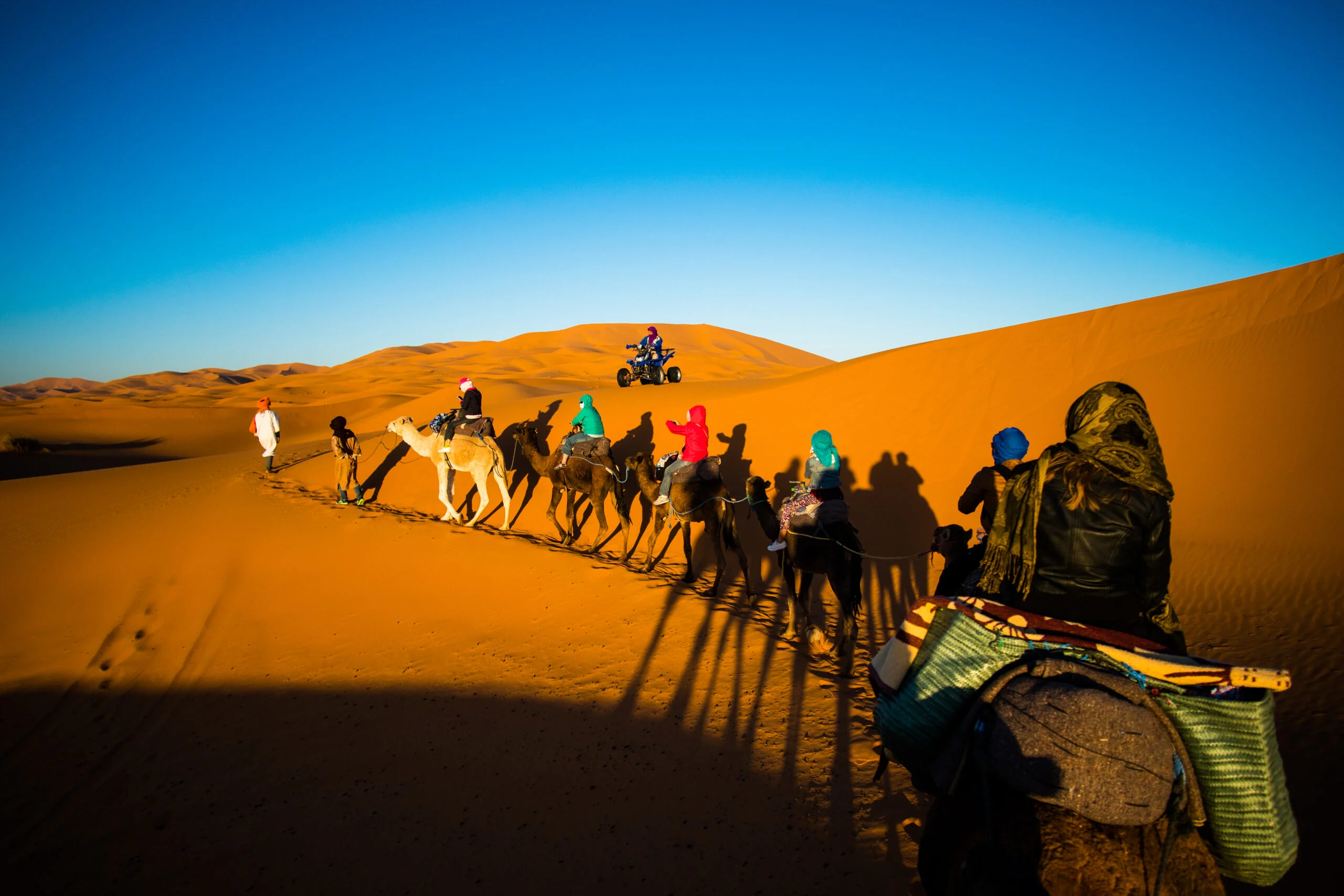
It’s a long drive, you’re tired, “the dunes will still be there next time.” We hear this constantly — and almost no one regrets going, while plenty regret skipping. A night at an Erg Chebbi camp, with a camel ride at sunset and the Milky Way wheeling overhead, is the memory most travellers come home talking about. If time is genuinely tight, the Agafay rocky desert outside Marrakech is a worthwhile compromise. When you’re ready to do it properly, our Sahara desert tours and our private desert tour from Marrakech handle the long drive, the camp booking and the timing so the only thing you have to do is watch the stars. The famous kasbah of Aït Benhaddou, a UNESCO World Heritage Site since 1987, sits right on the classic Marrakech-to-desert route.
14. Booking riads on autopilot
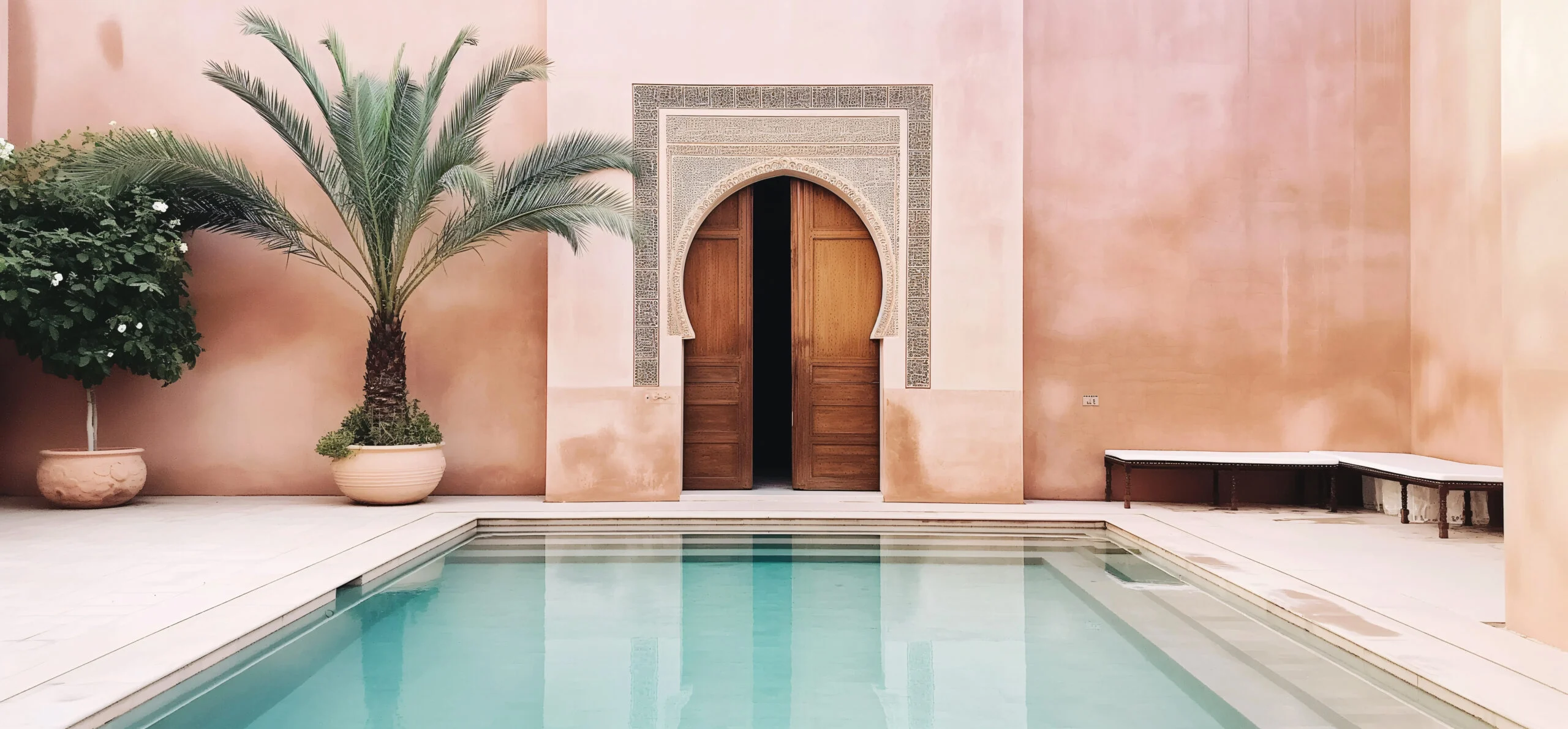
Not all riads are created equal. Some have rooftops with Atlas views; others sit beside a 5 a.m. mosque speaker. Some are 3 minutes from Jemaa el-Fnaa; others are a 25-minute walk through alleys without a porter to carry your bag. Read recent reviews carefully, ask about airport transfers and porter service to the front door, and check whether the riad has a pool if you’re visiting in summer. A riad’s exact location inside the medina matters more than its star rating.
15. Trying to figure it all out alone
You absolutely can do Morocco independently — and many travellers do it brilliantly. But a country with this much variety, this many languages, and this many “is this a scam?” moments is also a country where a small amount of local help goes a very long way. A local agency can pre-vet your riads, arrange a trusted driver, and time your desert nights around the moon phase. That’s the kind of detail solo planning often misses. If you’d rather hand the logistics to someone who lives here, our complete guide to the best Morocco tours for 2026 lays out the options without the sales pressure.
5 more rookie mistakes worth avoiding
The classic fifteen are the big ones, but these five quieter errors catch plenty of first-timers too:
- Not checking entry requirements early. Citizens of the EU and Schengen area, the US, the UK and Canada (around 65 nationalities in total) can enter Morocco visa-free for stays of up to 90 days. Your passport should be valid for at least six months beyond your trip. Travellers who do need a visa can use Morocco’s e-Visa system, launched in 2022. Always confirm the current rules for your nationality on an official source such as the U.S. State Department’s Morocco page or your own government’s travel advisory before you book.
- Assuming cards work everywhere. They don’t, and “cash is king” (mistake 9) bears repeating: always carry enough dirhams for the day, because the moment you most want a card — a tiny rural café, a parking attendant, a roadside argan co-op — is exactly where you won’t find a terminal.
- Ignoring the rhythm of the week. Friday is the main prayer day; many family-run shops and some restaurants slow down or close around midday Friday, and couscous appears on menus. Plan errands and big sightseeing around it rather than against it.
- Travelling without an offline map or local eSIM. Medina alleys confuse GPS and rarely have signs. Download offline maps before you arrive and pick up a local eSIM or SIM at the airport — it turns “hopelessly lost” into “two minutes from the riad.”
- Misreading the taxis. Petits taxis are small city cabs (insist on the meter, or agree a price first); grands taxis are shared older Mercedes that run set routes between towns. Knowing which is which — and roughly what a fare should cost — saves both money and frustration.
A simple first-timer’s pre-trip checklist
Run through this in the week before you fly and you’ll have dodged most of the mistakes above before you even land:
- Confirmed visa/entry rules for your nationality and checked your passport’s six-month validity.
- An itinerary with realistic drive times — not three cities in four days.
- Modest, layerable clothing packed (covered knees and shoulders, plus something warm for desert nights).
- A plan to get dirhams from a bank ATM on arrival, plus small notes for tips and taxis.
- Offline maps downloaded and a local eSIM or SIM sorted.
- Riads booked with location, transfers and reviews checked — not just price.
- At least one night outside Marrakech on the plan (ideally the Sahara).
- A few Darija phrases memorised: salam (hello), shukran (thank you), la shukran (no thank you), bsslama (goodbye).
5 things that pleasantly surprise first-timers
- How safe Morocco actually feels. Petty hassle is real; serious crime against tourists is rare. Most travellers feel safer in Marrakech at night than in many European capitals. Our solo female travel in Morocco guide goes deeper if you want the full picture.
- How welcoming Moroccans are to children and families. Kids are doted on everywhere — restaurants, riads, taxis. Travelling with little ones often opens doors rather than closing them.
- How fast you adapt to mint tea. Within 48 hours, you’ll be reaching for a glass without thinking. Accepting a cup is also the single easiest way to turn a transaction into a conversation.
- How good the infrastructure is. Africa’s first high-speed train, Al Boraq, runs at up to 320 km/h on the Tangier–Casablanca corridor (it opened in 2018). The motorway network is modern and well-maintained.
- How small the world feels at a desert camp. Strangers around a shared fire under a brilliant, light-pollution-free sky tend to leave as friends. It’s the moment most first-timers say tipped the trip from “nice” to “unforgettable.”
Frequently asked questions
Is Morocco a good destination for first-time travellers?
Yes. Morocco is one of the most accessible “exotic” destinations in the world: short flights from Europe, generally English-friendly tourism infrastructure, modern trains and good roads, and an enormous range of experiences in a relatively small country. With a little preparation, first-timers usually leave wanting to come back.
How many days do I need for a first trip to Morocco?
Seven days is a comfortable minimum to combine Marrakech, the Atlas Mountains and the Sahara. Ten days lets you add Fes or Chefchaouen without rushing. Less than five days is best spent on a single base (usually Marrakech) with day trips rather than long cross-country drives.
Do I need a visa to visit Morocco?
For most Western travellers, no. Citizens of the EU and Schengen area, the US, the UK, Canada and around 65 nationalities in total can enter Morocco visa-free for stays of up to 90 days, provided their passport is valid for at least six months. Travellers from other countries may need a visa or Morocco’s e-Visa. Always confirm the current rule for your nationality with an official government source before booking.
Do I need to speak French or Arabic to travel in Morocco?
No. English is widely spoken in the tourism industry, especially in Marrakech, Fes, Casablanca, Chefchaouen and Essaouira. A handful of Darija words (“salam”, “shukran”, “la shukran”, “bsslama”) goes a long way and is genuinely appreciated by locals.
What is the biggest mistake first-time visitors make?
Trying to see too much in too little time. Morocco’s distances are bigger than they look on the map, and rushing means missing the slow moments — long lunches, rooftop sunsets, conversations in a souk — that travellers remember most.
Is it safe to travel in Morocco as a tourist?
Generally, yes. Standard precautions apply: keep valuables out of sight, use licensed taxis, ignore aggressive touts, and trust your instincts in crowded areas. Solo female travellers can absolutely visit safely with a little extra preparation — our Marrakech safety guide covers the details in depth.
Is cash or card better in Morocco?
Both, but cash matters more than first-timers expect. Cards work at hotels, upscale restaurants and larger shops, while souks, taxis, hammams, tips and most riads run on dirhams. Withdraw from a reputable bank ATM, carry small notes, and treat the dirham as a closed currency you can only get inside the country.
How much should I budget for a week in Morocco?
Backpackers can travel comfortably on around €40–60 per day. Mid-range travellers in nice riads with private transfers typically spend €120–180 per day. Luxury (top riads, private guides, Sahara camps) starts around €300 per day. Internal flights, desert tours and hammam experiences are the line items that vary most.
Plan a smarter first trip
Morocco rewards curiosity and gentle preparation in equal measure, and avoiding these mistakes is really just about slowing down and asking the right questions before you go. If you’d like the rest of your first trip planned with the same care — trusted riads, a vetted driver, and desert nights timed around the moon — that’s exactly what we do. Browse our private desert tour from Marrakech, request a quote, or simply message us with a question — we’ll answer for free, no obligation. Either way: come curious, travel slowly, say yes to the mint tea, and your first Moroccan trip will be the kind you talk about for years.
