
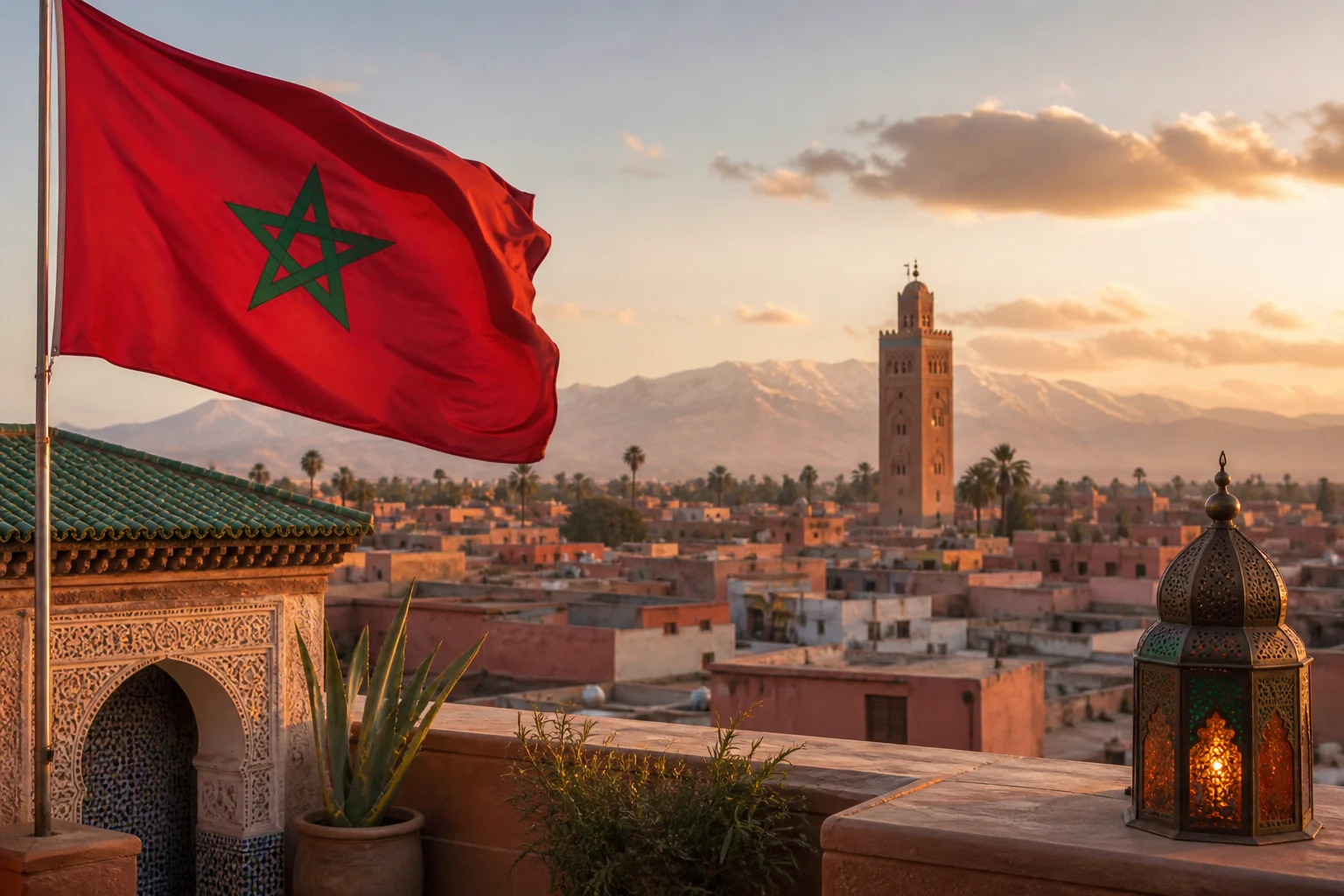
Le Maroc récompense les voyageurs bien préparés — et remet gentiment à leur place ceux qui ne le sont pas. Après avoir aidé des centaines de visiteurs à organiser leur premier voyage, nous voyons toujours les mêmes faux pas se répéter. Aucun n’est catastrophique. La plupart sont faciles à éviter une fois qu’on vous a prévenu. Voyez cet article comme une mise en garde amicale avant que vous n’atterrissiez à Casablanca ou à Marrakech : les 15 erreurs les plus courantes des nouveaux voyageurs en 2026, pourquoi elles comptent et comment éviter chacune d’elles — avec cinq erreurs de débutant en bonus et une courte liste de vérification avant le départ à la fin.
If you’re still in the early-research stage, it’s worth pairing this guide with our conseils de voyage pour Marrakech et notre guide de sécurité de Marrakech — together they cover almost everything a first-timer worries about before booking.
1. Vouloir « faire » le Maroc en cinq jours
L’erreur : Caser Marrakech, Fès, Chefchaouen et le Sahara dans un long week-end.
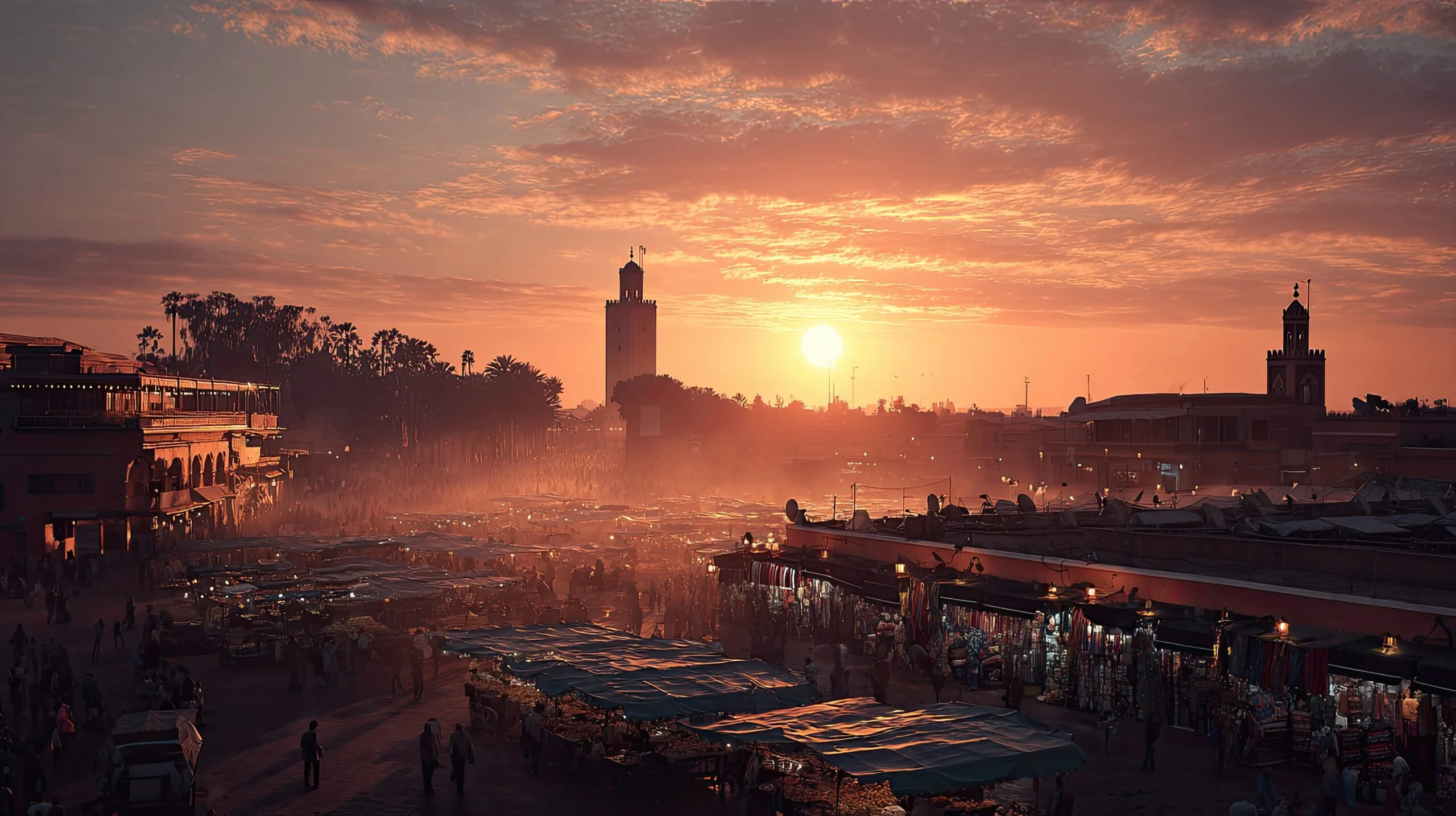
Pourquoi c’est important : Le Maroc fait à peu près la taille de la Californie. Marrakech-Merzouga (les dunes du Sahara), c’est 9 à 10 heures de route. Marrakech-Fès, c’est environ 6 heures en voiture ou 7 heures en train. Si vous enchaînez trop de villes en un seul voyage, vous passerez vos vacances sur la route plutôt que dans la médina.
La solution : Allow at least 7 days for a Marrakech–Sahara–Fes loop, and 10 days if you want Chefchaouen too. Pick fewer places, stay longer, see more. If your dates are fixed and short, base yourself in one city and use day trips rather than hauling a suitcase across the country every 36 hours.
2. Ne visiter que Marrakech
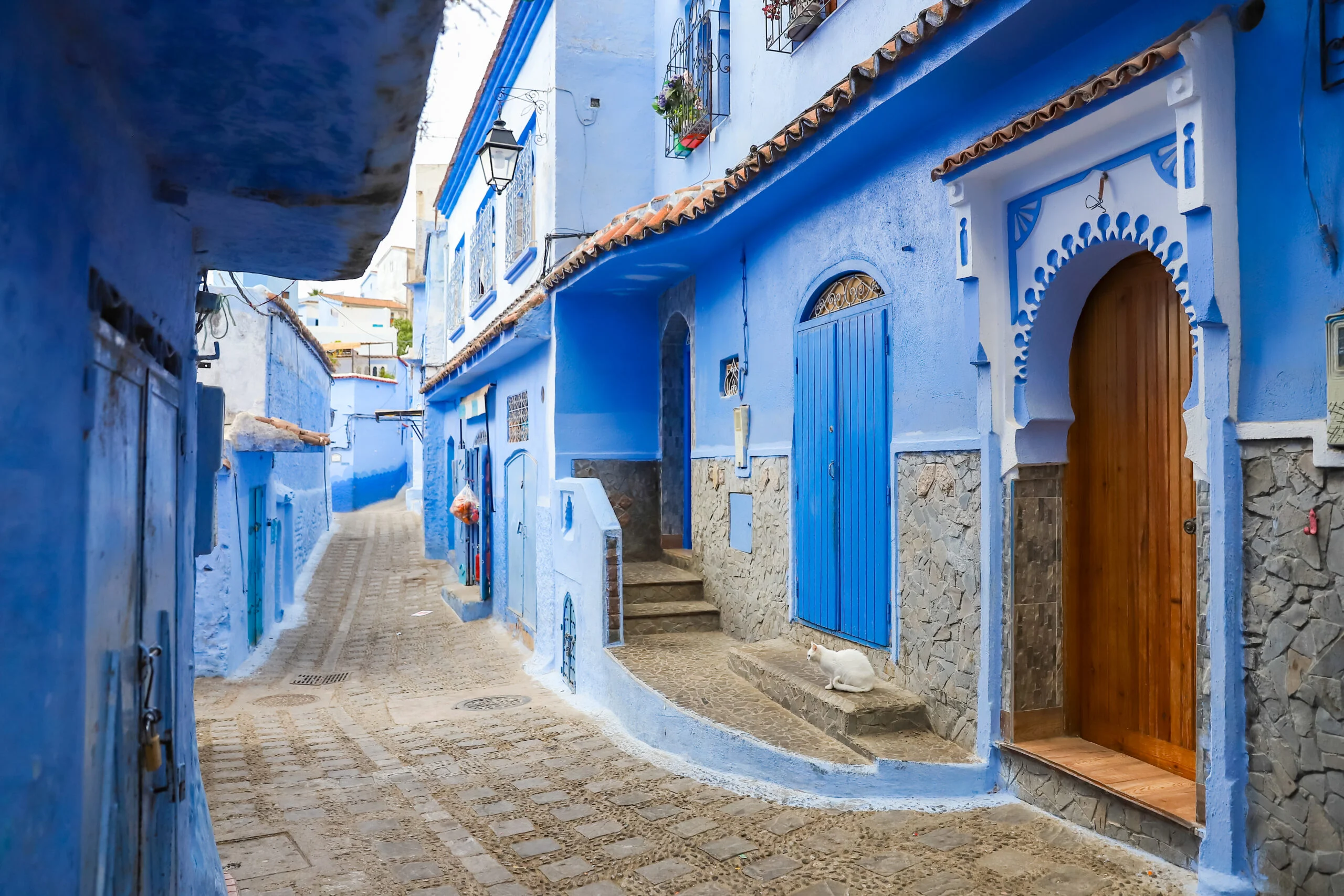
Marrakech est envoûtante, mais elle ne résume pas le Maroc. Faire l’impasse sur les montagnes de l'Atlas, les ruelles bleues de Chefchaouen, l’air atlantique d’Essaouira ou une seule nuit sous les étoiles du Sahara, c’est repartir en n’ayant lu qu’un seul chapitre d’un livre bien plus épais. Ajouter ne serait-ce que deux jours pour sortir de Marrakech change tout le voyage. Notre guide de Chefchaouen is a good place to start when you’re ready to plan beyond the Red City.
3. Sous-estimer le code vestimentaire
L’erreur : Emporter la même garde-robe shorts-et-débardeurs que pour l’Espagne.
Quand vous êtes prêt à organiser votre voyage, parcourez tous nos circuits au Maroc.
Pourquoi c’est important : Le Maroc est un pays à majorité musulmane. Il n’existe aucun code vestimentaire légal pour les touristes, mais couvrir genoux et épaules est la norme tacite — surtout dans les médinas, les petites villes et les villages berbères. S’habiller pudiquement, ce n’est pas se cacher : c’est se fondre dans le paysage et être reçu avec plus de chaleur.
La solution : Pack loose linen trousers, midi dresses, light long-sleeve shirts and a scarf. Save the swimwear for the riad pool or Essaouira’s beach. The same lightweight layers also handle Morocco’s big day-to-night temperature swings, which catch a lot of first-timers off guard.
4. Se laisser piéger par le « votre hôtel est fermé »
L’une des arnaques les plus tenaces au Maroc : un inconnu sympathique vous annonce que votre riad, la tannerie ou la grande place est fermé, puis propose de vous conduire ailleurs, « mieux ». Ça finit presque toujours dans la boutique de tapis d’un cousin. Souriez, dites «La, shukran” (no, thank you), and keep walking. If you really are lost, step into a café or shop and ask the owner — most will help without expecting anything in return. When in doubt, message your riad and ask them to send someone to meet you at a known landmark.
5. Engager des guides non officiels
Morocco has cracked down on faux guides since 2007, when unlicensed paid guiding was outlawed under Law 05-12. Real guides carry a Ministry of Tourism badge. Hiring an unlicensed guide can mean inflated prices, forced shopping detours and missed historical context. If you want a guide, book one through your riad, your tour operator or a verified platform — not the man waving at you outside Bab Boujloud. The official tourism board, ONMT (visitmorocco.com), is a useful reference point for what legitimate, licensed tourism looks like.
6. Ne pas négocier — ou négocier de façon agressive
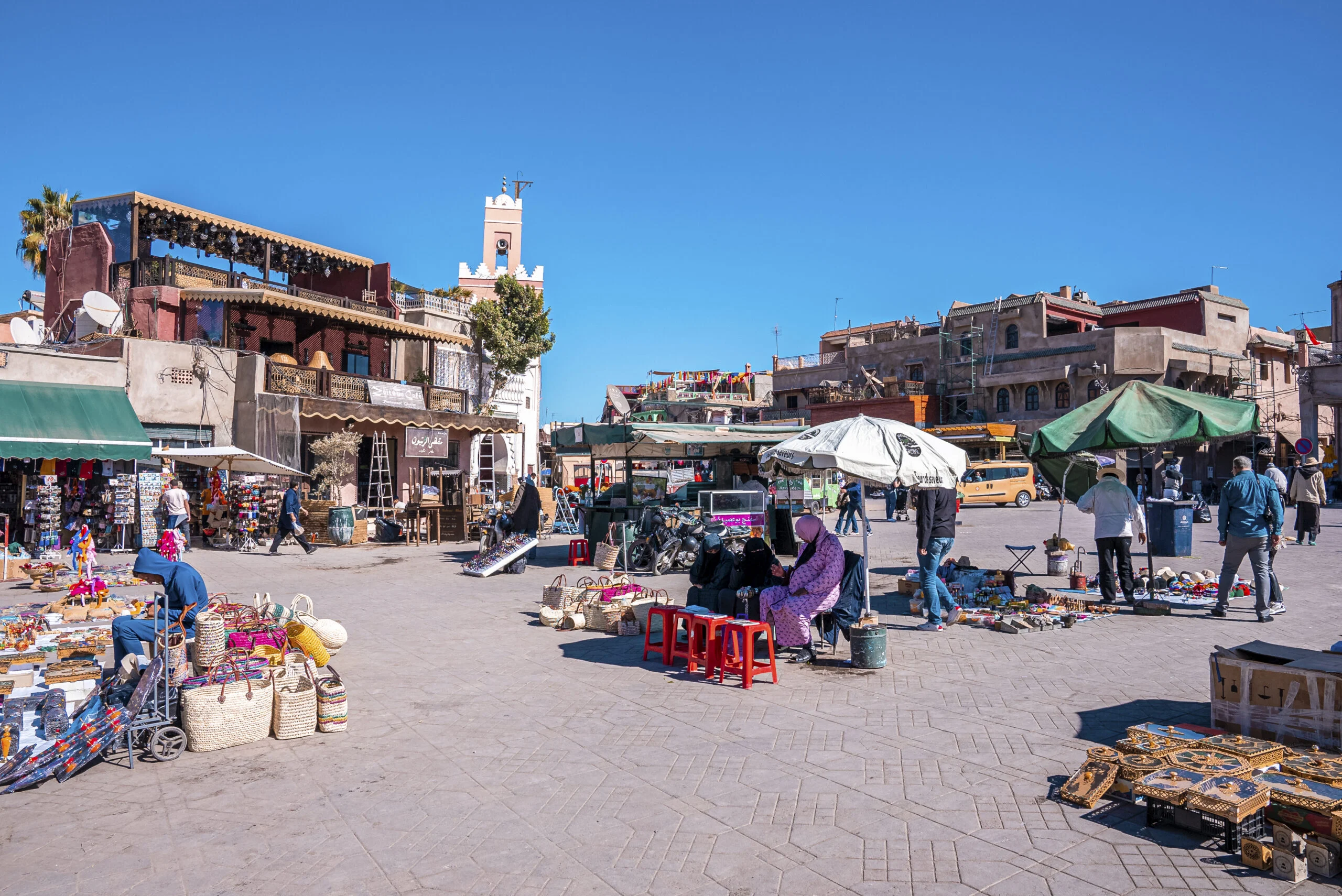
In the souks, the first price is theatre. Expect openings 2–5× the fair price. Counter-offer at around 30–40% and meet somewhere in the middle. Two important caveats: don’t haggle if you have no intention of buying (it’s considered rude), and don’t grind a craftsman down on a hand-knotted rug that took weeks to make. A good rule: pay a price you’re genuinely happy with and that lets the seller smile too. Walking away calmly is your strongest, most polite negotiating tool — and it’s often when the real price appears.
7. Boire l’eau du robinet
Tap water in major Moroccan cities is treated, but the mineral profile is different from what most visitors are used to. Even many locals drink bottled. A small bottle costs 5–10 MAD; a 5-litre jug for your riad room is around 15 MAD. Brushing your teeth with tap water is generally fine — it’s drinking it by the glass that catches travellers out. A reusable bottle with a built-in filter is a tidy way to cut plastic and still stay settled.
8. Manger uniquement dans les restaurants à touristes
Les adresses à menus illustrés et rabatteurs de la place Jemaa el-Fna sont pratiques, pas mémorables. La meilleure cuisine marocaine se cache dans les ruelles, dans les diffas, and in the homes of riad owners who’ll happily organise a couscous dinner if you ask. Try a local lunch spot where Moroccans eat — order tagine of the day, not the page-one tourist menu. And remember that couscous is traditionally a Friday lunch dish, so that’s the day to seek it out at its best.
9. Oublier que l’argent liquide est roi
Le dirham (MAD) est une devise non convertible — vous ne pouvez vous en procurer qu’à l’intérieur du Maroc. Hôtels et restaurants haut de gamme acceptent la carte, mais souks, taxis, hammams, pourboires et la plupart des riads fonctionnent en espèces. Retirez aux distributeurs des banques (Attijariwafa, BMCE et Société Générale sont fiables), gardez une réserve de petits billets (10, 20, 50 MAD) pour les pourboires et les taxis, et évitez de changer à l’aéroport sauf en cas d’absolue nécessité. Pour un guide détaillé, notre guide des devises et des pourboires au Maroc couvre tout en profondeur.
10. Mal gérer les pourboires (trop ou trop peu)
Quelques repères que les voyageurs trouvent vraiment utiles : 10 à 15 % au restaurant si le service n’est pas déjà inclus, 100 à 200 MAD par jour pour un guide privé, 50 à 100 MAD par jour pour un chauffeur, 20 à 50 MAD pour l’équipe du riad au départ, et 5 à 20 MAD pour le personnel du hammam et les petits services. Le pourboire n’est pas obligatoire, mais c’est ainsi qu’une bonne partie de l’économie de l’hospitalité marocaine paie réellement ses factures. Gardez de petites coupures à portée de main pour ne jamais devoir laisser un pourboire avec un billet de 200 dirhams impossible à faire changer.
11. Prendre des photos sans demander
Coller un appareil photo au visage de quelqu’un — surtout une femme âgée dans la médina ou un berger berbère dans l’Atlas — est le meilleur moyen de récolter un signe de tête agacé ou une demande de 100 MAD. La simple phrase en darija «Mumkin tsawer ?» (« Puis-je prendre une photo ? ») ouvre presque toutes les portes. Si la réponse est non, acceptez aussitôt et passez votre chemin. Pour les marché marchands, acheter un petit quelque chose avant amène souvent l’autorisation pour le portrait.
12. Voyager en juillet ou août sans préparation
Marrakech regularly hits 40 °C in midsummer; the Sahara can climb past 45 °C. If you must visit in peak summer, head for the coast — Essaouira’s Atlantic wind keeps it in the mid-20s — or up into the Atlas. Spring (March–May) and autumn (September–November) are the country’s sweet spots: warm days, cool nights, lighter crowds, lower prices. Whatever month you choose, plan strenuous sightseeing for early morning and late afternoon, and treat midday as tea-and-shade time the way locals do.
13. Faire l’impasse sur le Sahara
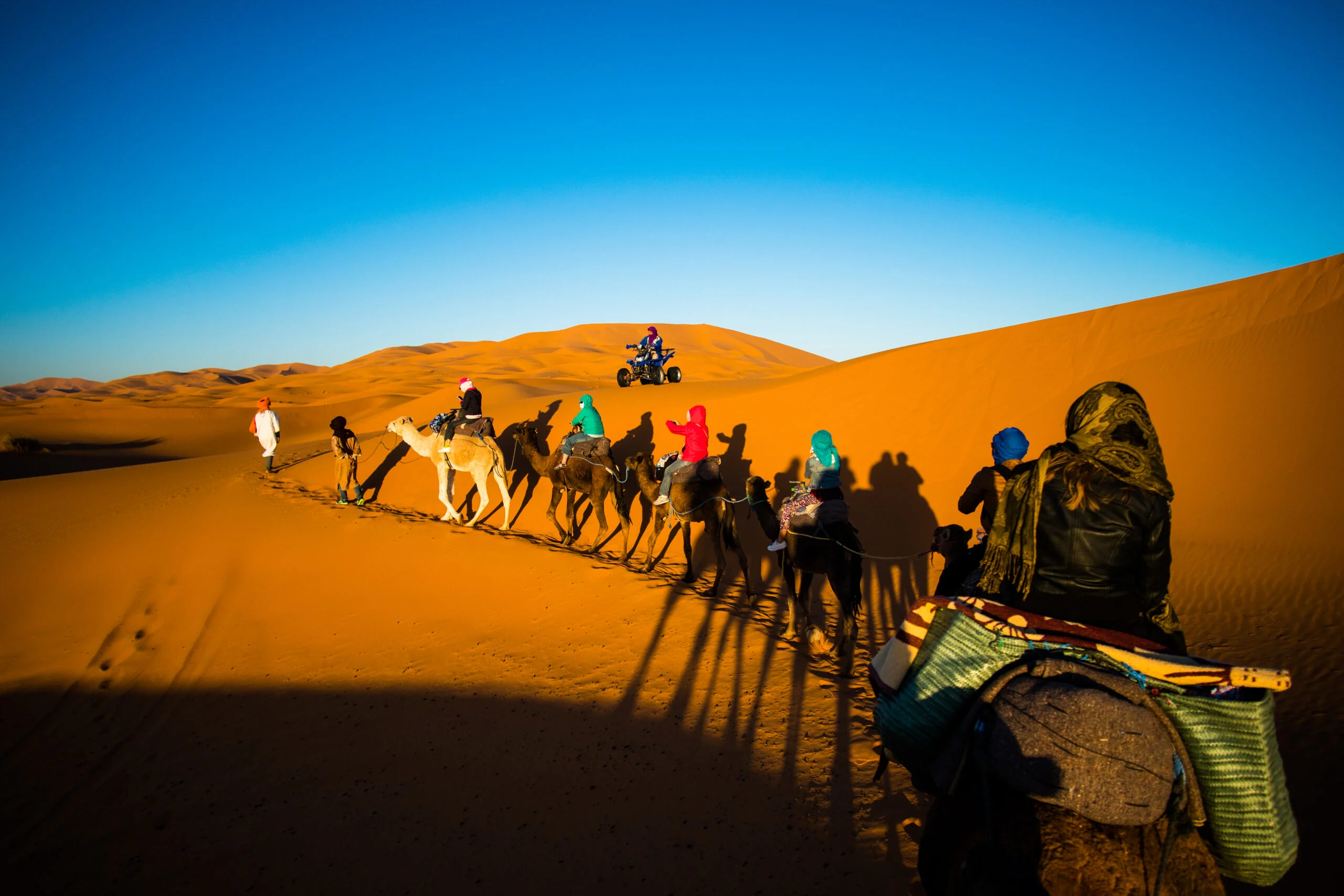
La route est longue, vous êtes fatigué, « les dunes seront toujours là la prochaine fois ». Nous l’entendons sans cesse, et presque personne ne regrette d’y être allé, alors que beaucoup regrettent d’avoir renoncé. Une nuit dans un camp de l’Erg Chebbi, avec une balade à dos de chameau au coucher du soleil et la Voie lactée qui tourne au-dessus de vous, est le souvenir dont la plupart des voyageurs parlent à leur retour. Si le temps est vraiment compté, le désert rocheux d’Agafay, aux portes de Marrakech, est un compromis intéressant. Quand vous serez prêt à le faire comme il se doit, notre circuits dans le désert du Sahara et notre circuit privé dans le désert au départ de Marrakech handle the long drive, the camp booking and the timing so the only thing you have to do is watch the stars. The famous kasbah of Aït Benhaddou, a un site du patrimoine mondial de l'UNESCO depuis 1987, sits right on the classic Marrakech-to-desert route.
14. Réserver un riad sans réfléchir
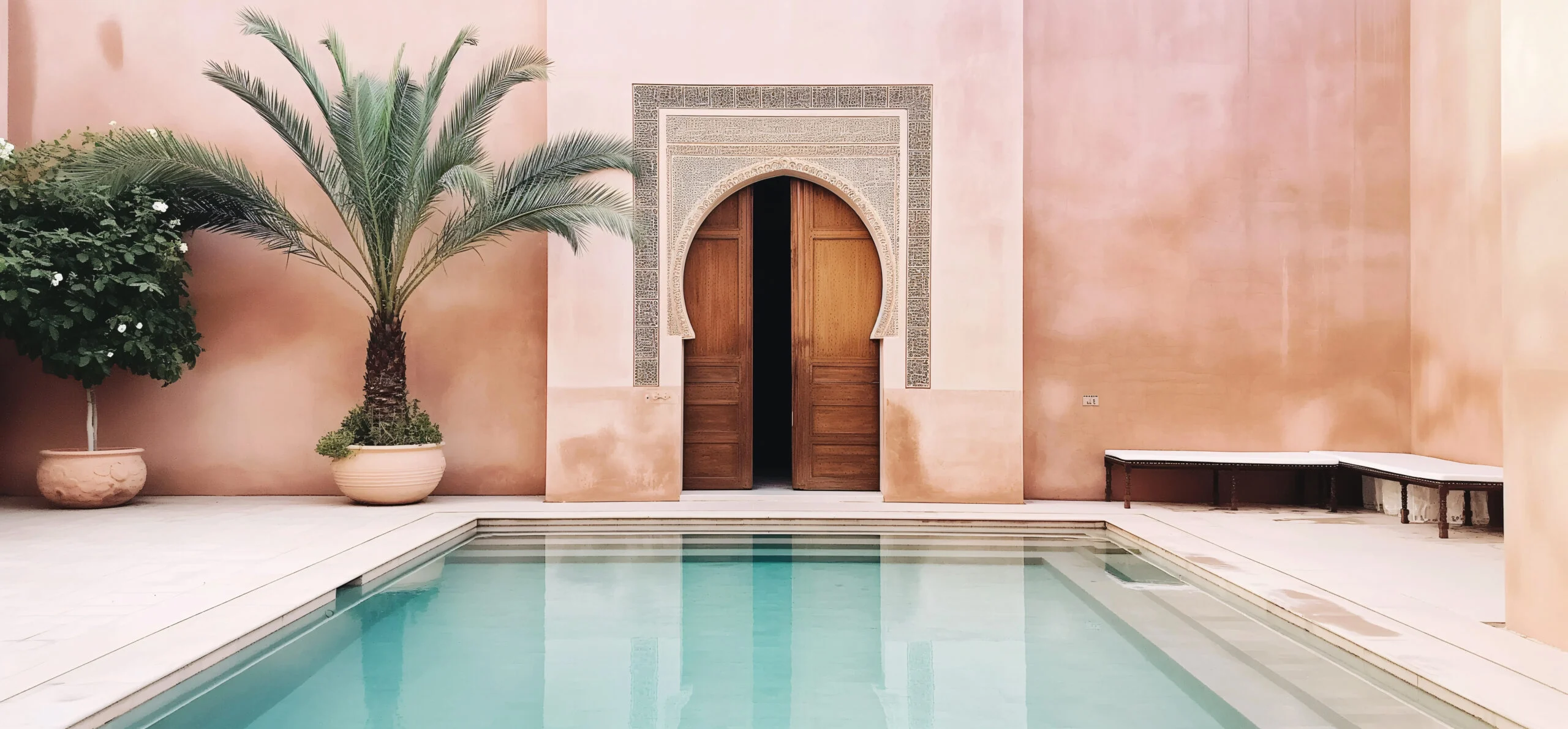
Not all riads are created equal. Some have rooftops with Atlas views; others sit beside a 5 a.m. mosque speaker. Some are 3 minutes from Jemaa el-Fnaa; others are a 25-minute walk through alleys without a porter to carry your bag. Read recent reviews carefully, ask about airport transfers and porter service to the front door, and check whether the riad has a pool if you’re visiting in summer. A riad’s exact location inside the medina matters more than its star rating.
15. Vouloir tout gérer seul
You absolutely can do Morocco independently — and many travellers do it brilliantly. But a country with this much variety, this many languages, and this many “is this a scam?” moments is also a country where a small amount of local help goes a very long way. A local agency can pre-vet your riads, arrange a trusted driver, and time your desert nights around the moon phase. That’s the kind of detail solo planning often misses. If you’d rather hand the logistics to someone who lives here, our complete guide to the best Morocco tours for 2026 lays out the options without the sales pressure.
5 more rookie mistakes worth avoiding
The classic fifteen are the big ones, but these five quieter errors catch plenty of first-timers too:
- Not checking entry requirements early. Citizens of the EU and Schengen area, the US, the UK and Canada (around 65 nationalities in total) can enter Morocco visa-free for stays of up to 90 days. Your passport should be valid for at least six months beyond your trip. Travellers who do need a visa can use Morocco’s e-Visa system, launched in 2022. Always confirm the current rules for your nationality on an official source such as the U.S. State Department’s Morocco page or your own government’s travel advisory before you book.
- Assuming cards work everywhere. They don’t, and “cash is king” (mistake 9) bears repeating: always carry enough dirhams for the day, because the moment you most want a card — a tiny rural café, a parking attendant, a roadside argan co-op — is exactly where you won’t find a terminal.
- Ignoring the rhythm of the week. Friday is the main prayer day; many family-run shops and some restaurants slow down or close around midday Friday, and couscous appears on menus. Plan errands and big sightseeing around it rather than against it.
- Travelling without an offline map or local eSIM. Medina alleys confuse GPS and rarely have signs. Download offline maps before you arrive and pick up a local eSIM or SIM at the airport — it turns “hopelessly lost” into “two minutes from the riad.”
- Misreading the taxis. Petits taxis are small city cabs (insist on the meter, or agree a price first); grands taxis are shared older Mercedes that run set routes between towns. Knowing which is which — and roughly what a fare should cost — saves both money and frustration.
A simple first-timer’s pre-trip checklist
Run through this in the week before you fly and you’ll have dodged most of the mistakes above before you even land:
- Confirmed visa/entry rules for your nationality and checked your passport’s six-month validity.
- An itinerary with realistic drive times — not three cities in four days.
- Modest, layerable clothing packed (covered knees and shoulders, plus something warm for desert nights).
- A plan to get dirhams from a bank ATM on arrival, plus small notes for tips and taxis.
- Offline maps downloaded and a local eSIM or SIM sorted.
- Riads booked with location, transfers and reviews checked — not just price.
- At least one night outside Marrakech on the plan (ideally the Sahara).
- A few Darija phrases memorised: salam (hello), shukran (thank you), la shukran (no thank you), bsslama (goodbye).
5 choses qui surprennent agréablement les nouveaux venus
- À quel point le Maroc est rassurant. Les petites tracasseries existent, mais les crimes graves contre les touristes sont rares. La plupart des voyageurs se sentent plus en sécurité à Marrakech la nuit que dans bien des capitales européennes. Notre guide du voyage en solo au féminin au Maroc va plus loin si vous voulez avoir le tableau complet.
- L’accueil que les Marocains réservent aux enfants et aux familles. Kids are doted on everywhere — restaurants, riads, taxis. Travelling with little ones often opens doors rather than closing them.
- La rapidité avec laquelle on s’habitue au thé à la menthe. Within 48 hours, you’ll be reaching for a glass without thinking. Accepting a cup is also the single easiest way to turn a transaction into a conversation.
- La qualité des infrastructures. Africa’s first high-speed train, Al Boraq, runs at up to 320 km/h on the Tangier–Casablanca corridor (it opened in 2018). The motorway network is modern and well-maintained.
- À quel point le monde paraît petit autour d’un campement dans le désert. Strangers around a shared fire under a brilliant, light-pollution-free sky tend to leave as friends. It’s the moment most first-timers say tipped the trip from “nice” to “unforgettable.”
Questions fréquentes
Le Maroc est-il une bonne destination pour un premier voyage ?
Oui. Le Maroc est l’une des destinations « exotiques » les plus accessibles au monde : vols courts depuis l’Europe, infrastructures touristiques globalement anglophones, trains modernes et bonnes routes, et un éventail énorme d’expériences dans un pays relativement compact. Avec un peu de préparation, les nouveaux voyageurs repartent presque toujours avec l’envie de revenir.
Combien de jours faut-il pour un premier voyage au Maroc ?
Seven days is a comfortable minimum to combine Marrakech, the Atlas Mountains and the Sahara. Ten days lets you add Fes or Chefchaouen without rushing. Less than five days is best spent on a single base (usually Marrakech) with day trips rather than long cross-country drives.
Ai-je besoin d'un visa pour visiter le Maroc ?
For most Western travellers, no. Citizens of the EU and Schengen area, the US, the UK, Canada and around 65 nationalities in total can enter Morocco visa-free for stays of up to 90 days, provided their passport is valid for at least six months. Travellers from other countries may need a visa or Morocco’s e-Visa. Always confirm the current rule for your nationality with an official government source before booking.
Faut-il parler français ou arabe pour voyager au Maroc ?
Non. L’anglais est largement parlé dans le secteur touristique, en particulier à Marrakech, Fès, Casablanca, Chefchaouen et Essaouira. Une poignée de mots en darija (« salam », « shukran », « la shukran », « bsslama ») fait beaucoup d’effet et est sincèrement appréciée des locaux.
Quelle est la plus grande erreur des primo-visiteurs ?
Vouloir trop voir en trop peu de temps. Les distances marocaines sont plus grandes qu’elles n’en ont l’air sur la carte, et se presser, c’est passer à côté des moments lents — longs déjeuners, couchers de soleil sur les terrasses, conversations dans un souk — dont les voyageurs se souviennent le plus.
Est-il sûr de voyager au Maroc en tant que touriste ?
Généralement, oui. Les précautions habituelles s’appliquent : gardez les objets de valeur hors de vue, prenez des taxis agréés, ignorez les rabatteurs insistants et faites confiance à votre instinct dans les zones bondées. Les voyageuses solo peuvent tout à fait visiter le pays en sécurité avec un peu de préparation supplémentaire — notre guide de sécurité de Marrakech covers the details in depth.
Is cash or card better in Morocco?
Both, but cash matters more than first-timers expect. Cards work at hotels, upscale restaurants and larger shops, while souks, taxis, hammams, tips and most riads run on dirhams. Withdraw from a reputable bank ATM, carry small notes, and treat the dirham as a closed currency you can only get inside the country.
Quel budget prévoir pour une semaine au Maroc ?
Les routards peuvent voyager confortablement avec environ 40 à 60 € par jour. Les voyageurs de milieu de gamme, dans de beaux riads avec transferts privés, dépensent généralement 120 à 180 € par jour. Le luxe (les meilleurs riads, guides privés, camps dans le Sahara) commence autour de 300 € par jour. Les vols intérieurs, les circuits dans le désert et les hammams sont les postes qui varient le plus.
Préparez un premier voyage plus serein
Morocco rewards curiosity and gentle preparation in equal measure, and avoiding these mistakes is really just about slowing down and asking the right questions before you go. If you’d like the rest of your first trip planned with the same care — trusted riads, a vetted driver, and desert nights timed around the moon — that’s exactly what we do. Browse our circuit privé dans le désert au départ de Marrakech, demandez un devis, ou écrivez-nous simplement posez-nous une question — we’ll answer for free, no obligation. Either way: come curious, travel slowly, say yes to the mint tea, and your first Moroccan trip will be the kind you talk about for years.
