
You’ve got a free weekend in Marrakech and one question won’t leave you alone: can you actually reach the Sahara and get back in time? The short answer is yes — but only if you’re honest about which desert you’re aiming for. A 2 day Sahara trip from Marrakech is one of Morocco’s most popular short escapes, and done right, it delivers the camel trek, the silence, and a night under more stars than most people see in a lifetime.
Mal organisé, c’est quatorze heures de minibus pour quarante minutes de sable. Tout se joue sur une décision à prendre avant de réserver quoi que ce soit : Zagora ou Merzouga. Ce guide vous présente l’itinéraire réaliste, les horaires que personne ne met dans la brochure et, heure par heure, ce qu’on ressent vraiment lors d’un week-end dans le désert.
Here’s the plan, start to finish.
Peut-on vraiment voir le Sahara en deux jours ?
Yes — at the Zagora desert. Here’s the geography that decides everything. The drive from Marrakech to Zagora is about 360 km and takes roughly seven hours each way, crossing the High Atlas on the way. That’s a long but doable day, leaving you real time in the dunes overnight and a relaxed return the next afternoon.
Merzouga, où se trouvent les dunes géantes de l’Erg Chebbi que vous avez vues sur les cartes postales, est à environ 560 km, soit près de neuf heures de route. Tassez cela en deux jours et vous passeriez presque tout le voyage assis. C’est pourquoi tout opérateur sérieux propose Merzouga en circuit de trois jours dans le désert at minimum, with an overnight stop in the Dades or Todgha gorges to break the drive.
So a true two-day weekend means Zagora. Be clear-eyed about what that is: a stony, rocky desert (a reg, en termes de géographe) bordé de dunes modestes plutôt que de la mer de sable vertigineuse de l’Erg Chebbi. C’est toujours le Sahara. Vous monterez toujours à dos de chameau dans la lumière dorée et dormirez dans un camp berbère. Il échange simplement la grandeur contre la proximité, et pour un week-end, c’est généralement le bon compromis.
Pour le réserver avec une équipe locale, découvrez notre circuit de 2 jours dans le désert de Zagora.
Zagora ou Merzouga : la comparaison honnête
Si vous rêvez des dunes de cinéma de 150 mètres, il vous faut trois jours et Merzouga, point final. Si ce que vous recherchez, c’est avant tout cette expérience of the desert — the camel, the camp, the quiet, the kasbah road — and you’ve only got a weekend, Zagora earns its keep. Many travelers who’ve done both say Zagora’s smaller scale actually makes the camp feel more intimate.
Still weighing it up? Our guide to the real cost of a Sahara desert tour breaks down what you pay for shared versus private trips, and you can compare durations across the full range of our page dédiée aux circuits dans le désert marocain. For a full weekend, though, the Zagora run below is the classic.
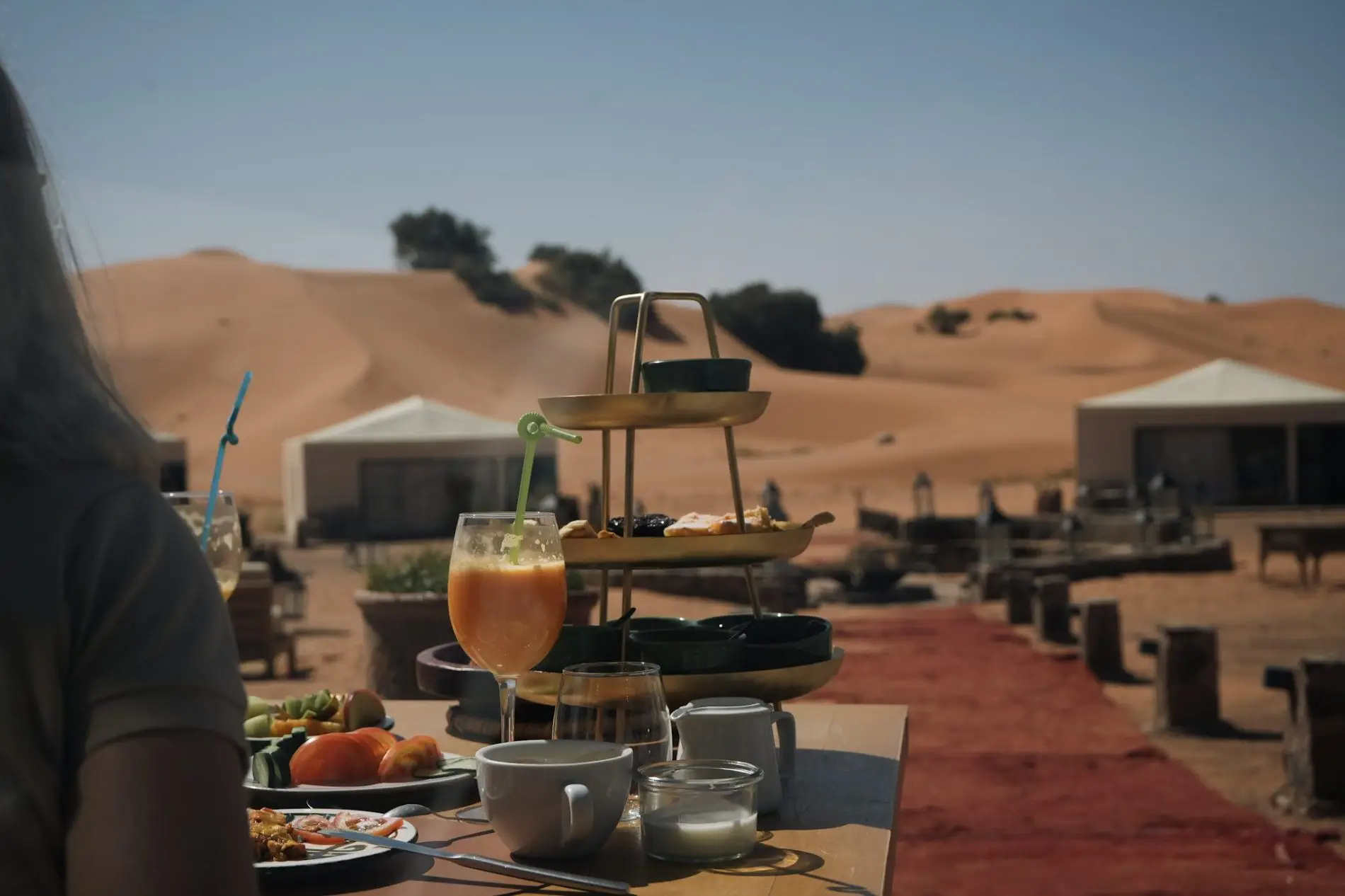
L'itinéraire en un coup d'œil
| Jour | Itinéraire | Points forts |
|---|---|---|
| Jour 1 (matin) | Marrakech → Tizi n’Tichka pass | Lacets du Haut Atlas, villages berbères, la montée à 2 267 m |
| Jour 1 (midi) | Aït Benhaddou → Ouarzazate | Morocco’s most famous ksar, the “door of the desert,” film studios |
| Jour 1 (après-midi) | Vallée du Draa → Zagora | Endless palm groves, kasbahs, the “Timbuktu 52 days” signpost |
| Jour 1 (coucher du soleil) | Balade à dos de chameau → camp du désert | Balade dans les dunes, dîner berbère, tambours, un ciel rempli d’étoiles |
| Jour 2 | Lever du soleil → retour à Marrakech | L'aube sur le sable, la longue route panoramique de retour par l'Atlas |
Une boucle continue, sans retour en arrière. Chaque tronçon du trajet est un spectacle en soi — ce qui sauve tout ce temps passé sur la route.
Day 1, Morning: Over the Tizi n’Tichka Pass
You’ll want an early start — most tours leave Marrakech between 7 and 8 a.m. Within an hour the plains give way to the High Atlas, and the road begins to climb. The Tizi n’Tichka is the main pass linking Marrakech to the south, topping out at around 2,267 metres (7,438 feet) on the modern N9 road. It’s one of the highest road passes in North Africa, and the switchbacks are spectacular — and slow.
The drive crosses the High Atlas range, where Berber villages cling to the slopes and roadside stalls sell amethyst, fossils and argan oil. There are photo stops, mint-tea stops, and the occasional traffic-clearing herd of goats. Don’t fight the pace. This is part of the trip, not an obstacle to the desert. One practical note: from late November through March, snow can briefly close the pass, so winter travelers should keep an eye on the forecast.
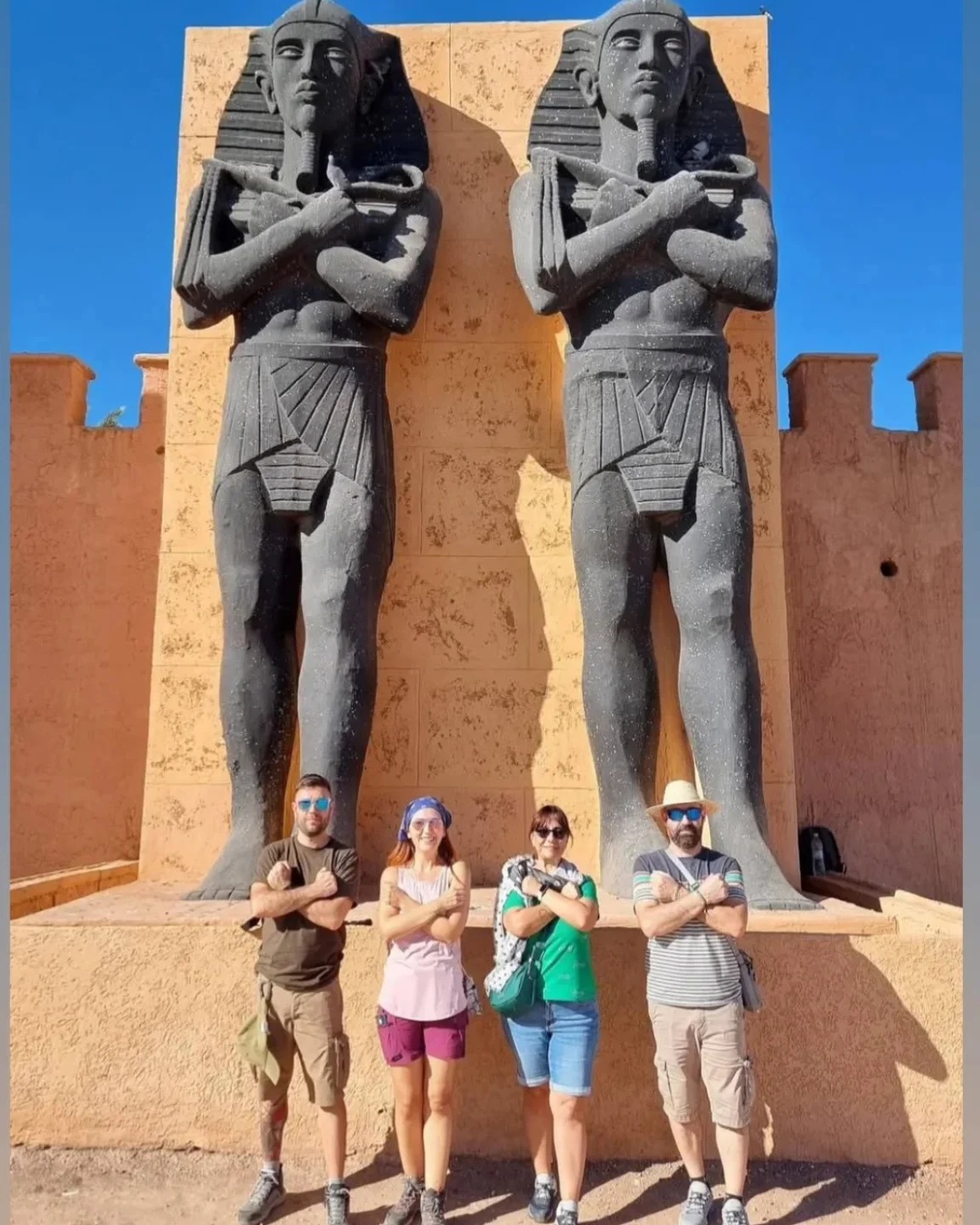
Jour 1, midi : Aït Benhaddou et Ouarzazate
Coming down the southern slopes, you reach the day’s cultural showpiece: Aït Benhaddou. This fortified earthen village, a un site du patrimoine mondial de l'UNESCO depuis 1987, has stood guard over the Ounila Valley for centuries — once a trading post on the caravan route that linked Marrakech to the Sahara and beyond. You’ll recognise it instantly: it has doubled as a backdrop in countless films and series. The site took some damage in the September 2023 earthquake, but it remains open and astonishing.
Cross the little river, climb the packed-earth lanes between the kasbahs, and look back at the valley. It’s worth the thirty minutes. From here it’s a short hop to Ouarzazate, nicknamed the “door of the desert” and home to Morocco’s famous film studios. Most tours pause here for lunch. If kasbah architecture grabs you, our Aït Benhaddou and Ouarzazate guide goes deeper on the history and the best photo angles.
Jour 1, après-midi : la vallée du Draa jusqu'à Zagora
After Ouarzazate the landscape changes character completely. You join the Draa Valley — Morocco’s longest river valley — and follow a ribbon of date palms, mud-brick kasbahs and oasis villages that runs for mile after mile. It’s one of the most quietly beautiful drives in the country, and a reminder that the desert isn’t only sand. People have farmed this thin green corridor for a very long time.
By late afternoon you roll into Zagora, a frontier town with one of Morocco’s most photographed signposts: the old “Tombouctou 52 jours” marker — Timbuktu, 52 days by camel. It’s a wink at the trans-Saharan caravans that once set out from here. This is where the road ends and the sand begins.
Jour 1, coucher du soleil : la balade à dos de dromadaire dans les dunes
This is the moment the whole drive was for. You’ll swap the van for a camel (technically a dromedary) at the desert’s edge and amble out toward the dunes as the light turns gold. The trek is usually short — an hour or so — and gentle, though first-timers should know a camel’s sway takes a few minutes to trust. If you’d rather not ride, a 4×4 transfer is almost always an option; just ask when you book.
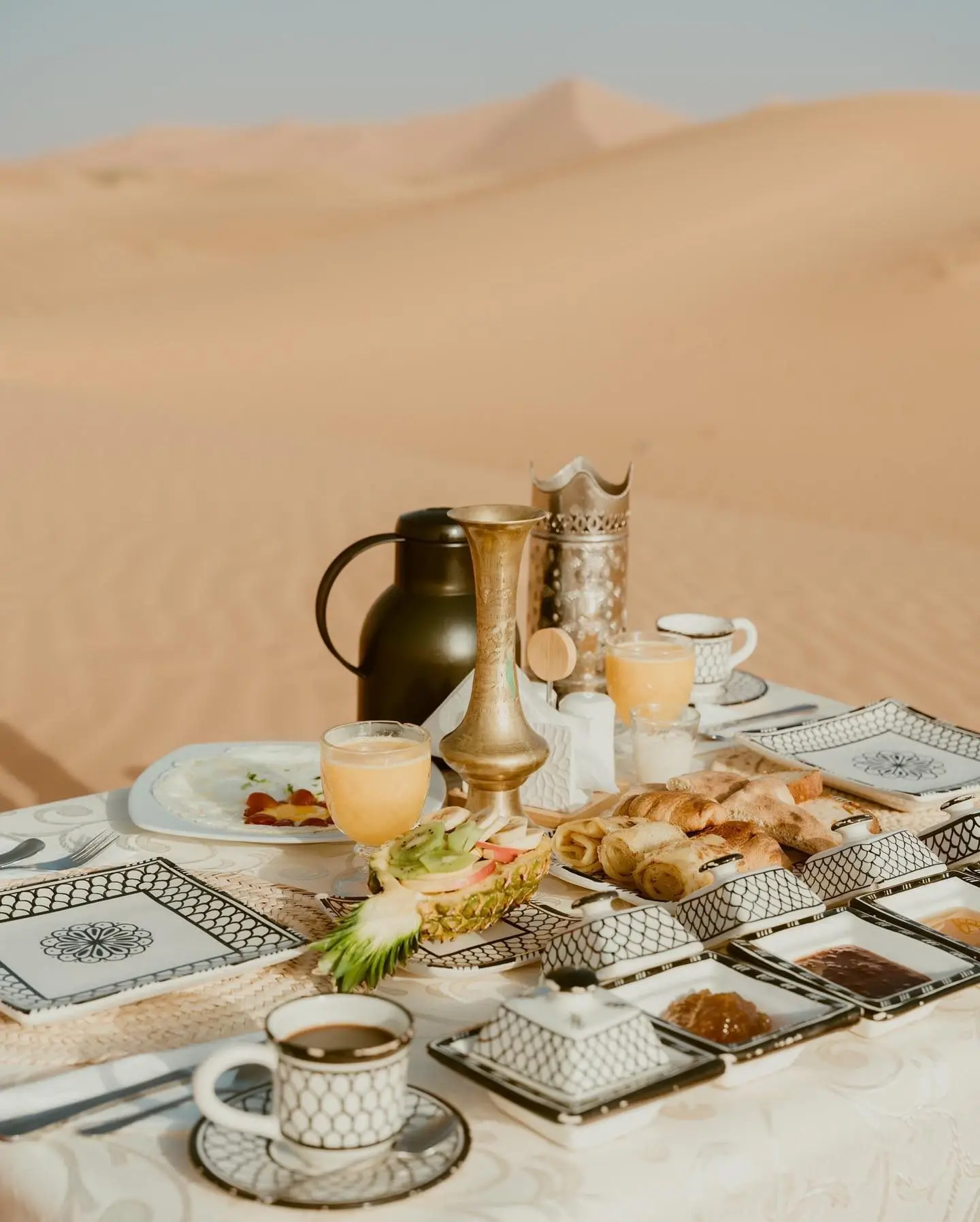
The camp itself is the surprise that wins people over. Expect Berber tents around a central fire, a tagine dinner, and after dark, drumming under a sky with no light pollution for a hundred miles. Camps range from simple shared tents to private setups with real beds and en-suite bathrooms. Whichever you choose, the silence when the music stops is the thing you’ll remember. It isn’t empty. It hums.
Jour 2 : le lever du soleil, et la longue route du retour
Set an alarm. Desert sunrise is the second unmissable moment of the trip, and it’s free — just step out of the tent and watch the dunes shift from grey to rose to gold. After breakfast you ride or drive back to the vehicle and begin the return journey, retracing the Draa Valley and climbing once more over the Atlas.
The drive back feels different — you know the road now, and the light hits the other side of the mountains. Most tours reach Marrakech by early evening, so build in a generous buffer if you have a flight that night. Some operators offer a brief stop at Tamegroute, known for its ancient Quranic library and green-glazed pottery, or at the Agdz kasbahs — worth asking about if you’d like to break the return.
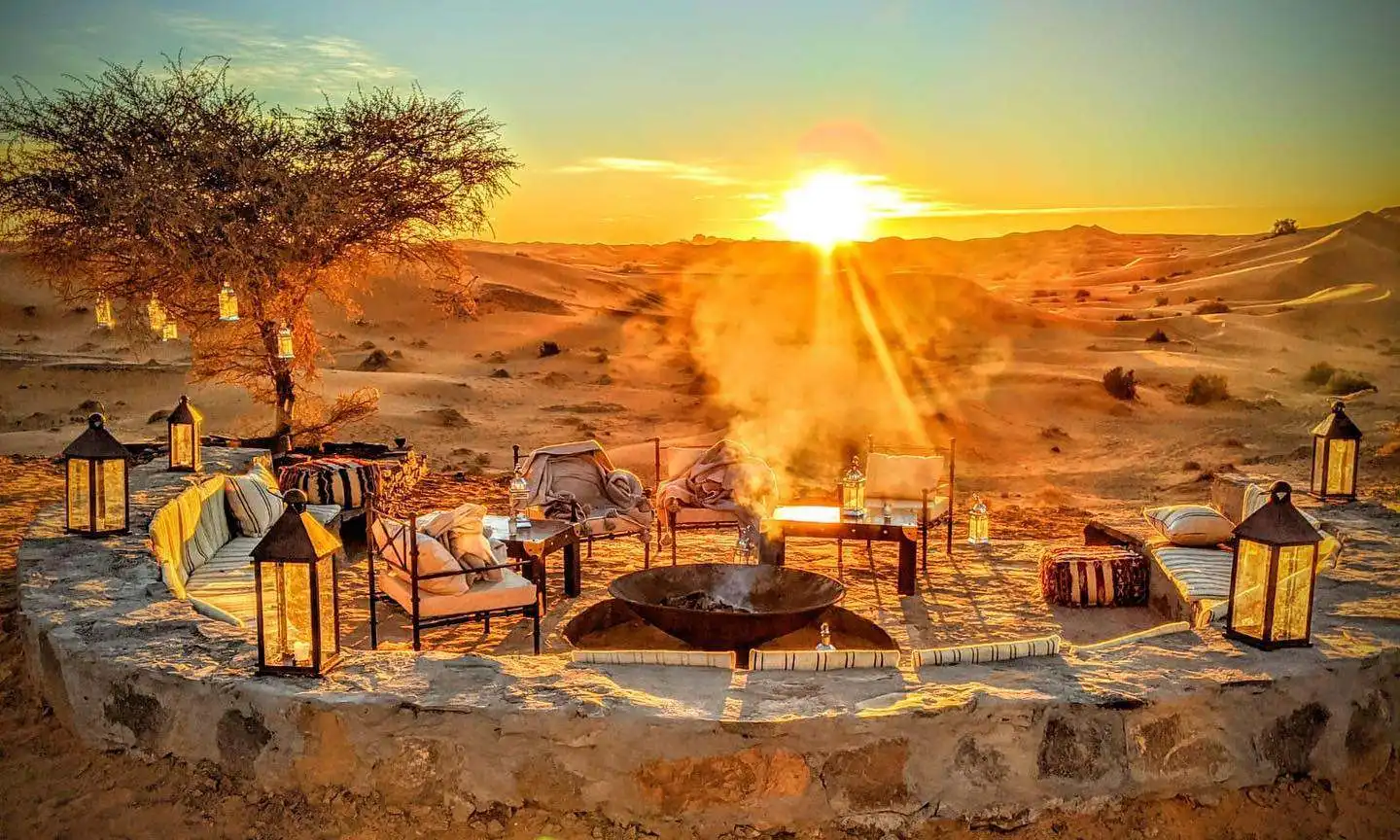
Quoi emporter pour un week-end dans le désert
Pack light but smart. The desert swings from hot afternoons to genuinely cold nights, even in summer, so layers matter more than anything. Bring a warm fleece or jacket for the evening, comfortable closed shoes (sand gets everywhere), a scarf or light chèche for sun and wind, sunglasses, sunscreen and a refillable water bottle. A headlamp or phone torch makes the camp far easier after dark.
Laissez la grande valise à votre riad de Marrakech — la plupart des hébergements gardent les bagages gratuitement — et voyagez avec un petit sac pour la nuit. L'argent liquide est utile pour les pourboires et les arrêts en route, car les terminaux de carte se font rares une fois passé Ouarzazate. Et chargez tout avant de partir ; l'électricité dans les campements simples peut être limitée.
Quand partir : la meilleure saison pour le désert de Zagora
Spring (March–May) and autumn (September–November) are the sweet spots: warm days, cool-but-bearable nights, and comfortable trekking. Winter brings crisp, clear days and genuinely cold desert nights — pack accordingly, and remember the Atlas pass can see snow. Summer is hot, often well above 40°C in the afternoon, though early starts and the cooler evenings still make it workable for many travelers. There’s no single “wrong” season; there’s just knowing what you’re signing up for.
Quelques conseils honnêtes avant de réserver
First, treat the “two days” as one full day of travel and one short morning — not two relaxed days in the dunes. If that sounds rushed, it is, a little; that’s the trade for staying close to Marrakech. Second, ask exactly what’s included before you pay: meals, the camel trek, the camp category (shared tent or private), and whether the vehicle is air-conditioned. Vague answers are a red flag.
Third, manage the drive smartly — sit on the left going south for the best valley views, bring motion-sickness tablets if the switchbacks worry you, and keep snacks and water within reach. Finally, don’t over-shop at the first roadside stall; prices ease the further you get from the tour-bus routes. A little patience, and the weekend rewards you.
Questions fréquentes
Une excursion de 2 jours dans le Sahara depuis Marrakech en vaut-elle la peine ?
For most travelers with a tight schedule, yes. You get the genuine desert experience — camel trek, Berber camp, sunrise over the dunes, and the spectacular kasbah road — without the longer commitment Merzouga demands. Just go in knowing Zagora’s dunes are modest, and the magic is as much about the camp and the silence as the scenery.
Quel désert visite-t-on lors d'une excursion de 2 jours, Zagora ou Merzouga ?
Zagora. Elle se trouve à environ 360 km de Marrakech, soit à peu près sept heures de route dans chaque sens, ce qui convient à un week-end. Merzouga et ses célèbres dunes de l'Erg Chebbi sont à environ 560 km — près de neuf heures — si bien qu'elles nécessitent réellement une excursion de trois jours avec une nuit d'étape en chemin pour être agréables plutôt qu'épuisantes.
Combien de route faut-il faire pour une excursion de 2 jours dans le désert ?
A lot, honestly: roughly seven hours each way between Marrakech and Zagora, crossing the High Atlas via the Tizi n’Tichka pass. The good news is the drive is scenic the whole way — mountains, kasbahs and palm-filled valleys — and tours build in stops at Aït Benhaddou, Ouarzazate and along the Draa Valley to break it up.
Can I do the camel trek if I’ve never ridden before?
Absolutely. The treks are short and slow, led on foot by a guide, and no experience is needed. The camel’s rocking motion feels strange for the first few minutes, then most people relax into it. If you’d prefer to skip riding altogether, a 4×4 transfer into the camp is usually available — just request it when you book.
What’s the best time of year for the Zagora desert?
Le printemps et l'automne offrent l'équilibre le plus confortable entre journées chaudes et nuits supportables. En hiver, les journées sont claires mais les nuits froides, et le col de l'Atlas peut fermer brièvement pour cause de neige. Les après-midis d'été sont très chauds, souvent au-dessus de 40 °C, si bien que les départs matinaux et les soirées plus fraîches comptent alors le plus. Prévoyez des couches en toute saison.
Dois-je réserver une excursion de groupe partagée ou un voyage privé ?
Shared tours are the budget-friendly choice and a sociable way to meet other travelers, while private trips give you control over timing, stops and the style of camp. If you’re a couple, a family, or simply want a relaxed pace and a quieter camp, private is worth the extra. Either way, confirm exactly what’s included before you commit.
If you’d like the rest of your desert weekend handled with the same care — a driver who knows where the light is best, a camp chosen by people who’ve actually slept in it, and the timings paced so the road never swallows the trip — that’s what we do. Browse our circuits privés dans le désert au départ de Marrakech, demandez un devis, ou écrivez-nous simplement message us with any question — we’ll answer for free, no obligation. For a fuller comparison of the two main Sahara options, see our Zagora vs Merzouga guide, which weighs them by drive time, dunes, cost and days. Either way: take the weekend. The desert is closer than you think.