
Fourteen days is the sweet spot. It’s the shortest trip that lets you see Morocco’s four imperial cities, sleep under Saharan stars, walk a 300-metre-deep gorge, and still finish with sea air on your face — without spending half your holiday in a car seat. This 14 day Morocco itinerary is the grand tour we’d plan for a friend: Casablanca to Rabat to Chefchaouen, down through Fes to the Erg Chebbi dunes, then west along the kasbah road to Marrakech and Essaouira.
It touches six of Morocco’s UNESCO World Heritage cultural sites. It never asks you to drive more than one long day. And it builds in something most itineraries forget: rest.
Here’s the full route, day by day, with the honest pacing notes most guides leave out.
L'itinéraire en un coup d'œil
| Jours | Étape | Points forts |
|---|---|---|
| 1–2 | Casablanca → Rabat | Hassan II Mosque, Rabat’s kasbah and capital calm |
| 3–4 | Chefchaouen | La médina bleue, l’air des montagnes du Rif, une matinée tranquille |
| 5–6 | Fès (via Volubilis) | Roman mosaics, the world’s great medieval medina |
| 7–8 | Merzouga | Forêts de cèdres du Moyen Atlas, vallée du Ziz, nuit dans un camp du désert |
| 9 | Vallée du Dadès | Todgha Gorge walk, kasbah-country sunset |
| 10–11 | Aït Benhaddou → Marrakech | Morocco’s most famous ksar, the Tizi n’Tichka pass |
| 12–13 | Marrakech | Jemaa el-Fna, souks, gardens — then a coast day |
| 14 | Essaouira → Marrakech | Atlantic ramparts, fresh fish, fly home rested |
The shape matters more than the stops. You move in one continuous arc — north coast, mountains, desert, south coast — so you never backtrack. Every transfer is a sight in itself.
Jours 1–2 : Casablanca et Rabat — le départ atlantique
Most international flights land in Casablanca, so start there — but don’t linger. Casablanca earns one unmissable stop: the Hassan II Mosque, built right on the ocean, with room for 105,000 worshippers between its 25,000-capacity prayer hall and the vast esplanade outside. Non-Muslim visitors can enter on a guided tour, which is rare for a working mosque in Morocco. See it, eat well, sleep off the flight.
On day 2, take the train up the coast to Rabat. Morocco’s capital is the country’s most underrated city stop: a UNESCO World Heritage site since 2012, with the Kasbah of the Udayas perched over the Atlantic, the unfinished 12th-century Hassan Tower, and a medina that locals actually shop in. Rabat is calm. That’s the point — you’ll want this gentle warm-up before the sensory volume rises.
Si vous souhaitez que nous l’organisions pour vous, découvrez notre grand circuit de 13 jours au Maroc.
Jours 3–4 : Chefchaouen — ralentir dans la ville bleue
From Rabat, head northeast into the Rif mountains to Chefchaouen. Founded in 1471 as a small kasbah to resist Portuguese incursions, the town later absorbed waves of Andalusi refugees — and somewhere along the way, its medina turned blue. Every shade of it.
Two nights here is deliberate. Day 3 is mostly travel; day 4 is yours. Climb to the Spanish Mosque for the classic view at golden hour, drink mint tea in Plaza Uta el-Hammam, and get lost on purpose — the medina is small enough that you can’t stay lost for long. We’ve written a full guide de voyage de Chefchaouen if you want the detailed version with photo spots and where to eat.
Jour 5 : Volubilis sur la route de Fès
The drive from Chefchaouen to Fes sets up one of the trip’s best detours: Volubilis, the ruined Roman city inscribed by UNESCO in 1997. Mosaic floors still sit in the open air where they were laid almost two thousand years ago, with storks nesting on the columns above. An hour or two here, with lunch in nearby Moulay Idriss or Meknes, breaks the journey perfectly. You’ll roll into Fes by late afternoon.
Jour 6 : Fès — le cœur médiéval
Fes el-Bali is the densest, oldest, most overwhelming medina in North Africa — a site du patrimoine mondial de l'UNESCO depuis 1981 and home to al-Quaraouiyine, founded in 859 by Fatima al-Fihri and recognised as one of the oldest centres of higher learning on earth. The Chouara tanneries, the medersas, the constant choreography of donkeys and copper and call to prayer: this is the day your trip stops feeling like a holiday and starts feeling like time travel.
One firm recommendation: hire a licensed local guide for your first morning. Fes rewards context more than any city in Morocco, and a good guide turns a maze into a story. Spend the afternoon revisiting whatever pulled at you.
Jours 7–8 : la longue route vers le sud et une nuit dans les dunes
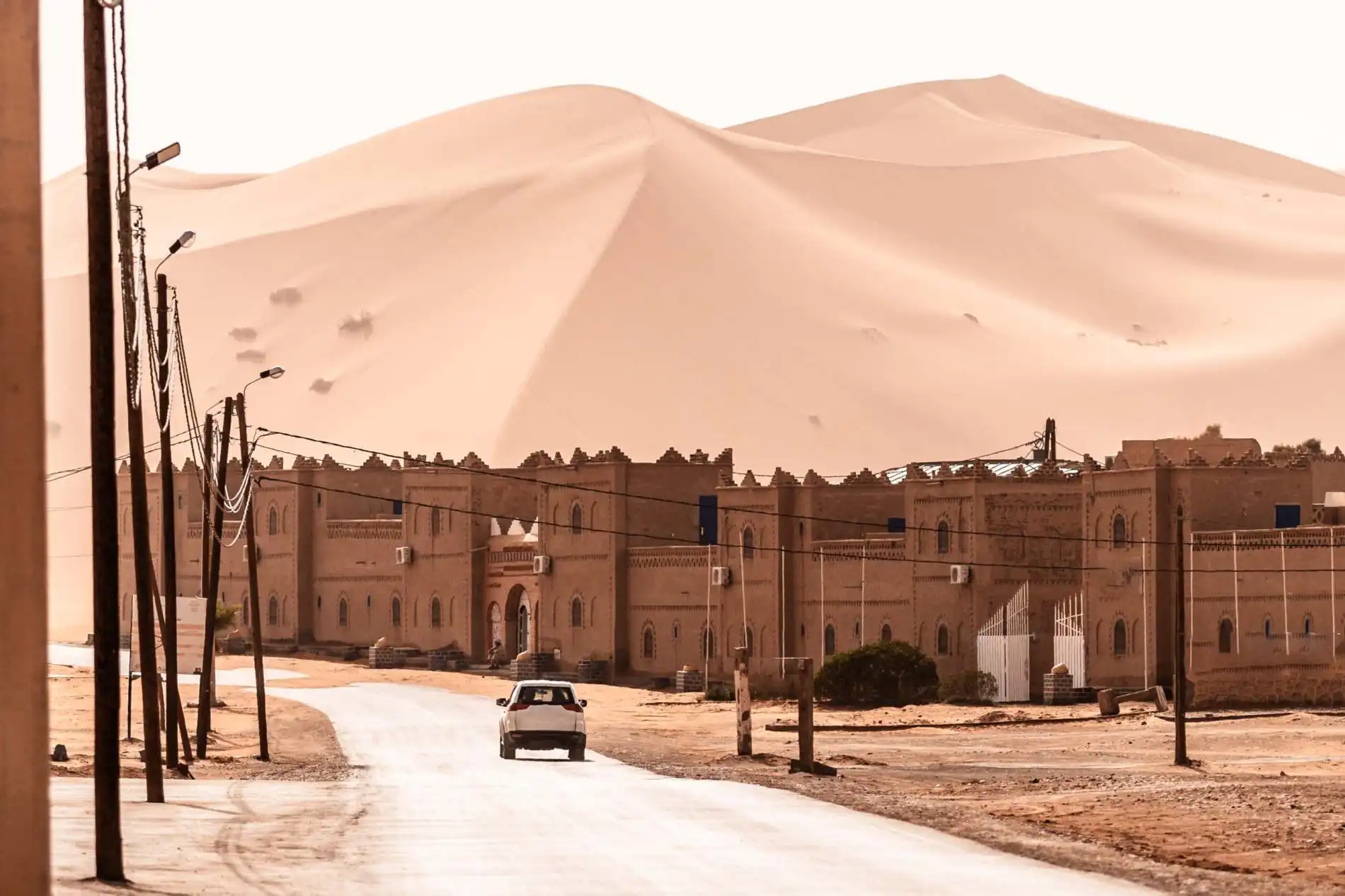
Day 7 is the big one: roughly 470 km from Fes to Merzouga, a solid 7–8 hours of driving before stops. It sounds brutal. It’s actually one of the most varied road days in the country — up through Ifrane’s alpine-style streets, the cedar forests around Azrou (watch for Barbary macaques), the high plains past Midelt, then the date-palm ribbon of the Ziz Valley unspooling toward the desert. Leave early, stop often, arrive for sunset.
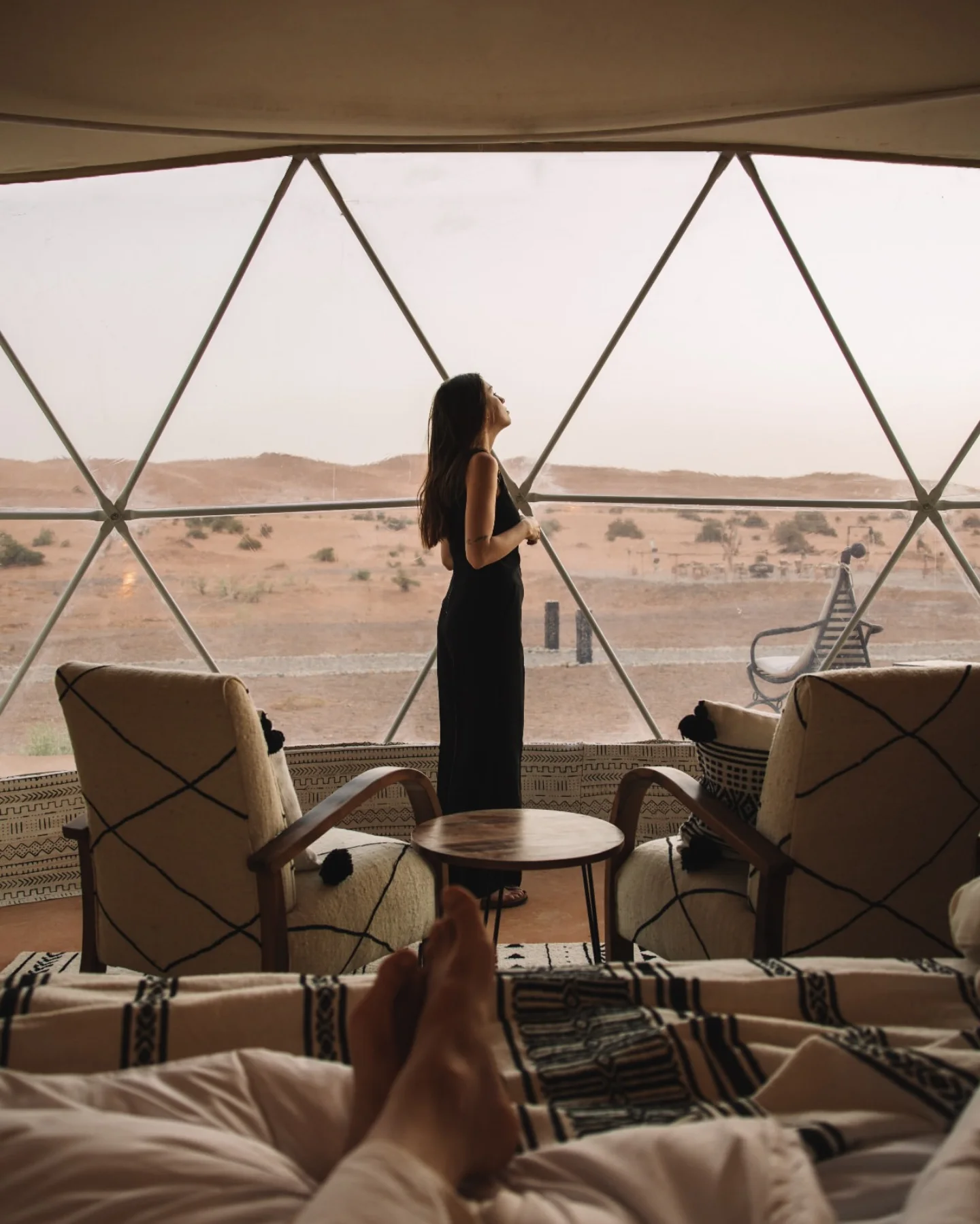
Le jour 8 appartient à l’Erg Chebbi : une mer de dunes qui s’étend sur environ 28 km du nord au sud, avec des crêtes qui s’élèvent jusqu’à 160 mètres environ. Partez à dos de chameau (ou en 4×4) dans le sable pour la nuit. Un bon camp dans le désert (un vrai lit, une douche chaude, un dîner sous plus d’étoiles que vous n’en avez jamais vu) est la nuit dont on se souvient le plus dans presque tous les voyages au Maroc que nous avons organisés. Là-bas, le silence n’est pas vide. Il vibre.
Jour 9 : les gorges du Todgha et la vallée du Dadès
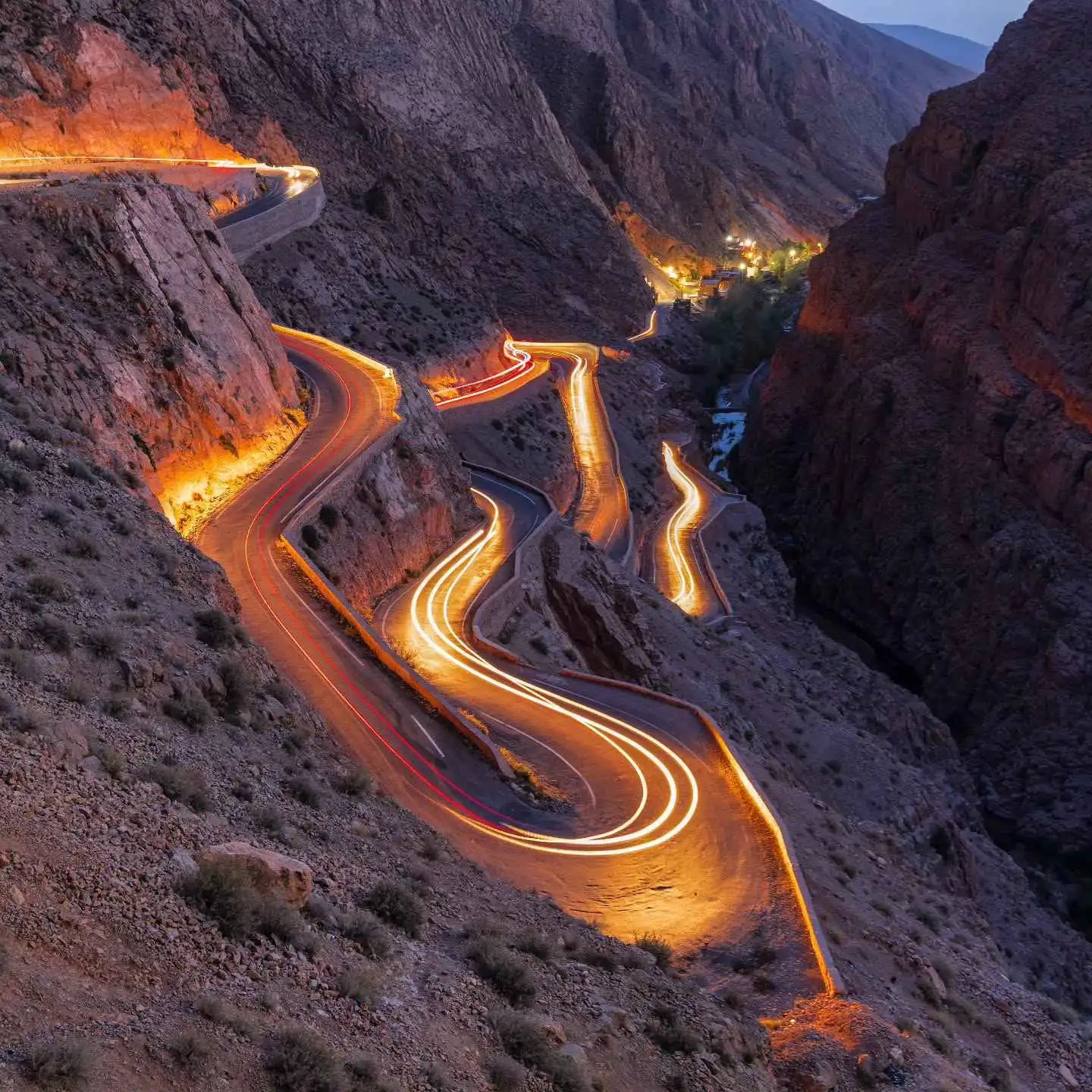
Sunrise over the dunes, breakfast, then west into kasbah country. The first stop is Todgha Gorge, where limestone walls rise as high as 300 metres and the canyon narrows to a passage only about 10 metres wide. The flat, shaded walk along the river takes under an hour and might be the easiest world-class hike anywhere.
Carry on to the Dades Valley for the night. The road through the valley’s rock formations — locals call some of them “monkey fingers” — is a slow, beautiful unwind after the desert. Choose a kasbah-style guesthouse with a terrace and watch the cliffs go copper at dusk.
Jours 10–11 : Aït Benhaddou et la traversée de l'Atlas
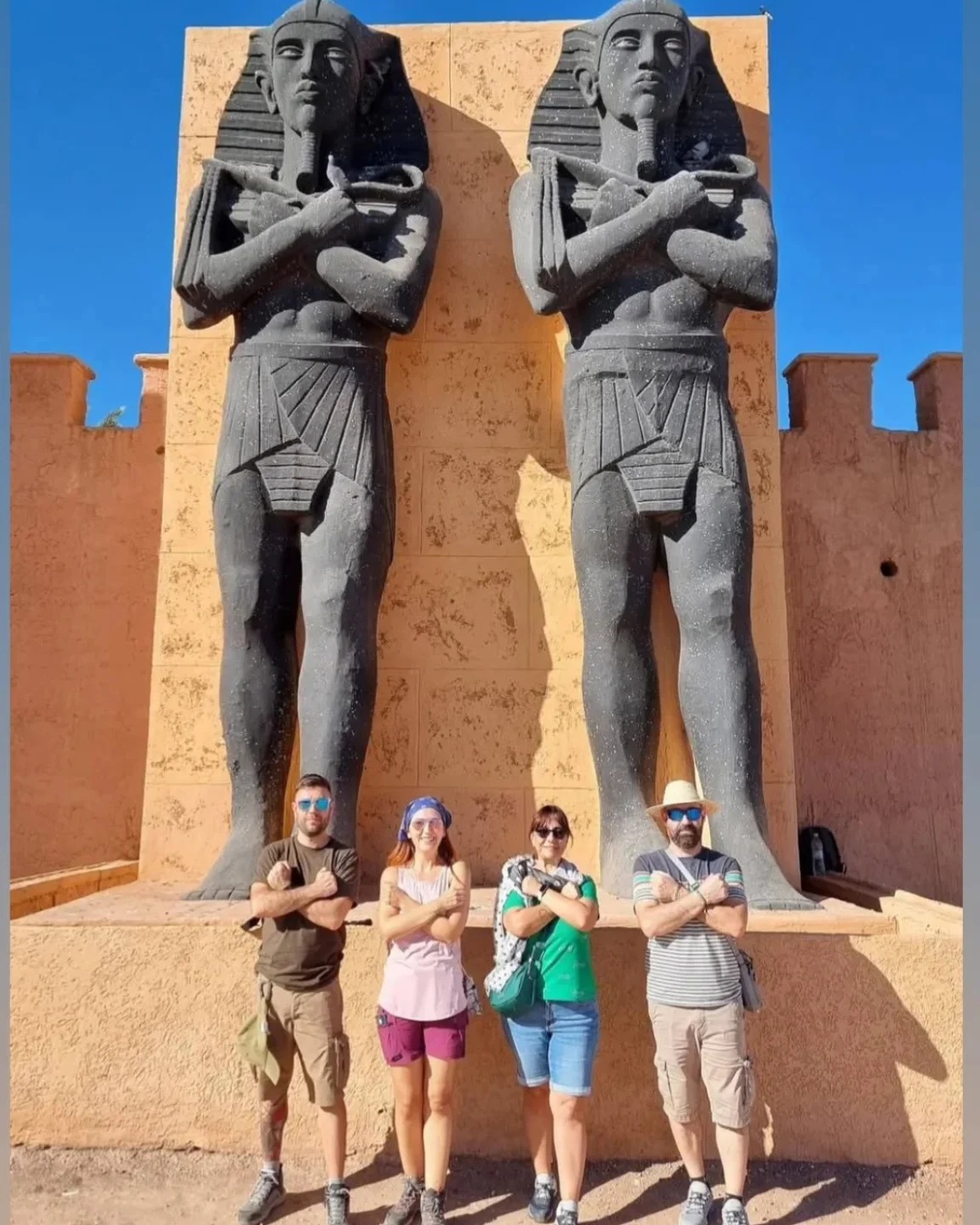
Day 10 continues west through Skoura’s palm groves and Ouarzazate — Morocco’s film-studio town — to Aït Benhaddou, site UNESCO depuis 1987. This fortified mud-brick ksar climbing its hillside is the image most people carry in their heads when they imagine southern Morocco, and it’s earned its fame honestly. Stay nearby so you can walk it in early light, before the day-trippers arrive from Marrakech.
Day 11 crosses the High Atlas on the N9 over the Tizi n’Tichka, the pass signposted at 2,260 metres — the highest major road pass in North Africa, cut through by the French in 1936 to replace the old caravan trails. Hundreds of bends, Berber villages stacked on slopes, and then the descent into the Haouz plain with Marrakech shimmering ahead. By evening you’re trading mountain quiet for the drum of Jemaa el-Fna.
Jours 12–13 : Marrakech — le crescendo
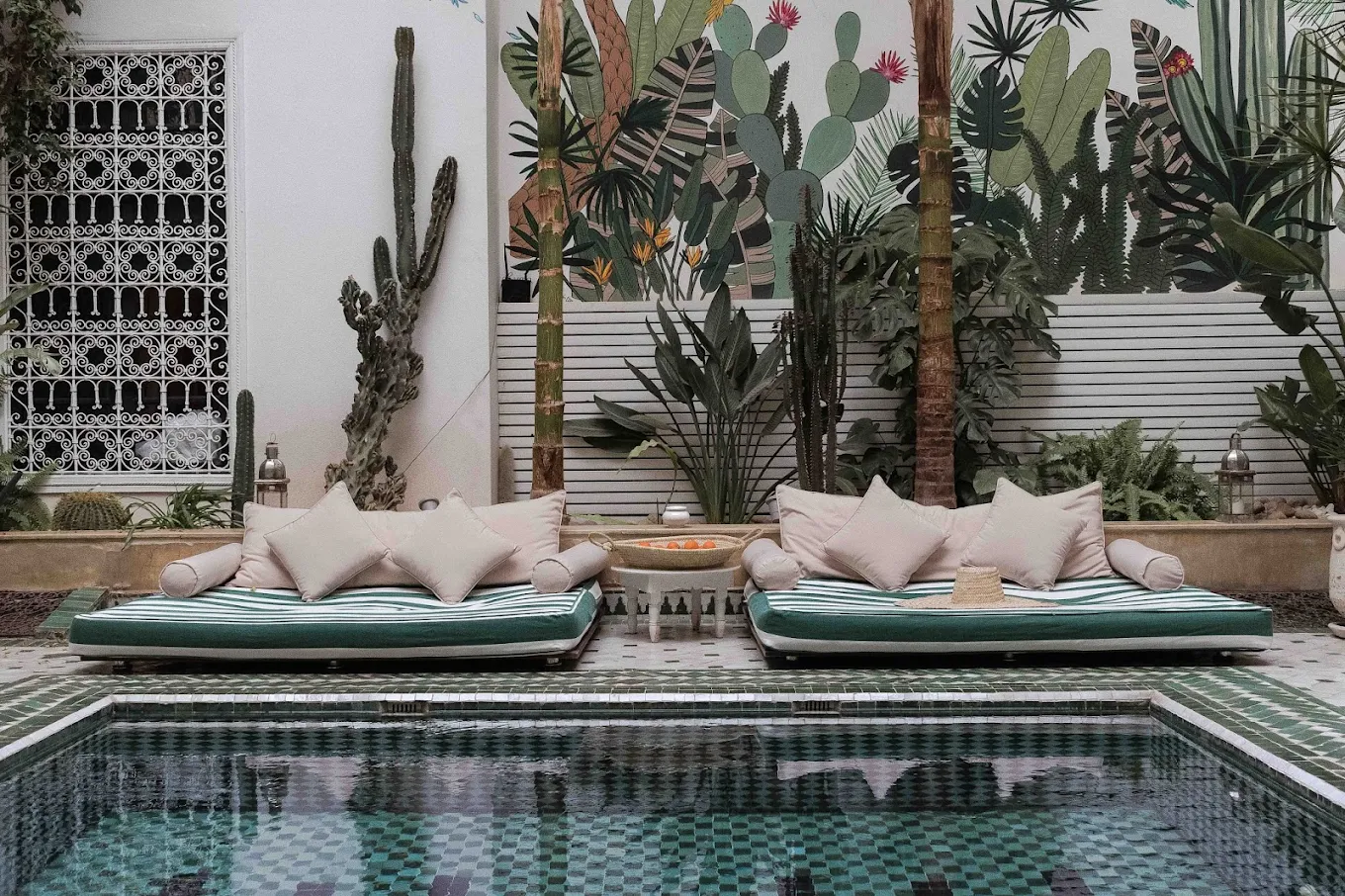
Marrakech needs no introduction, but it does need strategy. The medina has been a UNESCO World Heritage site since 1985, and Jemaa el-Fna square was proclaimed a masterpiece of intangible heritage in 2001 — by night it becomes an open-air theatre of food stalls, musicians and storytellers that has run continuously for centuries.
After eleven days on the road, the trick is to resist the checklist. You’ve already earned the right to skip things. The souks reward wandering more than targeting; the monuments are best in the first hour after opening; and the square is a different animal at 10 a.m., 5 p.m. and 10 p.m. — try to catch all three versions at least once.
Jour 12 : souks et monuments le matin (palais de la Bahia, médersa Ben Youssef), escapade dans un jardin l’après-midi (Majorelle ou le Jardin Secret, plus calme), Jemaa el-Fna à la nuit tombée. Jour 13 : choisissez votre rythme, entre un hammam, un cours de cuisine ou simplement le patio de votre riad et un livre. Vous avez traversé un désert. Vous avez bien le droit de vous asseoir.
Jour 14 : Essaouira et le final en bord de mer
End on the Atlantic. Essaouira sits about 175 km west of Marrakech — an easy 2.5 to 3 hours by road — and its walled medina, another UNESCO site (inscribed 2001), is everything Marrakech isn’t: cool, breezy, unhurried. Blue fishing boats, ramparts straight out of a maritime painting, grilled sardines at the port, gnaoua music drifting from doorways.
Si votre vol part de Marrakech en fin de journée le jour 14, Essaouira se fait en longue excursion d’une journée. Mieux encore, si votre programme le permet : dormez-y et rentrez le lendemain matin. Dans tous les cas, finir au bord de la mer vous renvoie chez vous reposé plutôt qu’épuisé.
Où dormir le long de l'itinéraire
The grand tour’s secret weapon is the variety of beds. In the cities, skip the chain hotels and book riads — traditional courtyard houses inside the medina walls, where the architecture itself is half the experience. Fes and Marrakech both have superb ones at every budget level, and arriving through a plain door into a tiled courtyard with a fountain never stops feeling like a magic trick.
In the south, the texture changes. The Dades and the kasbah road are guesthouse country: family-run places built in the local mud-brick style, dinner cooked by the owners, terraces aimed at the cliffs. And in Merzouga, the choice is between an auberge at the dune edge and a camp inside the dunes themselves. If your budget stretches to it once on the whole trip, spend it on the camp — that’s the night the photos can’t capture.
Deux règles pratiques que nous donnons à tout le monde. D’abord, réservez le camp du désert et vos riads de Fès et de Marrakech bien à l’avance au printemps et à l’automne : les meilleures petites adresses ne comptent qu’une poignée de chambres. Ensuite, vérifiez toujours si votre riad envoie un porteur à votre rencontre : les adresses de la médina déjouent le GPS, et cinq minutes de marche avec quelqu’un qui connaît les détours valent mieux que trente minutes à se tromper de chemin.
Quand faire ce circuit en 2026
Le printemps (mars-mai) et l’automne (fin septembre-novembre) sont les meilleures périodes pour le grand circuit : nuits douces dans le désert, visites confortables en ville, neige qui saupoudre encore l’Atlas au printemps. L’été est possible, mais l’étape Fès-Merzouga devient très chaude, et nous décalerions les activités dans le désert à l’aube et au crépuscule. L’hiver apporte des journées fraîches et lumineuses et des nuits froides dans le désert : prévoyez de vraies couches chaudes pour le camp.
For 2026 specifically, the autumn window looks like the smart play if you haven’t booked yet: spring dates at the popular desert camps fill earliest, and October light on the dunes is the photographer’s favourite. Whatever the season, check the UK FCDO’s Morocco travel advice close to departure for current entry requirements and any regional notes, and re-confirm opening days for sights like the Hassan II Mosque tours, which pause around prayer times and religious holidays.
Que mettre dans sa valise pour quatre climats en deux semaines
This route crosses Atlantic coast, two mountain ranges, the Sahara’s edge and city heat — sometimes within the same 48 hours. The packing answer is layers, not volume. A light down jacket or fleece earns its place even in May: desert nights and the Tichka pass both turn cold after dark. Add a scarf (sun, sand and modest-dress flexibility in one item), genuinely broken-in walking shoes for medina cobbles, and a headlamp for the camp.
Trois choses qu’oublient ceux qui partent pour la première fois. Des lunettes de soleil vraiment enveloppantes : la réverbération sur les dunes est féroce. Un sac souple plutôt qu’une valise rigide si vous rejoignez le camp à dos de chameau, car les bagages voyagent en 4×4 sur le sable. Et une copie papier des adresses de vos hébergements : les riads de la médina se trouvent souvent dans des ruelles que les applications de cartographie situent au mieux approximativement. Les codes vestimentaires sont souples pour les visiteurs, mais couvrir épaules et genoux rend l’accueil nettement plus chaleureux aux abords des mosquées, dans les villages et dans la médina de Fès.
Inverser le circuit, et autres variantes
Everything above runs equally well in reverse — land in Marrakech, finish in Casablanca — and the reverse run has one real advantage: you cross the Tizi n’Tichka early, while your enthusiasm for mountain bends is fresh, and end with the gentler northern cities. The compromise version for short flight windows: skip Casablanca entirely except as an airport, and bank that day for the Dades.
Travelers who’ve already seen the north sometimes swap Chefchaouen and Rabat for two extra nights split between Essaouira and the Atlas foothills. That turns the grand tour into a south-weighted loop that’s lighter on driving overall. There’s no wrong answer here — only the version that matches your energy. The skeleton (Fes, the desert, the kasbah road, Marrakech) is the part we’d defend to the last.
Voiture de location, train ou chauffeur privé ?
Three honest options. The rail network is excellent where it exists — Casablanca, Rabat and Fes are all well connected, and the classic Marrakech–Fes line covers 385 km in roughly 6.5–7 hours — but trains don’t reach Chefchaouen, the desert, or the kasbah road. So a pure-train version of this trip isn’t possible.
Self-driving is very doable: roads on this route are good, and the freedom is real. The trade-offs are mountain driving on the Tichka’s bends, navigating medina-edge parking, and the simple fatigue of being the driver on a 470 km desert day. Our full guide des transports au Maroc breaks down trains, buses, grands taxis and car rental in detail.
The third option is a private driver for the southern loop (Fes onward) with trains for the north. It costs more, and it’s what most travelers on this exact route eventually wish they’d done: every long drive becomes a rolling viewpoint, and someone else handles the bends.
Conseils de rythme, en toute franchise
This itinerary has one genuinely long day (day 7) and two medium ones (days 5 and 10). Everything else is short hops or no driving at all. If that still feels brisk, the fix is simple: drop Rabat to its strengths in a half-day, or trade the second Chefchaouen night for an extra night in the Dades. If you have a fifteenth day to play with, our grand circuit du Maroc en 15 jours shows exactly where we’d spend it.
And if two weeks of logistics is precisely the part you don’t want to own, this is — full disclosure — what we do at Moratra. Our grand circuit privé de 13 jours runs a close cousin of this route with riads, camp and driver already woven together; it’s an easy benchmark for what the organised version of this trip looks like, even if you end up building your own.
Questions fréquentes
14 jours suffisent-ils pour bien voir le Maroc ?
Yes — two weeks is the sweet spot for a first visit. It covers the imperial cities, the Sahara, the kasbah valleys and the coast without daily dawn departures. You won’t see everything (no one does), but you’ll see the country’s full range: mountains, medinas, desert and ocean, with rest days built in.
Faut-il commencer cet itinéraire à Casablanca ou à Marrakech ?
Start wherever your cheapest convenient flight lands; the loop works in both directions. Casablanca starts give you a gentle ramp-up and save the Marrakech crescendo for the end. Marrakech starts front-load the intensity and finish in the calmer north. If prices are equal, we’d land in Casablanca and fly home from Marrakech.
What’s the longest driving day on this route?
Fes to Merzouga: roughly 470 km and 7–8 hours of actual driving, usually 9–10 with stops for the Azrou cedar forests, Midelt lunch and Ziz Valley viewpoints. It’s the one day that demands an early start. Every other transfer on the route is materially shorter, and several days involve no driving at all.
Peut-on faire cet itinéraire de 14 jours au Maroc sans conduire soi-même ?
Yes. Use trains for Casablanca–Rabat and on to Fes, then a private driver (or a small-group tour) for the Chefchaouen leg and the southern loop through the desert to Marrakech. Plenty of travelers do exactly this split — it keeps costs reasonable in the north and removes all mountain-road stress in the south.
Combien de sites du patrimoine mondial de l'UNESCO ce circuit comprend-il ?
Six cultural sites: Rabat (inscribed 2012), Volubilis (1997), the Fes medina (1981), Aït Benhaddou (1987), the Marrakech medina (1985) and the Essaouira medina (2001). Jemaa el-Fna square in Marrakech also holds separate UNESCO recognition for intangible cultural heritage, first proclaimed in 2001.
La nuit en campement dans le désert vaut-elle la peine avec seulement deux semaines ?
It’s usually the night people remember most, so yes. The camel ride into Erg Chebbi at sunset, dinner in camp and a 160-metre dune at sunrise justify the long approach drive. If you’re tight on time or money, a comfortable auberge at the dune edge captures much of the magic too.
If you’d like the rest of your Morocco trip planned with the same care — routes timed to the light, riads chosen by people who’ve slept in them, a driver who knows which viewpoint beats the famous one — that’s what we do. Browse our circuit Maroc 14 jours, demandez un devis, ou écrivez-nous simplement posez-nous une question — we’ll answer for free, no obligation. Either way: take the two weeks. Morocco repays every single day.
Sources and disclosure: UNESCO inscription dates from the World Heritage Centre; pass elevation as signposted on the N9; distances and journey times are road-network figures that vary with season and stops — re-verify travel advisories via the FCDO link above close to your departure. Moratra operates tours on parts of this route; the itinerary above stands on its own whether or not you travel with us.