
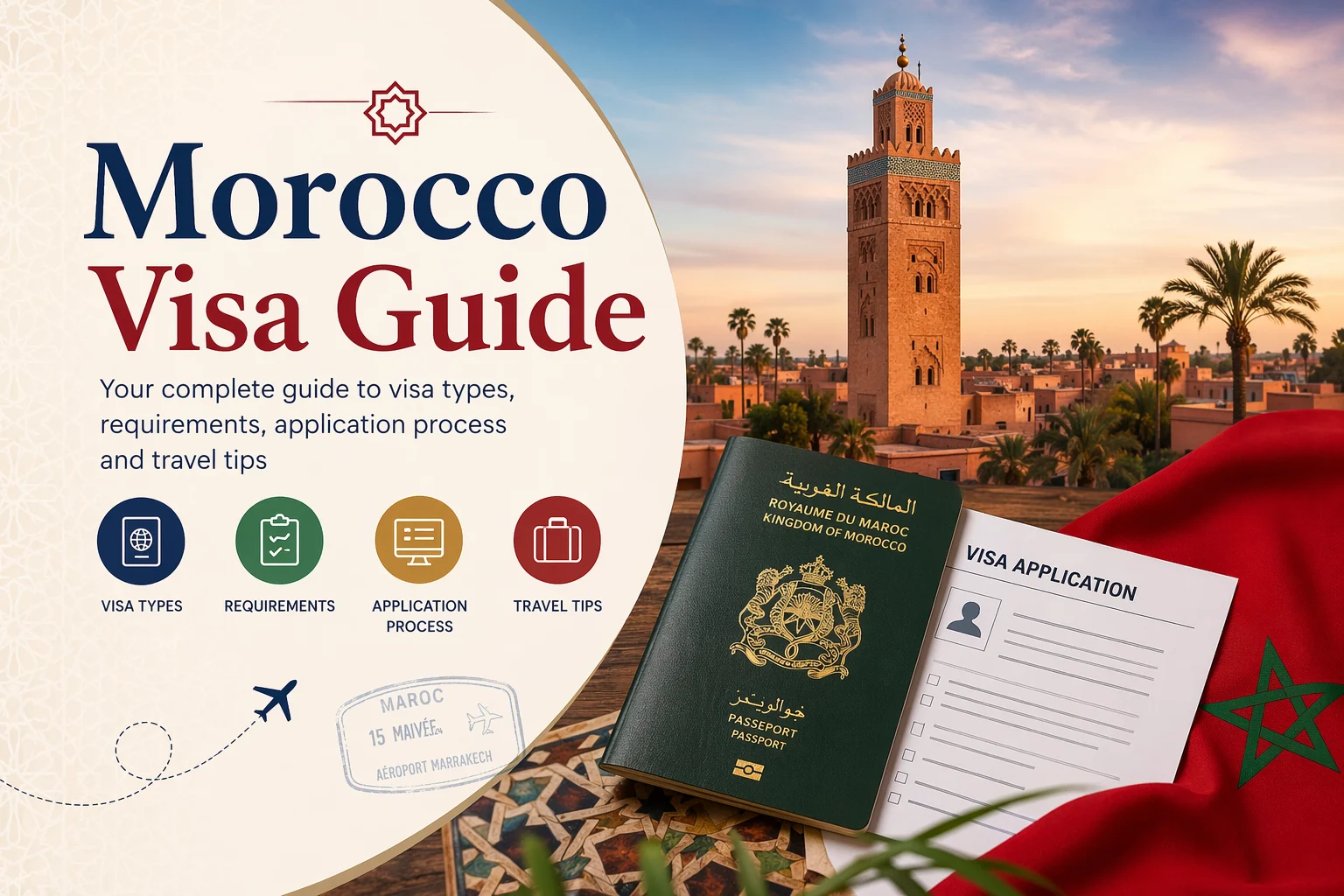
Le Maroc est l’un des pays d’Afrique du Nord où il est le plus facile d’entrer, mais cette facilité dépend entièrement du passeport que vous avez en main. Les voyageurs de l’Union européenne, des États-Unis, du Royaume-Uni, du Canada, d’Australie et de dizaines d’autres pays entrent avec un simple tampon à la frontière. Ceux d’une grande partie de l’Asie, de l’Afrique et de l’Amérique latine ont besoin soit d’un visa classique délivré par un consulat marocain, soit d’un visa électronique demandé en ligne.
Ce guide explique, nationalité par nationalité, exactement ce dont vous avez besoin pour entrer au Maroc en 2026 : le programme e-Visa, les règles relatives au passeport, la durée de séjour, les conséquences d’un dépassement et les cas particuliers qui piègent beaucoup de primo-visiteurs (Ceuta et Melilla, le Sahara occidental, le ferry depuis l’Espagne). La politique des visas change plus souvent que la plupart des voyageurs ne l’imaginent : le Maroc a élargi sa liste e-Visa à plusieurs reprises depuis le lancement du programme en 2022 et a levé début 2026 l’autorisation de voyage temporaire AEVM pour plusieurs pays africains. Vérifiez donc toujours auprès du consulat marocain le plus proche avant de prendre l’avion. Toutes les informations ci-dessous ont été vérifiées fin avril 2026.
Réponse rapide : avez-vous besoin d’un visa pour le Maroc ?
| Si votre passeport vient de… | Ce qu’il vous faut | Durée de séjour autorisée |
|---|---|---|
| UE / EEE / Schengen, Royaume-Uni, États-Unis, Canada, Australie, Nouvelle-Zélande, Japon, Corée du Sud, pays du CCG | Rien : entrée sans visa | 90 jours |
| RAS de Hong Kong, Singapour, Maldives | Rien : entrée sans visa | 30 jours |
| République dominicaine | Rien : entrée sans visa | 60 jours |
| Inde, Israël, Thaïlande, Vietnam et autres nationalités de la catégorie A de l’e-Visa | Demander un e-Visa marocain en ligne | 30 jours, entrée unique |
| Titulaires d’un titre de séjour de longue durée ou d’un visa à entrées multiples de l’UE, des États-Unis, du Royaume-Uni, du Canada, d’Australie, etc. (catégories B / C) | Demander un e-Visa marocain en ligne | 30 jours, entrée unique |
| Toutes les autres nationalités | Demander un visa classique auprès d’un consulat marocain | Selon la durée accordée sur le visa |
| République du Congo, Équateur, Ghana, Guinée | Sans visa, mais demande en ligne de l’autorisation de voyage AEVM obligatoire avant le départ | 90 jours |
Autre remarque à l'entrée : le Maroc n'exige pas d'assurance voyage pour entrer, mais elle est vivement conseillée pour les soins médicaux et les trajets dans le désert ou en montagne. Consultez notre guide sur l'assurance voyage pour le Maroc.
La liste complète des nationalités et les catégories de l’e-Visa sont détaillées dans les sections ci-dessous.
Vous arrivez à Marrakech ? Réservez notre transfert privé depuis l’aéroport.
Pays exemptés de visa (90 jours)
Environ 70 nationalités peuvent entrer au Maroc sans visa pour du tourisme, des affaires ou des visites familiales. La durée de séjour standard est de 90 jours à compter de la date d’entrée, ce qui suffit largement pour presque tous les itinéraires de vacances, y compris les longs circuits Marrakech–Sahara–Fès que choisissent la plupart des visiteurs.
Europe
Les 27 États membres de l’Union européenne sont exemptés de visa pour 90 jours, ainsi que le reste de l’espace Schengen : Islande, Liechtenstein, Norvège et Suisse. Andorre, Monaco, Saint-Marin, le Vatican et le Royaume-Uni sont également exemptés pour 90 jours, tout comme la Russie.
Amériques
Les États-Unis, le Canada, le Mexique, le Brésil, l’Argentine, le Chili, le Pérou, la Colombie et plusieurs autres pays d’Amérique latine sont exemptés de visa pour 90 jours. La République dominicaine est exemptée de visa, mais limitée à 60 jours.
Conseil de coopération du Golfe et Moyen-Orient
Bahreïn, le Koweït, Oman, le Qatar, l’Arabie saoudite et les Émirats arabes unis sont tous exemptés de visa pour 90 jours. La Turquie figure aussi sur la liste.
Asie-Pacifique
Exemptés de visa pour 90 jours : Australie, Chine, Indonésie, Japon, Malaisie, Nouvelle-Zélande, Philippines, Corée du Sud et RAS de Macao. Trois exceptions en Asie-Pacifique sont limitées à 30 jours: la RAS de Hong Kong, Singapour et les Maldives.
Afrique
L’Algérie, la Tunisie, le Sénégal, le Niger, le Burkina Faso, le Cap-Vert, la Côte d’Ivoire, le Gabon, la Guinée-Bissau, le Mali, le Togo et plusieurs autres pays entrent sans visa pour 90 jours. La liste des nationalités africaines s’est nettement allongée entre 2024 et 2026, à mesure que le Maroc a renforcé ses liens diplomatiques avec l’Union africaine.
Si votre pays ne figure dans aucun des groupes ci-dessus, partez du principe qu’il vous faut un e-Visa ou un visa consulaire classique, et vérifiez auprès du consulat marocain le plus proche. La liste officielle à jour est publiée sur consulat.ma.
L’e-Visa marocain : qui peut en bénéficier et comment il fonctionne
Le Maroc a lancé son programme e-Visa le 10 juillet 2022 pour simplifier l’entrée des voyageurs qui auraient sinon besoin d’un visa consulaire classique. Le programme a été élargi plusieurs fois depuis.
Il existe trois catégories d’éligibilité :
- Catégorie A : éligibilité par la nationalité. Les ressortissants d’Azerbaïdjan, du Bénin, de Brunei Darussalam, du Cambodge, du Guatemala, d’Inde, d’Israël, de Jordanie, du Laos, de Thaïlande et du Vietnam peuvent faire la demande avec un simple passeport ordinaire en cours de validité.
- Catégorie B : éligibilité par la résidence. Toute personne titulaire d’un titre de séjour valide (au moins 180 jours de validité restante) de l’Union européenne, des États-Unis, du Royaume-Uni, du Canada, du Japon, de Norvège, de Suisse, de Nouvelle-Zélande, d’Israël, des Émirats arabes unis ou d’Australie peut faire la demande.
- Catégorie C : éligibilité par le visa. Toute personne titulaire d’un visa valide à entrées multiples, de type vignette (non électronique), pour l’espace Schengen, les États-Unis, le Royaume-Uni, le Canada, l’Australie, l’Irlande, la Nouvelle-Zélande, la Norvège ou le Japon, avec au moins 90 jours de validité restante à la date de la demande.
Frais : généralement environ USD 30 pour la catégorie A, avec des ajustements selon la catégorie et la nationalité.
Délai de traitement : 24 heures (express) à 72 heures (standard) sur le portail officiel.
Validité : l’e-Visa permet une entrée unique, valable pour un séjour de 30 jours maximum, dans les 180 jours suivant sa délivrance.
La demande se fait sur le portail officiel du gouvernement marocain, acces-maroc.ma (ou via diplomatie.ma). Évitez les sites tiers qui majorent les frais : la demande officielle est simple.
Pays soumis à visa et démarche consulaire
Si vous ne figurez pas sur la liste des pays exemptés et ne remplissez pas les conditions de l’e-Visa, il vous faudra un visa consulaire marocain classique. La demande se fait auprès de l’ambassade ou du consulat du Maroc dans votre pays de résidence. Une demande de visa touristique standard exige :
- Un passeport valable au moins 6 mois après la date de départ prévue
- Un formulaire de demande de visa rempli
- Des photos d’identité récentes (les exigences de fond et de format varient légèrement selon le consulat)
- Un justificatif d’hébergement (réservations d’hôtel ou lettre d’invitation)
- Une réservation de vol aller-retour
- Un justificatif de ressources suffisantes
- Une assurance voyage (souvent demandée, parfois obligatoire)
Les délais de traitement varient fortement selon le consulat, de quelques jours à plusieurs semaines. Faites votre demande tôt.
Règles relatives au passeport à la frontière
C’est là que surviennent le plus souvent les problèmes évitables.
- 6 mois de validité au-delà de votre séjour est la règle générale la plus sûre et celle que recommande le Département d’État américain pour le Maroc. Le FCDO britannique indique actuellement un minimum de 3 mois après la date d’arrivée pour les titulaires d’un passeport britannique, mais la plupart des compagnies aériennes et des agents d’enregistrement appliquent la règle plus stricte des 6 mois : prévoyez donc 6 mois.
- Au moins une page vierge dans le passeport est exigée pour le tampon d’entrée.
- Votre passeport doit être lisible à la machine et en bon état. La police des frontières marocaine a déjà refusé l’entrée à des voyageurs dont le passeport était déchiré ou abîmé par l’eau.
- Faites tamponner votre passeport à l’entrée. Cela semble évident, mais c’est important : il arrive que des voyageurs passent sans tampon (surtout dans les ports de ferry très fréquentés en été), puis soient traités comme des arrivants en situation irrégulière au moment de repartir. Vérifiez toujours le tampon avant de quitter le guichet.
Combien de temps pouvez-vous rester, et que se passe-t-il si vous dépassez ?
La plupart des voyageurs exemptés de visa peuvent rester 90 jours à compter de la date d’entrée. Les exceptions figurent dans le tableau ci-dessus (Hong Kong, Singapour et les Maldives à 30 jours ; la République dominicaine à 60 jours). Les titulaires d’un e-Visa sont limités à 30 jours.
Prolonger votre séjour
Si vous souhaitez rester plus de 90 jours en tant que touriste, vous pouvez demander une prolongation unique auprès du commissariat central (Sûreté nationale) de la ville marocaine où vous résidez. Lancez la démarche au moins 15 jours avant l’expiration de votre séjour autorisé, munissez-vous d’un justificatif d’hébergement et de ressources, et préparez-vous à un entretien en personne. Une deuxième prolongation est beaucoup plus difficile à obtenir et n’est généralement accordée que pour un motif sérieux (médical, familial, professionnel). Pour les séjours de longue durée, renseignez-vous sur la carte de séjour, qui fait l’objet d’une démarche distincte.
Dépassement de la durée de séjour
Un court dépassement sans prolongation est traité sur le plan administratif plutôt que pénal, mais ce n’est pas un blanc-seing. Si vous restez au-delà des 90 jours autorisés sans prolongation valable, vous devrez généralement comparaître devant un juge avant d’être autorisé à partir. Les autorités fixent une amende en fonction de la durée du dépassement, puis délivrent un laissez-passer , un document de sortie officiel à présenter à l’aéroport ou à la frontière. Prévoyez quelques heures de plus et n’essayez pas de partir le jour même où la situation est régularisée.
Un court dépassement ne vous interdit pas définitivement de revenir, mais des dépassements répétés ou longs peuvent compliquer vos entrées futures.
Cas particuliers à connaître
Sahara occidental
La grande majorité du Sahara occidental est administrée par le Maroc et considérée, en matière de visa, comme faisant partie du pays. Les voyageurs exemptés de visa peuvent visiter les parties du Sahara occidental administrées par le Maroc (Laâyoune, Dakhla et la côte) dans le cadre du même séjour de 90 jours. Les déplacements plus loin, dans les zones contestées ou tampons, sont restreints ; des voyageurs indépendants ont été refoulés, et les mines terrestres restent un risque sérieux dans certaines zones. Consultez toujours les derniers avis du FCDO britannique et du gouvernement canadien avant de vous aventurer au-delà des principales villes côtières.
Ceuta et Melilla, et la frontière terrestre
Ceuta et Melilla sont des villes espagnoles de la côte nord-africaine : elles font partie de l’Espagne et de l’espace Schengen, pas du Maroc. Si vous passez du Maroc à Ceuta ou Melilla à pied ou en voiture, vous quittez officiellement le Maroc et entrez en Espagne. Vous devrez passer les contrôles de sortie marocains et d’entrée espagnols, puis au retour les contrôles de sortie espagnols et d’entrée marocains, ce qui signifie un nouveau tampon d’entrée marocain et un nouveau décompte de 90 jours. Bon à savoir : en vertu d’un arrangement local ancien, les habitants de Tétouan peuvent entrer à Ceuta sans visa, et ceux de Nador à Melilla. Ces exemptions locales ne s’appliquent pas aux voyageurs internationaux.
Ferry Espagne–Maroc
Si vous arrivez en ferry depuis Tarifa, Algésiras ou un autre port espagnol, le contrôle des passeports marocain se fait à bord du ferry sur de nombreuses lignes. Repérez le guichet de la police marocaine pendant la traversée et faites la queue tôt : la file s’allonge lors des départs chargés de l’été, et vous ne voulez pas débarquer à Tanger sans tampon.
L’autorisation de voyage AEVM
Le Maroc a temporairement exigé une autorisation électronique de voyage (AEVM) pour les ressortissants de plusieurs pays africains exemptés de visa pendant la Coupe d’Afrique des nations 2025 (25 septembre 2025 – 25 janvier 2026). Cette mesure a depuis été levée pour la plupart des pays. Au 27 avril 2026, seuls les ressortissants de la République du Congo, de l’Équateur, du Ghana et de la Guinée doivent encore obtenir une AEVM en ligne avant de voyager, bien qu’ils soient exemptés de visa. Si vous venez de l’un de ces quatre pays, prévoyez une étape supplémentaire avant votre vol.
Questions fréquentes
Ai-je besoin d’un visa pour un transit par un aéroport marocain ?
La plupart des voyageurs qui restent en zone de transit lors d’une correspondance à Casablanca n’ont pas besoin de visa marocain. Si vous devez sortir de la zone de transit sécurisée ou passer la nuit sur place, il vous faudra soit un tampon d’entrée sans visa (si vous y avez droit), soit un e-Visa ou un visa consulaire.
Puis-je entrer plusieurs fois au Maroc pendant un séjour de 90 jours sans visa ?
Oui. Les entrées sans visa repartent à zéro à chaque nouvelle arrivée. Beaucoup de voyageurs font un rapide aller-retour à Ceuta, Melilla, en Espagne continentale ou à Gibraltar pour relancer le décompte ; c’est toléré, mais le faire de façon répétée pour vivre au Maroc à long terme finira par susciter des questions à la frontière.
Puis-je travailler, ou télétravailler, au Maroc avec une entrée touristique ?
Un séjour touristique couvre le tourisme, les visites familiales et les courts rendez-vous d’affaires. Un emploi salarié pour un employeur marocain exige un permis de travail et un titre de séjour. Travailler à distance pour un employeur étranger sur votre propre ordinateur relève d’une zone grise : la plupart des voyageurs le font discrètement et sans problème pour des séjours de moins de 90 jours, mais ce n’est pas formellement autorisé.
Les enfants ont-ils besoin de leur propre passeport ?
Oui. Chaque voyageur, y compris les nourrissons et les mineurs, doit avoir son propre passeport pour entrer au Maroc. Certaines nationalités exigent aussi des documents supplémentaires (autorisation parentale) lorsqu’un enfant voyage avec un seul parent ou avec un accompagnateur qui n’est pas son parent. Vérifiez à l’avance les règles de votre pays et les exigences des compagnies aériennes pour le Maroc.
Que faire si mon passeport est perdu ou volé au Maroc ?
Signalez-le à la police locale (vous aurez besoin du procès-verbal), puis rendez-vous à l’ambassade de votre pays à Rabat ou à votre consulat pour demander un document de voyage d’urgence. Prévoyez du temps au départ : il vous faudra un document de sortie marocain ou une modification de visa pour partir avec le nouveau passeport.
Obtenez une aide spécifique sur le visa avant votre départ
Les règles de visa sont personnelles : elles dépendent de votre passeport, de votre résidence, de votre itinéraire et de la frontière que vous franchirez. Les informations ci-dessus sont un état des lieux de référence pour 2026, mais vérifiez toujours auprès de l’ambassade ou du consulat du Maroc le plus proche avant de réserver des vols non remboursables, surtout si vous voyagez avec autre chose qu’un passeport touristique standard d’un pays exempté de visa.
Si vous souhaitez un second regard sur votre situation particulière, sachez que l’équipe Moratra aide les voyageurs de tous les pays à préparer leur voyage au Maroc, notamment en vous orientant vers la démarche de visa adaptée à votre nationalité. Nous ne traitons pas les demandes de visa (elles doivent passer par les canaux officiels), mais nous vous indiquerons volontiers quoi demander, à quel moment, et comment accorder votre visa avec le reste de votre itinéraire. Contactez Moratra pour des conseils gratuits sur l’organisation de votre voyage : nous vous aiderons à arriver prêt à profiter du pays, et non des formalités.
Préparez votre voyage au Maroc avec Moratra
Prêt à transformer les idées de ce guide en vrai voyage ? Découvrez les expériences privées les plus réservées de Moratra à travers le Maroc : des itinéraires sélectionnés avec soin, des riads où règne le luxe , et des guides locaux :
- Circuits de luxe au Maroc — des itinéraires privés de plusieurs jours entre Marrakech, le Sahara, Fès et les villes impériales.
- Circuits dans le désert du Sahara au Maroc — des voyages privés VIP de Marrakech à l’Erg Chebbi et Merzouga.
- Excursions d'une journée dans le désert d'Agafay — des camps de luxe et des dîners sous les étoiles à seulement 30 minutes de Marrakech.
- Activités et excursions à Marrakech — cours de cuisine, hammams, visites à pied et vols en montgolfière.
Besoin d’aide pour choisir ? Contactez-nous à tout moment — notre équipe locale vous conseille gratuitement et sans engagement pour votre voyage au Maroc.
