
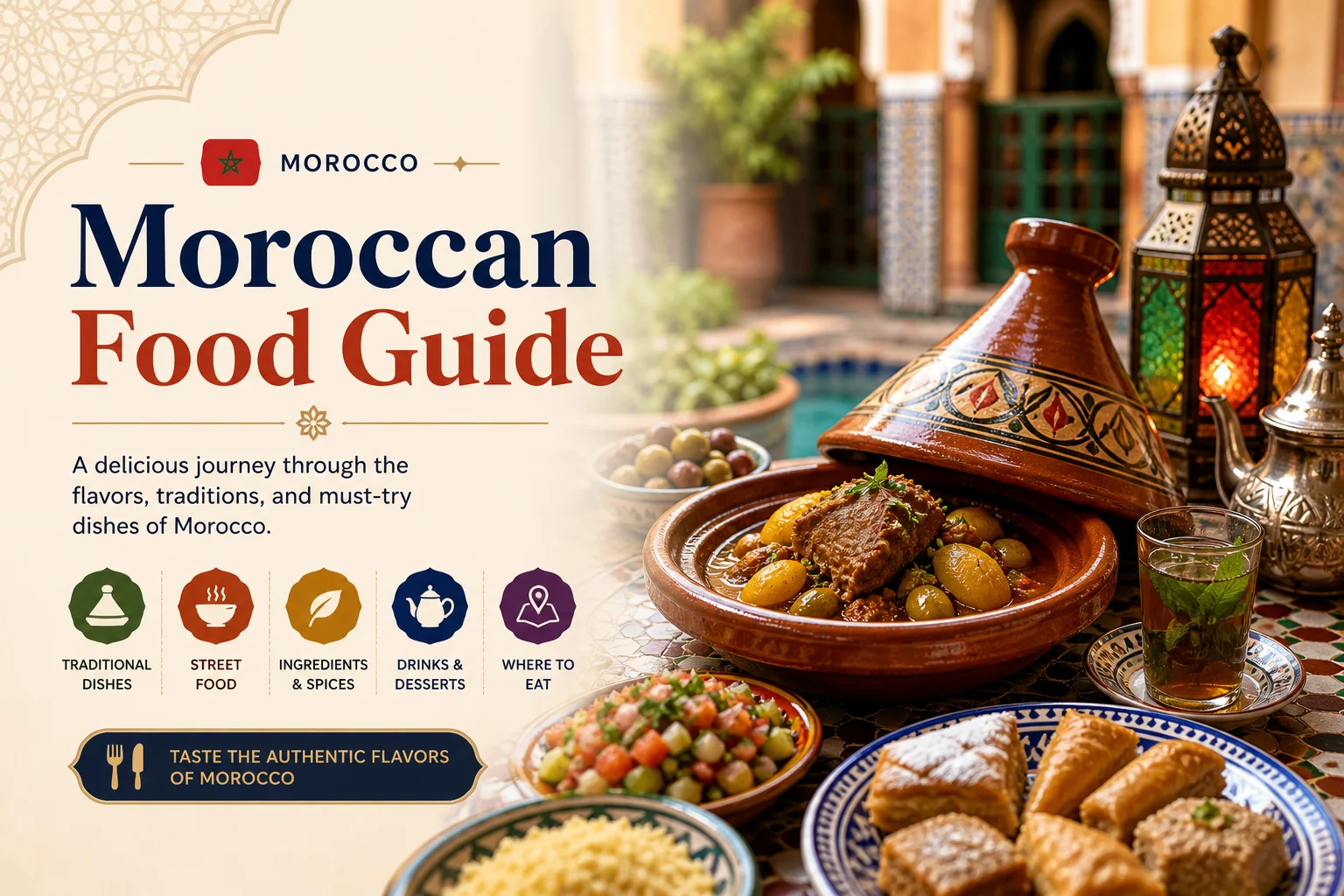
Moroccan food is one of the great cuisines of the world — a four-way conversation between Amazigh (Berber) home cooking, Arab spice trading, Andalusian refinement, and a French colonial accent that still shows up on every café menu. UNESCO inscribed Moroccan couscous on its Representative List of the Intangible Cultural Heritage of Humanity in 2020, alongside Algeria, Mauritania and Tunisia — a useful reminder that what you eat here is not “exotic,” it’s living heritage with documented depth.
This is the guide we wish every traveler had before their first meal in Morocco: 25 dishes worth your appetite, what they actually taste like, where each one belongs, and the cultural context that makes them feel like more than food. We’ve grouped them by category so you can plan a trip — or a single afternoon — around them.
How Moroccan food is built
Before the dish list, a few things to know.
Moroccan cuisine is generous and slow. Most signature dishes take hours, not minutes — which is why a real tagine cooked at home or in a riad is a different animal from the one delivered to a tourist table in 15 minutes. The flavor base is usually some combination of saffron, ginger, cumin, sweet paprika, turmeric, cinnamon, and ras el hanout (a house spice blend whose name literally means “head of the shop” — every grocer mixes their own, so no two are identical).
Bread is the universal utensil. Khobz — round, slightly chewy semolina bread — is on every table, and you’ll quickly learn to use a torn piece as a scoop. Cutlery for stews is optional and, in traditional settings, slightly beside the point.
Mint tea is not a drink, it’s a ceremony. We’ll come back to it.
The tagines (1–6)
A tagine is both the dish and the conical clay pot it cooks in. The shape traps steam, recirculates it, and slow-braises whatever is inside with very little added liquid. Done right, a tagine is among the most satisfying things you can eat anywhere.
You can also do this with us on our Moroccan cooking class with market visit.
1. Lamb tagine with prunes and almonds (طاجين اللحم بالبرقوق) — The festive classic. Lamb shoulder is braised with cinnamon, ginger, saffron, honey-softened prunes, and toasted almonds. Sweet-savory in a way that takes a bite or two to register, then becomes addictive. Order this at any wedding, Eid table, or upscale Marrakech restaurant.
2. Chicken tagine with preserved lemon and olives (طاجين الدجاج بالحامض المصير) — The everyday hero. Chicken, salty preserved lemons, green olives, ginger and saffron. Bright, briny, savory. If you only eat one tagine in Morocco, make it this one.
3. Kefta mkaouara (طاجين الكفتة) — Spiced beef or lamb meatballs in a tomato-cumin sauce, with eggs cracked on top in the last few minutes so the whites just set. Eaten straight from the pot with bread. A staple of small medina restaurants.
4. Berber tagine (طاجين أمازيغي) — Sometimes called “tagine of the seven vegetables” or “Atlas tagine.” Whatever’s in season, layered into a pyramid: carrots, zucchini, potatoes, turnips, eggplant, sometimes pumpkin, often crowned with a piece of slow-cooked beef or lamb. Rustic, vegetable-forward, and the most common home version.
5. Mrouzia (المروزية) — A sweeter, deeply spiced lamb tagine with raisins, almonds and honey, traditionally cooked for Eid al-Adha. Heavy with ras el hanout. Look for it during the festival, or at restaurants that take pride in seasonal cooking.
6. Tagine of fish (طاجين السمك) — A coastal specialty, especially in Essaouira and El Jadida. White fish (often sea bream) layered over potatoes and tomatoes, lifted with chermoula — a herby marinade of cilantro, parsley, garlic, paprika, cumin and lemon. Lighter than its meat siblings and easy to love on a hot day.
The couscous family (7–9)
Couscous is granular semolina, hand-rolled and steamed three times to keep every grain separate. It’s not just a side — in Morocco, couscous is the Friday family meal, the dish that brings extended families together after the midday prayer.
7. Couscous tfaya (كسكس التفاية) — Couscous topped with caramelized onions and raisins (“tfaya”), often crowned with chicken or lamb. Sweet, savory, comforting. The version most foreign visitors meet first.
8. Couscous with seven vegetables (كسكس بسبع خضار) — The classic Friday couscous. A pyramid of grain topped with carrots, turnips, zucchini, pumpkin, cabbage, chickpeas and tomatoes, usually with lamb or beef hidden inside. Eaten communally from a single round platter.
9. Seffa medfouna (سفة مدفونة) — Sweet couscous “buried” with shredded chicken or pigeon, dusted heavily with cinnamon and powdered sugar, garnished with fried almonds. A celebration dish, often served late in a wedding meal. Eat it small, eat it slow.
Street and casual food (10–14)
If you want to know how Moroccans actually eat day to day, leave the tablecloth restaurants and walk.
10. Harira (حريرة) — Tomato-and-lentil soup with chickpeas, fine vermicelli, lamb, and a final swirl of beaten egg, finished with cilantro and lemon. The traditional dish for breaking the Ramadan fast, but available in any working-class restaurant year-round, usually paired with sticky chebakia (see #20) or a date.
11. Bissara (بيصارة) — Thick fava bean (sometimes split pea) soup, finished at the table with a generous pour of olive oil, ground cumin and a dusting of paprika. Cheap, filling, and very northern — Chefchaouen, Tetouan and the Rif eat it at breakfast.
12. Msemen (مسمن) — Square, flaky pan-griddled flatbread, layered like a quick croissant. Eaten plain, drizzled with honey, smeared with amlou (almond–argan oil paste — see #25), or used to wrap savory fillings.
13. Sfenj (سفنج) — Moroccan donut. A yeasted ring fried in oil and dusted with sugar, sold from dedicated stalls in the early morning. Best eaten warm, within five minutes of being lifted out of the oil, on the walk back to your riad.
14. Bocadillo (بوكاديو) — A Spanish-influenced street sandwich found everywhere from Tangier to Marrakech: split bread loaded with potato, tuna or kefta, harissa, olives and salad. Cheap fast food at its best.
Snails, sweetbreads and the brave list (15–17)
The Jemaa el-Fnaa nighttime food stalls are tourism’s favorite stage, but the food is real and locals eat it too. A few items worth seeking out — or photographing first, deciding later.
15. Babbouche / ghlal (بابوش) — Snails simmered in a broth of fifteen-plus herbs and spices: thyme, mint, gum arabic, anise, licorice root, orange peel. You drink the broth out of the bowl when the snails are gone — locals consider it a digestive remedy. Recommended on a cold evening.
16. Ras (رأس) — Slow-roasted sheep’s head, served whole or carved into portions, with cumin and salt for dipping. The cheek meat is the most tender part. Common at Eid al-Adha and in dedicated stalls.
17. Tangia marrakchia (طنجية مراكشية) — Marrakech’s signature dish, and the one most underrated by visitors. Lamb, preserved lemon, garlic, cumin, saffron and smen (aged butter) sealed in a tall clay urn, then buried in the ashes of the hammam (public bathhouse) furnace and forgotten for 6–8 hours. Falls apart at a touch. A bachelor’s-style dish historically cooked by men, eaten at lunchtime in the medina.
Pastries, sweets and breakfast (18–22)
Morocco’s sweet repertoire is closer to the eastern Mediterranean than to French patisserie, though the French influence shows up in the lighter morning pastries.
18. Pastilla / bastilla (بسطيلة) — A celebration pie. Layers of paper-thin warqa pastry around shredded pigeon or chicken, almonds, cinnamon, sugar, and saffron, baked until crisp and dusted with icing sugar. Sweet, savory, extraordinary. Pay extra for a real one — the cheap version is usually filling, not the pastry.
19. Kaab el ghazal (كعب الغزال) — “Gazelle horns.” Crescent-shaped almond-paste cookies scented with orange-blossom water. Refined, restrained, the cookie you serve guests with mint tea.
20. Chebakia (شباكية) — Sesame-coated, honey-dipped pastry rosettes, deep-fried and shaped like flowers. The Ramadan companion to harira; one of each, every night, for a month.
21. Baghrir (بغرير) — “Thousand-hole pancakes.” Yeasted semolina pancakes with a smooth bottom and a moonscape of tiny holes on top, perfect for absorbing warm honey and butter. A breakfast staple.
22. Rghaif and harcha (رغايف وحرشة) — Two essential breakfast breads. Rghaif is layered and flaky like a less-buttery msemen; harcha is a thick semolina griddle cake with a sandy crust, halfway between a biscuit and cornbread. Both pair with cheese, jam, amlou or honey.
The drinks (23–25)
23. Atay bi nana / Moroccan mint tea (أتاي بالنعناع) — Green tea (usually Chinese gunpowder), spearmint, and a generous amount of sugar, brewed in a metal teapot and poured from height to aerate. Served in small glasses, usually three rounds. The Tuareg saying — “the first glass is gentle as life, the second strong as love, the third bitter as death” — is widely quoted across North Africa. Refusing tea is uncomfortable. Drinking three glasses with a stranger is how friendships start.
24. Avocado smoothie (عصير الأفوكا) — A juice-bar staple: blended avocado, milk, sugar and sometimes almonds and dates. Thicker than a smoothie, lighter than a milkshake, surprisingly good as a mid-afternoon meal in summer.
25. Amlou and argan-based drinks (أملو) — Amlou is technically a spread, but treat it as a flavor: ground roasted almonds, argan oil, and honey, eaten with bread or stirred into milk. Argan is a tree endemic to southwestern Morocco and the cooperatives around Essaouira and the Souss valley sell some of the most distinctive products in the country.
Regional specialties — what to eat where
Morocco’s food map is more local than its tourist circuits suggest. A short cheat sheet:
- Marrakech — tangia, mechoui (whole roasted lamb), tanjia stalls in the medina, the night food court at Jemaa el-Fnaa.
- Fes — pastilla in its most refined form, fluffy couscous, traditional palace cuisine. The city’s old families still set the standard for Moroccan fine dining.
- Essaouira — grilled fish at the port stalls (you pick from the catch, they cook it), seafood tagines, argan oil and amlou cooperatives.
- Tangier and the north — bissara, Spanish-influenced sandwiches, fresh sardines, mint tea with absinthe leaves on the side.
- Atlas mountains and the south — Berber tagines, mountain bread baked in communal ovens, fresh goat cheese, walnuts.
- Sahara (Merzouga, M’hamid) — medfouna (the “Berber pizza,” a stuffed flatbread baked in hot sand), camel meat, dates from the surrounding palm groves.
Food safety, briefly
Morocco’s food is, on the whole, safer than its reputation. A few practical rules go a long way.
- Drink bottled or filtered water and use it for brushing teeth. Tap water is technically chlorinated and safe for locals but visitors’ guts often disagree.
- Avoid raw salads at the cheapest tourist restaurants — washing standards vary. Cooked vegetables are no problem.
- Eat where there’s turnover. A busy stall churning through ten customers an hour is safer than a quiet restaurant warming yesterday’s tagine.
- Mint tea is made with boiled water, so it’s a safe default everywhere.
- Carry rehydration salts in your bag. If something disagrees with you, they’re the fastest fix.
How to actually meet Moroccan food
The fastest way is to cook a meal yourself. A four-hour cooking class — souk shopping in the morning, two or three dishes at the riad in the afternoon, lunch at the table you helped set — teaches you more than a week of restaurant meals.
The second fastest is a guided street food tour. Most first-time visitors stick to the same five restaurants their hotel recommends and miss what locals eat — a guide who knows their corner of the medina solves that in three hours.
If you’d like Moratra to set either up — or just point you to the food spots that most visitors never find — we’ll happily map out a food itinerary for your dates and travel style. The advice is free; just tell us where you’re going and what you like to eat.
FAQ
Is Moroccan food spicy?
Not in the chili-heat sense. Moroccan cuisine is heavily spiced — saffron, cumin, ginger, cinnamon, paprika — but rarely hot. Harissa is offered on the side at most tables for those who want it; you control the heat.
Is Moroccan food vegetarian-friendly?
Yes, more than visitors expect. Vegetable tagines, couscous with seven vegetables, bissara, harira (often made meat-free during Ramadan), zaalouk (eggplant salad), taktouka (pepper-tomato salad), and an enormous variety of bread-based meals make a satisfying meatless trip easy in cities. Outside cities, ask before ordering — meat broth sometimes hides in “vegetable” dishes.
Can I drink alcohol in Morocco?
Yes, in licensed restaurants, hotels and supermarkets (Carrefour, Marjane, Acima) with valid ID. It’s not served in most medina restaurants or family-run cafés, and not consumed in public. During Ramadan, alcohol service is restricted to non-Muslims and to specific venues.
What’s the best Moroccan food souvenir?
Argan oil and amlou from a verified cooperative (look for the FNCAH logo), saffron from Taliouine, ras el hanout from a spice shop you trust, and a clay tagine if you’ll actually use one. Skip the mass-market spice mixes in tourist souks — they’re padded with salt.
How much should I tip in restaurants?
10% in mid-range and upscale restaurants, rounding up the bill in casual places. Many local cafés don’t expect a tip at all.
Plan your food trip
Whether you’re putting together a dedicated food itinerary or just want to make sure your trip includes the dishes that matter, the Moratra team can help. We design tours around real food — cooking classes, market visits, hidden eateries, riad dinners — and we offer free planning advice for travelers who’d rather book direct on the ground.
Drop us your dates and a note on what you’d like to eat; we’ll send back a tailored plan, no obligations.
Plan Your Morocco Trip with Moratra
Ready to turn the ideas in this guide into a real trip? Browse Moratra’s most-booked private experiences across Morocco — handpicked itineraries, luxury riads and local guides:
Heading to Marrakech? Taste the medina on our Marrakech food tour and street-food guide.
- Luxury Morocco Tours — multi-day private itineraries across Marrakech, the Sahara, Fes and the imperial cities.
- Morocco Sahara Desert Tours — VIP private journeys from Marrakech to Erg Chebbi and Merzouga.
- Agafay Desert Day Trips — luxury camps and dinner-under-the-stars experiences just 30 minutes from Marrakech.
- Activities and Day Tours in Marrakech — cooking classes, hammams, walking tours and hot air balloon flights.
Need help choosing? Reach out anytime — our local team offers free, no-obligation Morocco trip advice.
