
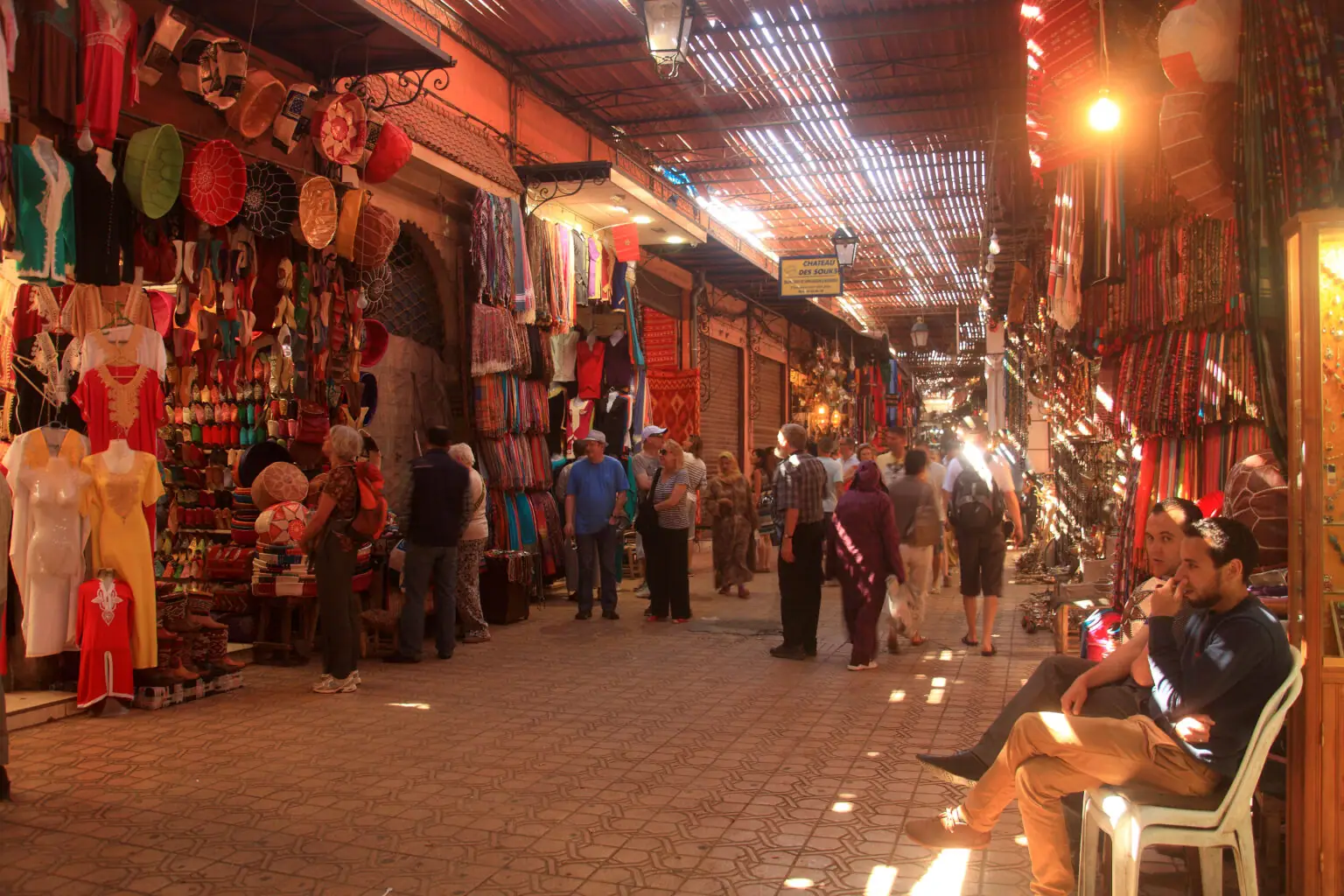
Morocco rewards travelers who take their time. The cities are layered, the landscapes are vast, and the culture has a deep, unhurried respect for elders that turns what could be a demanding trip into a remarkably welcoming one. With the right pace, the right transport, and a few smart accommodation choices, Morocco is one of the most rewarding destinations a senior traveler can choose — culturally rich, weather-friendly for most of the year, and far more accessible than its reputation suggests.
This guide is built around comfort: how to plan an itinerary that doesn’t exhaust you, where to stay, how to handle the medinas, and what to know about health and transport before you go.
Why Morocco Works So Well for Senior Travelers
A few things make Morocco a particularly strong choice for travelers in their 60s, 70s, and beyond:
- A culture that honors elders. Older travelers are treated with genuine warmth in Morocco — shopkeepers offer chairs, riad staff insist on carrying bags, and you’ll rarely be hassled the way younger backpackers sometimes are.
- Mild shoulder-season weather. From March to May and September to November, daytime temperatures sit between roughly 17–25°C (63–77°F) — comfortable for walking without the punishing summer heat that hits Marrakech and the desert in July and August.
- Short flights from Europe and reasonable connections from North America. No jarring 20-hour transits to reach a destination this exotic.
- Strong private hospitality infrastructure. Private riads, boutique hotels, and luxury desert camps have raised the comfort bar substantially in the last decade.
- Excellent value at the upper-comfort end. A private driver, premium accommodation, and curated experiences cost a fraction of comparable trips in Europe.
Safety is also reassuring. Morocco has long been considered one of the safest tourist destinations in North Africa, and as an older visitor you are statistically among the least targeted travelers for petty scams or hassling.
Comfort Considerations: What to Plan For
Morocco’s biggest physical challenges aren’t dramatic — they’re quietly cumulative. Here’s what to actually plan around.
Medina Surfaces
The historic medinas of Marrakech, Fes, and Chefchaouen are the country’s cultural heart, but they were built for pedestrians and donkeys, not modern mobility. Expect uneven cobblestones, occasional steps, narrow lanes, and slopes — particularly steep in Fes el-Bali, which is built into a hillside. None of this rules out a medina visit; it simply means going slowly, with a guide who knows the gentlest routes, and at the coolest part of the day.
Heat
Inland cities like Marrakech and Fes can exceed 38–40°C in midsummer, which is genuinely taxing. Plan visits between October and April for the cities, and avoid full desert immersion in July and August unless you’re staying in a fully air-conditioned luxury camp.
Altitude
The High Atlas reaches over 4,000 meters at its peak, but most senior-friendly mountain visits stop at 1,500–2,000m (Ourika Valley, Imlil, Ouirgane) — modest enough that altitude is not a concern for most travelers. If you have heart or lung conditions, mention them to your trip planner so high passes can be avoided.
Walking Pace
Sights are spread out, and even comfort-focused trips involve a few hours on your feet each day. Build in at least one rest day per destination, and don’t try to do Marrakech, Fes, the desert, and the coast in a single week.
Recommended Senior-Friendly Itineraries
The right length matters more than the right list of cities. Most travelers we work with land on something between 10 and 14 days, with driving stretches kept under 3–4 hours and rest days built in.
The 8-Day Comfort Highlights
Marrakech (3 nights) → Atlas Mountains day trip → Essaouira (2 nights) → Agafay Desert (1 night luxury camp) → return to Marrakech (1 night).
This route avoids long drives, includes coastal sea air, and offers a gentler “desert” experience in the Agafay — a stony plateau about 45 minutes from Marrakech with full luxury camps. It’s a strong fit if a 10-hour drive to the real Sahara feels like too much. Moratra’s 8-Day Morocco Signature Escape follows a similar gentle rhythm, with Marrakech as the base, Essaouira and the Atlas as day trips and one night in an Agafay luxury camp.
The 12–14 Day Imperial & Sahara Comfort Circuit
Casablanca (1 night) → Rabat (1 night) → Fes (3 nights, with a rest day) → Merzouga via Erfoud (2 nights luxury camp) → Dades / Skoura (1 night) → Aït Benhaddou → Marrakech (3 nights).
This longer version, close to our 12-day Morocco tour, reaches the genuine Sahara without rushed driving. The Saharan stretch is broken into shorter days, and the desert camp portion is restricted to high-end operators with proper beds, en-suite bathrooms, and private vehicle access right to the camp. See our guide to the best luxury desert camps if you’re choosing operators.
The 5-Day Luxury Sampler
For travelers with limited time or stamina, a five-day stay split between Marrakech and Agafay — with a private driver for half-day excursions to the Atlas foothills and Ourika Valley — delivers the Morocco experience without the longer drives.
Where to Stay
Accommodation is where senior trips are won or lost. A few rules of thumb:
- Choose riads carefully. Traditional riads are gorgeous, but many have steep, narrow staircases and no elevators. Ask for ground-floor rooms or for riads with elevators (a small number of larger ones do). Our curated riad guide for Marrakech flags accessibility on a property-by-property basis.
- Modern hotels are not a downgrade. Properties like the Royal Mansour, La Mamounia, and Four Seasons in Marrakech, plus the Sofitel and Palais Faraj in Fes, combine elevators, ramps, and ground-floor suites with traditional Moroccan design.
- Pick a luxury camp for the desert, not a basic one. Premium camps in Erg Chebbi have proper beds, hot showers, en-suite bathrooms, and vehicles that drive guests right to the tent door — sparing you the long camel ride if you’d rather skip it.
- Coastal hotels in Essaouira and Agadir tend to have the best accessibility — flat layouts, elevators, and sea-level walking.
Health, Medical Care & Pharmacies
Morocco’s private healthcare in the major cities is reliable and affordable by Western standards. Casablanca, Rabat, and Marrakech all have well-equipped private hospitals and clinics, and pharmacies — marked with a green cross — are everywhere and often staffed by pharmacists who speak French and basic English. Many medications that require a prescription elsewhere can be purchased over the counter.
A few practical pieces of advice:
- Bring all regular medications in their original packaging, plus a written list of generic names and dosages.
- Take out comprehensive travel insurance with medical evacuation coverage — this is the single most important purchase for a senior trip.
- Drink only bottled or filtered water, and be cautious with raw salads at unknown street stalls.
- Emergency number for medical assistance is 15 in major cities (SAMU). Your hotel or guide can arrange a private doctor visit, often within an hour.
Transportation: The Single Most Important Choice
If you take one piece of advice from this guide, let it be this: travel by private car with a dedicated driver. Group buses run on fixed schedules, are not designed for slower boarding, and don’t stop when you need to. Private transport puts the day’s pace entirely in your hands.
For long inter-city stretches, the ONCF Al Boraq high-speed train — Africa’s first, opened in 2018 — is a comfortable alternative on the Tangier–Rabat–Casablanca corridor. First class is spacious, air-conditioned, and includes a dedicated lounge at major stations. For other routes, first-class on standard ONCF trains (Casablanca–Marrakech, Casablanca–Fes) is reserved seating with comfortable compartments.
Skip overnight buses, shared grand taxis, and self-driving in the medinas. For a fuller breakdown, see our Morocco transportation guide.
Pace Your Trip — The Single Best Senior Travel Hack
The single most common regret we hear from senior travelers in Morocco isn’t about the food, the heat, or the medinas. It’s about pace. Two practical rules to live by:
For more options, browse all our Morocco tour packages.
- One major activity per day, not three. A morning at Bahia Palace and a souk lunch is a full day. Resist the urge to add a hammam, a cooking class, and a sunset rooftop to the same afternoon.
- Always include a true rest day at each base. Nothing scheduled — just the riad pool, a long lunch, a slow walk, and a nap.
FAQ: Morocco for Senior Travelers
Is Morocco safe for seniors?
Yes. Morocco is regularly ranked among the safest destinations in North Africa, and older travelers are treated with particular respect. Standard precautions — guarded valuables, registered taxis, evening caution in unfamiliar areas — apply as they would anywhere.
What’s the best time of year for older travelers to visit Morocco?
March–May and September–November offer the most comfortable temperatures across cities, mountains, and desert. Avoid July and August inland, and aim for October–April if the desert is on your itinerary.
Can wheelchair users or travelers with limited mobility visit Morocco?
Yes, with planning. Modern hotels in Casablanca, Rabat, Marrakech (Gueliz district), and Agadir are largely accessible. The historic medinas are challenging but can be partially explored with a guide who knows the smoothest routes. Private transport is essential.
How long should a senior-friendly Morocco trip be?
Ten to fourteen days is the sweet spot. Shorter trips force long drives; longer trips can be split between two regions with a domestic flight to avoid backtracking.
Do I need vaccinations or special health prep?
No special vaccines are required for travelers from most countries (check with your doctor for routine boosters). The most useful preparation is comprehensive travel insurance with medical evacuation, plus a printed list of your medications.
Is the Sahara desert too physically demanding for older travelers?
Not at all, if you choose the right operator. Premium camps offer vehicle transfers right to the tent (no required camel ride), proper beds, and en-suite bathrooms. The desert experience can be as gentle or as adventurous as you want.
Plan Your Trip With Moratra
Comfortable Morocco travel isn’t about cutting corners — it’s about choosing the right pace, the right vehicle, and the right rooms, then leaving room for the country to surprise you. Moratra’s team designs comfort-focused itineraries every week for travelers in their 60s, 70s, and 80s — with private drivers, vetted accommodation, and pacing built around your energy level rather than a packed checklist.
If you’d like a personalized plan tailored to your interests, mobility, and travel dates, our advice is always free — just send us a note and we’ll put together something that suits how you actually want to travel.
