Yes — Morocco is one of the easiest countries in the world for a halal, Muslim-friendly trip. It is a Muslim-majority country where halal food is the norm and mosques stand in every town. On a private tour, your guide plans the day around prayers, halal meals and a calm pace.
Here is how halal Morocco tours really work. This guide covers food, prayer, dress and how to book a private trip.
Muslim travel is also booming. The Mastercard-CrescentRating Global Muslim Travel Index counted 196 million Muslim trips abroad in 2025. Morocco ranks 12th in its 2026 index, with a score of 71.
That puts Morocco among the top places outside Southeast Asia and the Gulf. The same team expects 245 million Muslim travellers and about US$230 billion in spending by 2030, according to the same GMTI research.
Is Morocco a good place for Muslim travellers?
Morocco is about as easy as travel gets for Muslims. Pew Research Center puts the Muslim share of the people at about 99%, mostly Sunni. So prayer is part of daily life, not an afterthought.
- Halal food is the default, not a special order.
- Mosques and prayer rooms are easy to find.
- Modest dress is normal and comfortable.
- Guides and drivers are used to Muslim visitors.
- It is a short, easy trip from Europe and the Gulf.
That means real ease on the ground. You hear the call to prayer five times a day. A mosque is almost always close by, and you rarely explain your food needs twice.
The culture fits too. Modest dress is normal here. Alcohol is sold only in licensed hotels and tourist spots, and guides and drivers are used to helping Muslim visitors.
Talking to people is easy. Arabic and Amazigh are the official languages, French is widely spoken, and English is common in hotels and with guides. Setting up prayer stops or halal meals is simple.
Getting there is easy too. Morocco is a short flight from most of Western Europe. It is one long-haul hop from the US East Coast, with handy links from the Gulf.
Is the food in Morocco halal?
For the most part, yes. Meat sold and served across Morocco is halal by default. The whole supply chain is built that way, so you do not need a special label to eat well.
The classics are naturally halal. Tagine, harira soup and couscous are staples. Couscous is even listed by UNESCO, which added it to its Intangible Cultural Heritage list in 2020.
There is lots more to try. Grilled brochettes, fried sardines on the coast, and msemen at breakfast are all easy wins. Sweets and pastries are made with no pork or alcohol at all.
A couple of things are worth a check. Alcohol shows up in a few French-style restaurants, and big hotel buffets can mix dishes. Our Moroccan food guide lists 25 dishes to order and what is in each one.
Where can you pray in Morocco?
Prayer spots are everywhere. Every town and area has a mosque. Bigger malls and airports have a prayer room, or musalla.
Your riad or hotel can help as well. They will point you to the nearest mosque. Or they will hand you a prayer mat and the qibla direction.
One honest note matters here. Non-Muslims usually cannot enter working mosques in Morocco. The one big exception is the huge Hassan II Mosque in Casablanca, which runs guided tours for all visitors.
For Muslim travellers this is rarely a problem. You can pray in any mosque you pass. On a private tour, your guide builds prayer times into the day, so you never rush your salah.
Fridays carry a little more weight. Jumu’ah prayer around midday is the busiest of the week. A private plan makes it easy to be near a mosque then, not stuck on a long drive.
How to plan halal Morocco tours: prayer, food and pace
The biggest lever is going private. On a Moratra private tour, the day runs at your pace. A licensed Morocco guide is with your group alone, from start to finish.
That set-up is what makes a trip truly faith-friendly. The guide can stop the drive for dhuhr and asr. They can pick halal restaurants, keep meals alcohol-free, and slow things down in Ramadan.
A shared group tour cannot bend like that. A dozen strangers on one bus means one fixed timetable. Our luxury Morocco tours add hand-picked riads and private transport on top of that freedom.
Here is how the two options compare on what matters most to Muslim travellers:
| Faith-friendly factor | Shared group tour | Private tour with Moratra |
|---|---|---|
| Stopping for prayer times | Fixed schedule, limited | Guide plans salah into the day |
| Halal & alcohol-free dining | Set restaurant list | Meals chosen around your needs |
| Pace during Ramadan | Standard itinerary | Slowed for fasting and iftar |
| Family & women-only privacy | Shared with strangers | Exclusive to your group |
| Changing the plan | Rarely possible | Reshaped around you |
Travelling during Ramadan
Ramadan can be one of the best times to visit. In 2027 it falls early in the year. Moratra’s Ramadan guide sets the window at roughly 8 February to 8 March 2027, with Eid al-Fitr around 9 March.
Morocco confirms the official start once the crescent moon is sighted. The country keeps running all month. Hotels, sights and tours all stay open.
The rhythm just shifts. Afternoons go quiet, then the cities wake up after iftar. A private tour fits this window well, since the plan can bend around fasting and evening meals.
The evenings are the reward. You break the fast with harira, dates and chebakia. Then the medina fills with families and lantern light.
It is a side of Morocco most visitors miss. For the full month-by-month picture, see our Morocco in Ramadan 2027 guide.
Muslim-friendly things to do in Morocco
The big trips are as faith-friendly as they are fun. A private desert tour is the classic. From Marrakech it is about 360km, or five and a half to six hours, to the Zagora dunes.
Erg Chebbi near Merzouga is further out. It is roughly 560km, or nine to ten hours. Prayer and meal stops are planned along the way.
The cities are easy to enjoy modestly. Marrakech’s medina, gardens and souks reward a slow wander. Old-style hammams offer women-only hours or private sessions for couples.
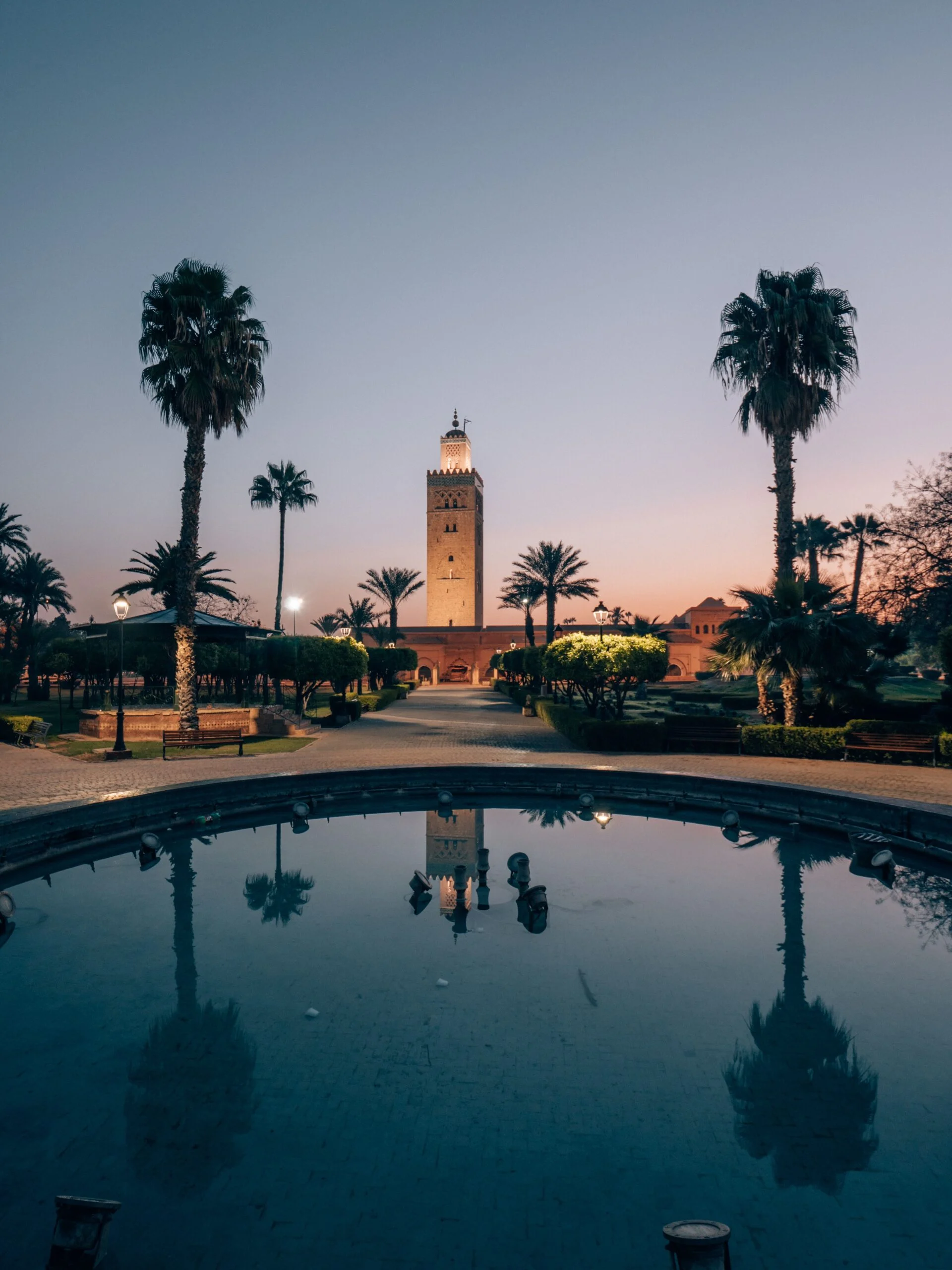
Marrakech itself makes a fine base. The Koutoubia Mosque and its minaret rise over the old city, a short walk from the main square. Its call to prayer is a highlight of any stay.
Fez is the spiritual heart of the country. Its walled medina holds one of the oldest universities in the world, founded in the ninth century. Its mosques, schools and workshops feel centuries deep.
Further north, Rabat and Chefchaouen add calm, walkable stops. Both are relaxed, modest and easy for families. They pair well with a longer route.
The Atlantic coast rounds off a trip nicely. Essaouira has breezy ramparts and a calm beach, good for families and slow days. It pairs well with Marrakech.
Families are looked after best of all. Moroccans treat children as welcome guests almost everywhere, as our Morocco family travel guide explains.
Our guests feel that welcome first-hand. One family from Dubai travelled with us on a private Zagora desert escape in early 2025. They put it simply:
Our children still talk about the camel ride every single day.” — The Al-Rashidi Family, Dubai, UAE
What should Muslim travellers wear in Morocco?
Modest dress is the normal, easy choice. Light clothes that cover the shoulders and knees work all year. Loose cotton and linen handle the heat well.
Women do not have to cover their hair in public. A scarf is still handy for cool desert evenings, or just for comfort. Men and women both feel most at ease in relaxed, modest styles.
Hammams have a simple etiquette. Sessions are split by gender or booked in private. Bring a swimsuit if you want more cover, and your guide can point you to a good spot.
A few tips for a smooth trip
A little local know-how goes a long way. A warm “As-salamu alaykum” is welcomed everywhere. People are quick to help once you ask.
During Ramadan, keep daytime eating and drinking low-key in public, out of respect. After iftar, the mood turns festive and everyone is out. Your guide can help you time the day.
Small tips are normal for good service. Carry some cash for cafes, guides and small shops. Your driver-guide can help you judge what is fair.
Most of all, just ask. If you are unsure about halal food or prayer times, your guide is there to help. That is the whole point of going private.
How to book a halal-friendly private tour
Booking is simple and low-risk. It starts with your needs, not a fixed package:
- Tell us your needs. Prayer times, halal-only meals, no alcohol, women-only spa sessions or Ramadan dates — the more you share, the better we plan.
- We reply within 24 hours with a full plan and quote, built around your group.
- A 50% deposit holds your dates. It is 100% refundable within 24 hours of payment, so there is no pressure.
- Pay the balance due 5 days before departure in Morocco, once you are there and all is set.
It helps to see a full route first. Our 10-day Morocco itinerary shows how a private grand tour fits together. It bends easily around prayer, halal meals and a Ramadan-friendly pace.
When you are ready, you can request a quote and start your booking.
For more options, browse all our Morocco tour packages.
Frequently asked questions
Are Morocco tours really halal-friendly?
Yes. Morocco is a Muslim-majority country, so halal food, prayer spots and modest norms are standard, not special requests. On a private tour it is fully tailored, with your guide planning prayer stops, halal meals and pace around you.
Can I ask for halal-only meals and no alcohol?
Yes, meat is halal by default across Morocco. On a private tour your guide picks restaurants that fit your needs and keeps meals alcohol-free. Share any special needs early and we confirm them in your plan.
Can non-Muslims visit mosques in Morocco?
Usually no, since working mosques are for worshippers. The main exception is the Hassan II Mosque in Casablanca, which runs guided tours for all faiths. Muslim travellers can pray in any mosque.
Are there women-only hammam and spa options?
Yes, old-style hammams often have separate women’s hours or areas. Many riads and spas offer private or couples’ sessions. We can set up women-only or private bookings as part of your tour.
When is Ramadan 2027 in Morocco?
The likely window is about 8 February to 8 March 2027, with Eid al-Fitr around 9 March. Morocco confirms the start once the crescent moon is sighted. Our Ramadan 2027 guide has the details.
Is Morocco safe and welcoming for Muslim families?
Morocco is very welcoming for Muslim families. Moroccans treat children as welcome guests almost everywhere, and it is a short flight from Europe with an easy cultural fit. A private tour keeps kids comfortable and the pace calm.
Plan your Muslim-friendly Morocco tour with Moratra
Morocco makes faith-friendly travel feel easy. A private tour shapes the whole trip around you — prayers, halal meals, modest comfort and a pace that suits your family. Tell us what matters and we build it in.
Get in touch through our contact page — we answer for free, no obligation, and reply within 24 hours.