
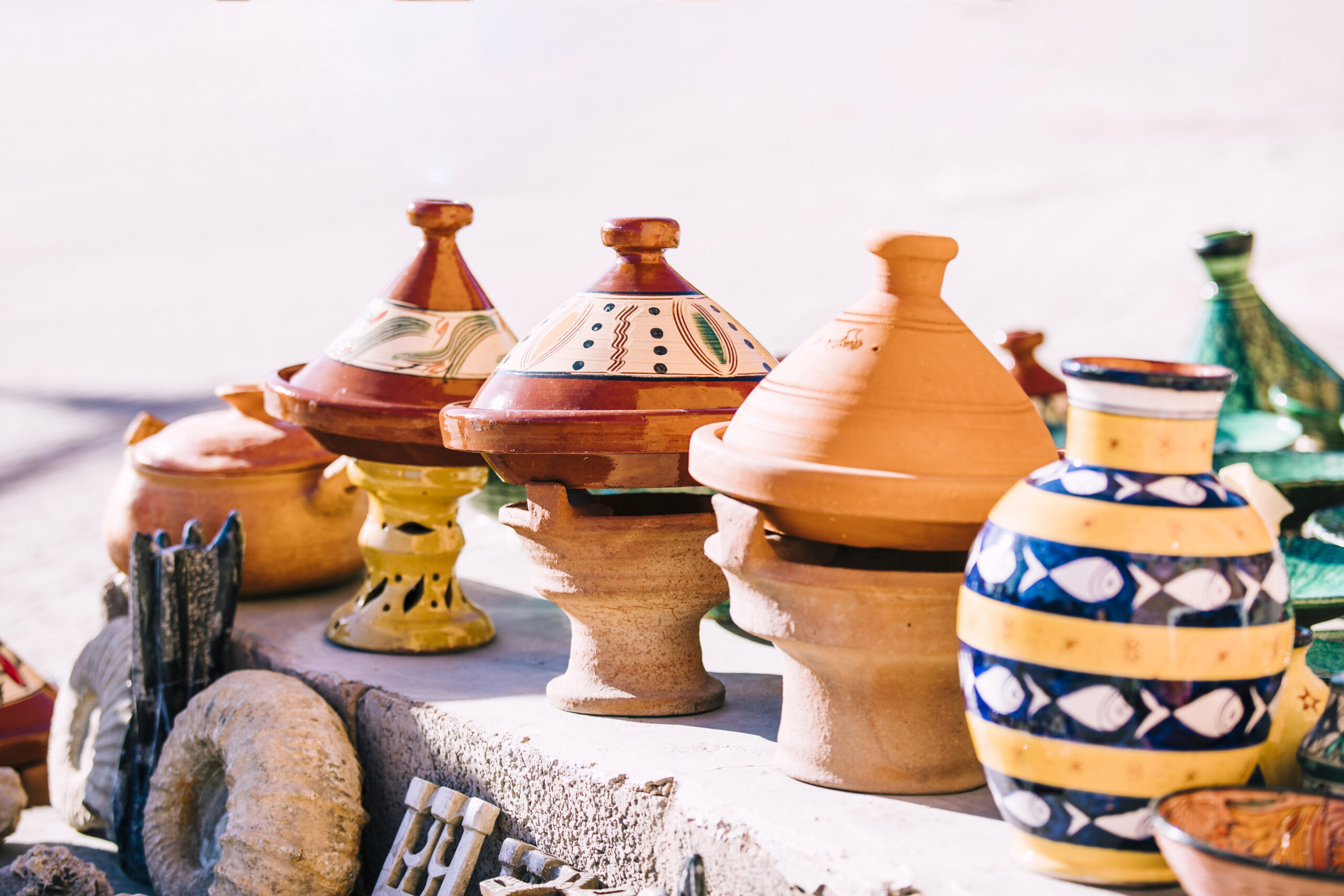
Marrakech artisan workshops let you sit beside a working craftsperson and make something with your own hands — a clay bowl shaped on a wheel, a cut-tile zellige panel, or a perfume you blend and bottle yourself. The three most popular are pottery, zellige mosaic and perfume-making, and each suits a different kind of traveler. This guide covers what happens in each session, how to choose, and how to book.
What crafts can you learn in a Marrakech artisan workshop?
Most hands-on craft sessions in Marrakech fall into three families: clay (pottery and ceramics), tile (zellige mosaic) and scent (natural perfume-making). All three run inside or near the medina, the old walled city, and all three send you home with something you made rather than bought.
If you want the classic maker’s morning — clay on the wheel plus a taste of tile-cutting — a zellige and pottery workshop is the most popular starting point. Perfume suits travelers who prefer a calmer, seated session. Below we break down each craft, then help you pick the right one.
Why is Marrakech a good place for craft workshops?
Marrakech has made and sold handmade goods for close to a thousand years, and its craft economy is still very much alive. The medina was inscribed on the UNESCO World Heritage List in 1985, partly for its working souks and artisan quarters. The old city is organized into traditional craft souks, where dyers, metalworkers, leatherworkers and potters have clustered by trade for generations. That concentration is why you can watch a craft being made and then learn it a few doors away.
Craft here is a real industry, not a museum piece. Morocco’s handicraft sector is worth roughly 7% of GDP, and artisanal exports rose about 11% in 2025 to more than 1.23 billion dirhams, up from just over one billion in 2023. The North Africa Post has described the sector as moving “from social safety net to economic engine.” Morocco’s Ministry of Tourism, Handicrafts and the Social and Solidarity Economy, led by Fatim-Zahra Ammor, has also run initiatives to promote the country’s artisans.
What happens in a pottery workshop in Marrakech?
A pottery session usually starts at the wheel. A local potter shows you how to center a lump of clay, open it, and pull up the walls into a bowl or cup. Expect to get muddy; that is part of the fun, and children usually love it. Adults often find the wheel oddly calming once they stop fighting the clay.
Many sessions also cover hand-building and glazing, so you learn how color and pattern go on before firing. A good instructor slows the wheel down for you and lets you try again when a bowl collapses. Because kiln-firing takes time, most studios either fire your piece for later pickup or send you home with a hand-painted item prepared earlier. Ask how your finished piece is handled when you book a pottery workshop in Marrakech.
What is a zellige workshop like?
Zellige is the geometric tile mosaic you see on Moroccan fountains, floors and riad walls. It is made from glazed terracotta tiles that a craftsman hand-chisels into small shapes, then arranges face-down into a pattern before setting them. The craft is centuries old and is closely tied to Fez, Morocco’s historic tile capital.
In a workshop you will not build a whole wall, but you will cut or place tiles and assemble a small panel, coaster or trivet to take home. Each color is a separate glazed tile, and the pattern only appears once the pieces lock together, which is why the craft rewards patience. It is precise, quiet and good for adults and design lovers. To see how zellige fits the bigger picture, read our guide to Moroccan architecture and zellige.
How does a perfume-making workshop in Marrakech work?
Perfume-making is the calmest of the three crafts. You sit with a guide and a tray of natural oils and essences: rose from the Valley of Roses, orange blossom, cedar, amber and musk. You smell each one, then learn how top, heart and base notes stack to build a balanced scent.
You then blend your own combination and bottle it to carry home as your signature scent. Your guide explains which Moroccan ingredients are prized and why, so you leave understanding the scent as well as wearing it. There is no mess and little physical effort, so it suits travelers short on time, couples, and anyone who wants a gift they made themselves. You can book a perfume-making workshop in Marrakech as a standalone session or pair it with a craft morning.
Which Marrakech craft workshop is right for you?
The best choice depends on how hands-on you want to be, who you are traveling with, and what you would like to bring home. The table below compares the three at a glance.
| Craft | What you make | Hands-on level | Best for | Take home |
|---|---|---|---|---|
| Pottery | A wheel-thrown or hand-built clay piece | High — messy and physical | Families, kids, hands-on travelers | A glazed bowl, cup or plate (some fired later) |
| Zellige mosaic | A small hand-set tile panel or coaster | Medium — precise and detailed | Adults, design and pattern lovers | A finished mosaic piece |
| Perfume-making | Your own blended, bottled scent | Low — seated and calm | Couples, gift-makers, short on time | A bottle of your signature perfume |
Still deciding? Use this quick test.
- Traveling with children or want to get your hands dirty? Choose pottery.
- Love geometric patterns, tilework and fine detail? Choose zellige.
- Short on time, or want a calm, mess-free session and a portable gift? Choose perfume-making.
- Cannot decide between clay and tile? A combined zellige and pottery session covers both in one morning.
If you also want to shop for finished crafts while you are in town, our Marrakech shopping guide covers the souks and fair prices.
How much do artisan workshops in Marrakech cost, and how do you book?
Prices vary by craft, by session length, and by whether you go private or join a small group. We keep live pricing on each workshop page rather than quote a figure that could go out of date, so check the pottery, zellige and perfume pages for current rates before you commit.
Booking is simple: pick your craft and preferred date, send a request, and the team confirms availability, timing and exactly what is included. Sessions run year-round and make a reliable rainy-day or hot-afternoon plan, since they are indoors. Set aside part of a morning or afternoon rather than a whole day.
Many travelers pair two crafts in a single day, or add a workshop to a food or garden tour. If you tell us your dates and group size, we can suggest a sensible order and rough timings so nothing feels rushed.
Start planning your craft day
A workshop is one of the most personal ways to spend a day in Marrakech, and it slots easily around a souk visit or a garden stop. When you are ready to plan, browse all our activities in Marrakech and build the day around the craft you like most.
Not sure which session fits your group or your dates? Tell us what you have in mind and we will help — we answer for free, with no obligation.
FAQ: Marrakech artisan workshops
Do I need any experience to join a craft workshop?
No. Pottery, zellige and perfume sessions are built for complete beginners, and the artisan guides you at every step. You bring curiosity; they bring the skill and the materials.
Are artisan workshops in Marrakech suitable for children?
Pottery is the most child-friendly because it is playful and tactile. Perfume-making works for older kids who can follow instructions, while zellige suits patient children and teens. Ask about age limits when you book.
What language are the workshops run in?
Most sessions are run in English or French, and many artisans also speak Arabic. If you need a specific language, mention it when you request your date so we can match you with the right host.
Can I take my finished piece home the same day?
Perfume and most zellige pieces come home with you the same day. Pottery can need firing, so some studios arrange pickup later or give you a piece prepared earlier. Always confirm this when booking.
Where in Marrakech do the workshops take place?
Most studios and ateliers sit inside or a short taxi ride from the medina. When you book, we send the exact meeting point and directions, so you will not have to hunt for it in the souks.
How long should I set aside for a workshop?
Plan for part of a morning or afternoon rather than a full day. That leaves time to combine your session with lunch, a garden or a wander through the souks.
