
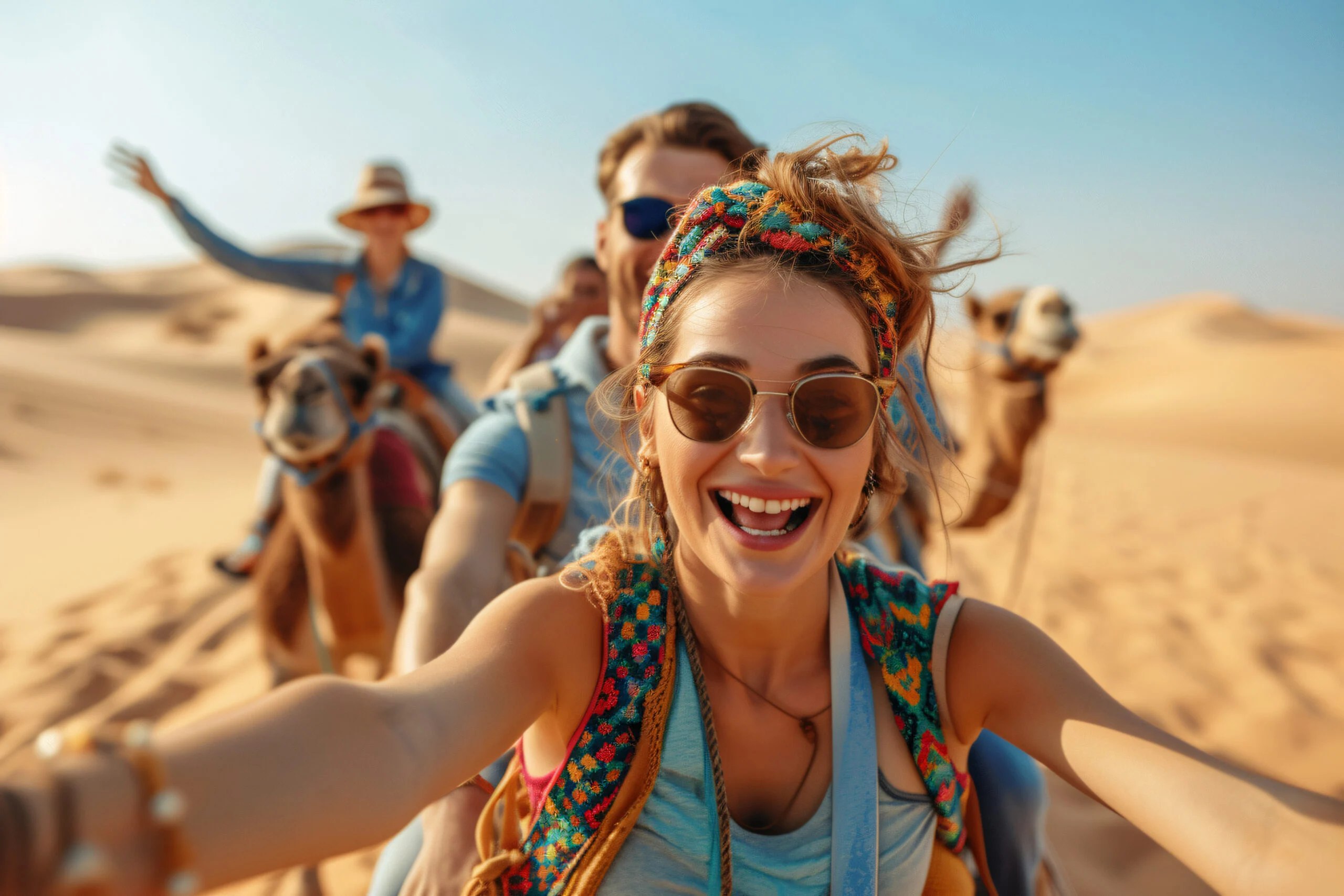
Some countries have one or two postcard views. Morocco has a problem of abundance: a blue city in the mountains, a red city at the edge of the desert, dunes the height of office towers, and medieval alleys where the light does half your work for you. If your camera roll is the way you remember a trip, few places on earth fill it faster.
This guide collects the 25 most instagrammable spots in Morocco — not just the famous ones, but the exact corners, the right time of day, and the small tricks that separate the photo you imagined from the one you actually take. Every spot here is real, reachable, and worth the detour. No studio sets, no places we haven’t researched properly.
How This Guide Works (and How to Photograph Morocco Respectfully)
For each spot you’ll find where it is, when the light is best, and one practical tip — phone or camera, it doesn’t matter. The spots are grouped by region so you can string them into a route rather than a scavenger hunt.
Two ground rules before you start shooting. First, people: always ask before photographing anyone, especially in the souks and rural villages. A smile and “Possible photo?” works in any language. Performers and water-sellers in the big squares pose for a living — if you shoot, tip. Second, equipment: Morocco tightly restricts drones, so don’t pack one without checking the current rules first — plenty of travelers have had theirs held at customs. The good news: nothing in this list needs one.
Marrakech: Spots 1–7
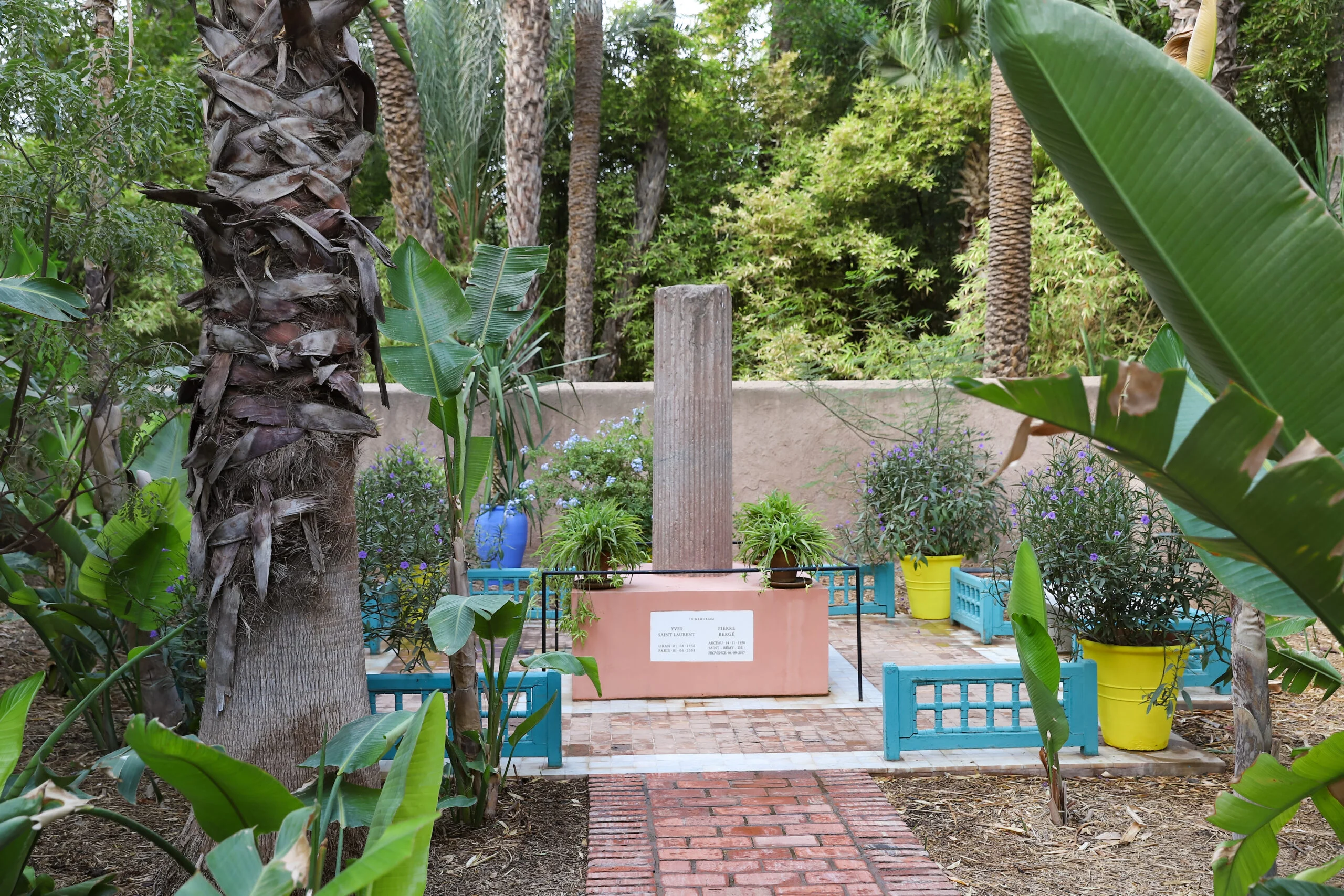
1. Jardin Majorelle
The French painter Jacques Majorelle began this garden in 1923 and spent almost forty years building it; in 1937 he mixed the intense ultramarine now known as Majorelle Blue, and in 1947 he opened the gates to the public. Yves Saint Laurent and Pierre Bergé bought and restored it in 1980, saving it from developers — the full story is on the Fondation Jardin Majorelle’s official site. Book the first time slot of the morning. By 10 a.m. every blue staircase has a queue; at opening, you get five quiet minutes with the cobalt villa, the bamboo grove, and nobody’s elbows.
You can also do this with us on our Marrakech photography tour.
2. Ben Youssef Madrasa
Rebuilt under the Saadian sultan Abdallah al-Ghalib and completed in 1564–65, this former Quranic college held around 130 student rooms and was once the largest madrasa in the Maghreb. Today it’s pure geometry: a marble courtyard wrapped in carved cedar, stucco, and zellige tilework. Stand dead center of the reflecting pool and shoot the symmetry head-on. Then go upstairs — the small student cells frame the courtyard through wooden screens, and that’s the shot most people miss.
3. Bahia Palace
A late-19th-century palace built to be the most beautiful of its age — “Bahia” means brilliance. The painted cedar ceilings photograph best around midday, when overhead sun fills the open courtyards and bounces warm light into the salons. Look up more than you look ahead. The honeycomb of color above the Grand Courtyard’s private apartments embarrasses most filters.
4. Jemaa el-Fnaa at Dusk
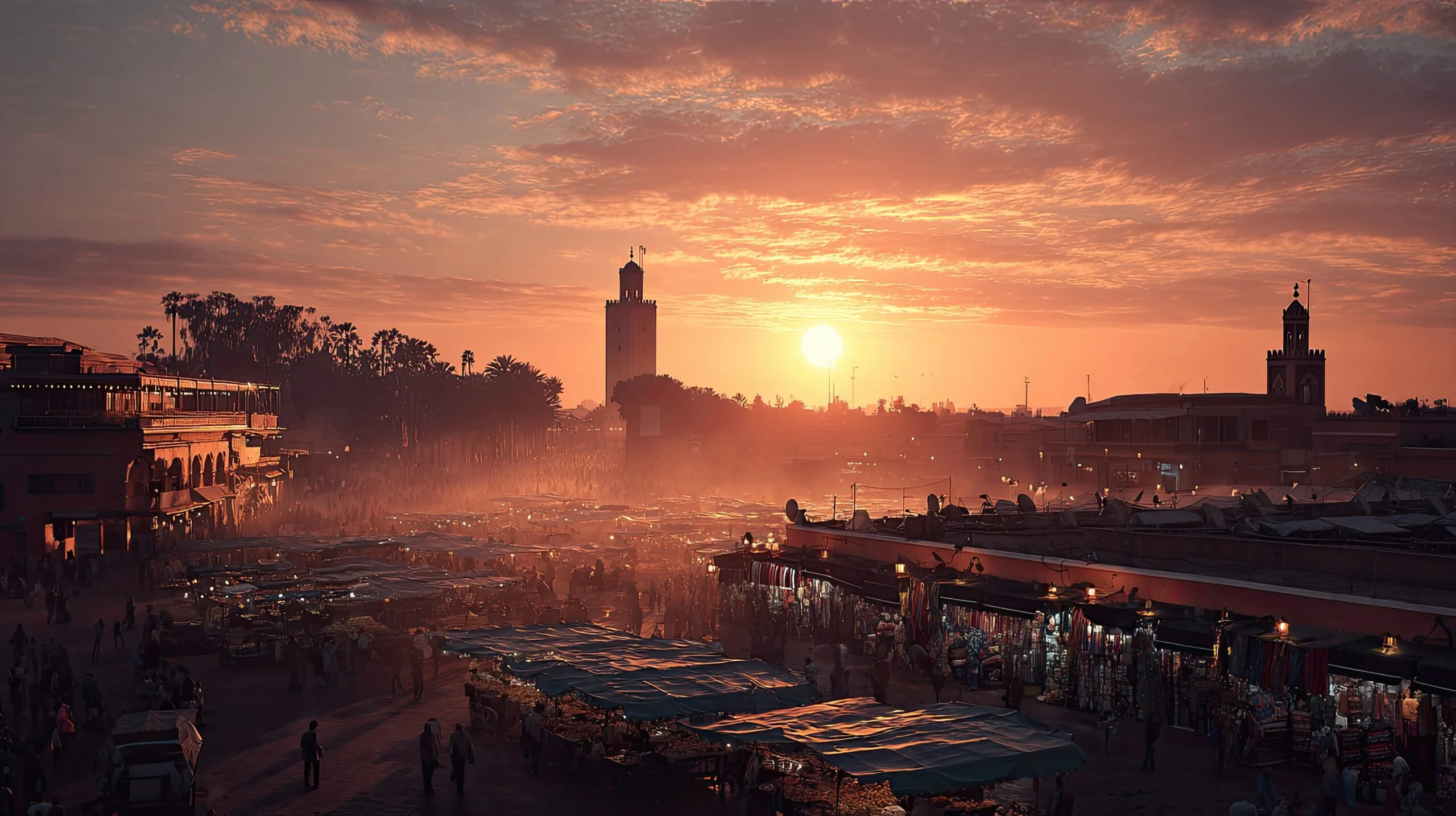
UNESCO recognized the cultural space of Jemaa el-Fnaa in 2001 as a masterpiece of intangible heritage — and from a rooftop café at dusk, you see why. Grab a terrace table on the square’s east side about 45 minutes before sunset, order a mint tea, and wait. The food-stall smoke rises, the lanterns switch on, the Koutoubia silhouettes against orange, and the square turns into the busiest long-exposure subject in North Africa.
5. The Souk Alleys and the Dyers’ Quarter
The covered souks north of the square are a tunnel of hanging lamps, dyed yarns, and slatted light. Shoot into the shafts of sun that cut through the reed roofing around mid-morning. In Souk Sebbaghine — the dyers’ quarter — skeins of wool hang overhead in saturated reds and yellows. Keep your shutter ready and your bargaining face on; you’ll be invited into every second shop, which is half the fun.
6. Saadian Tombs
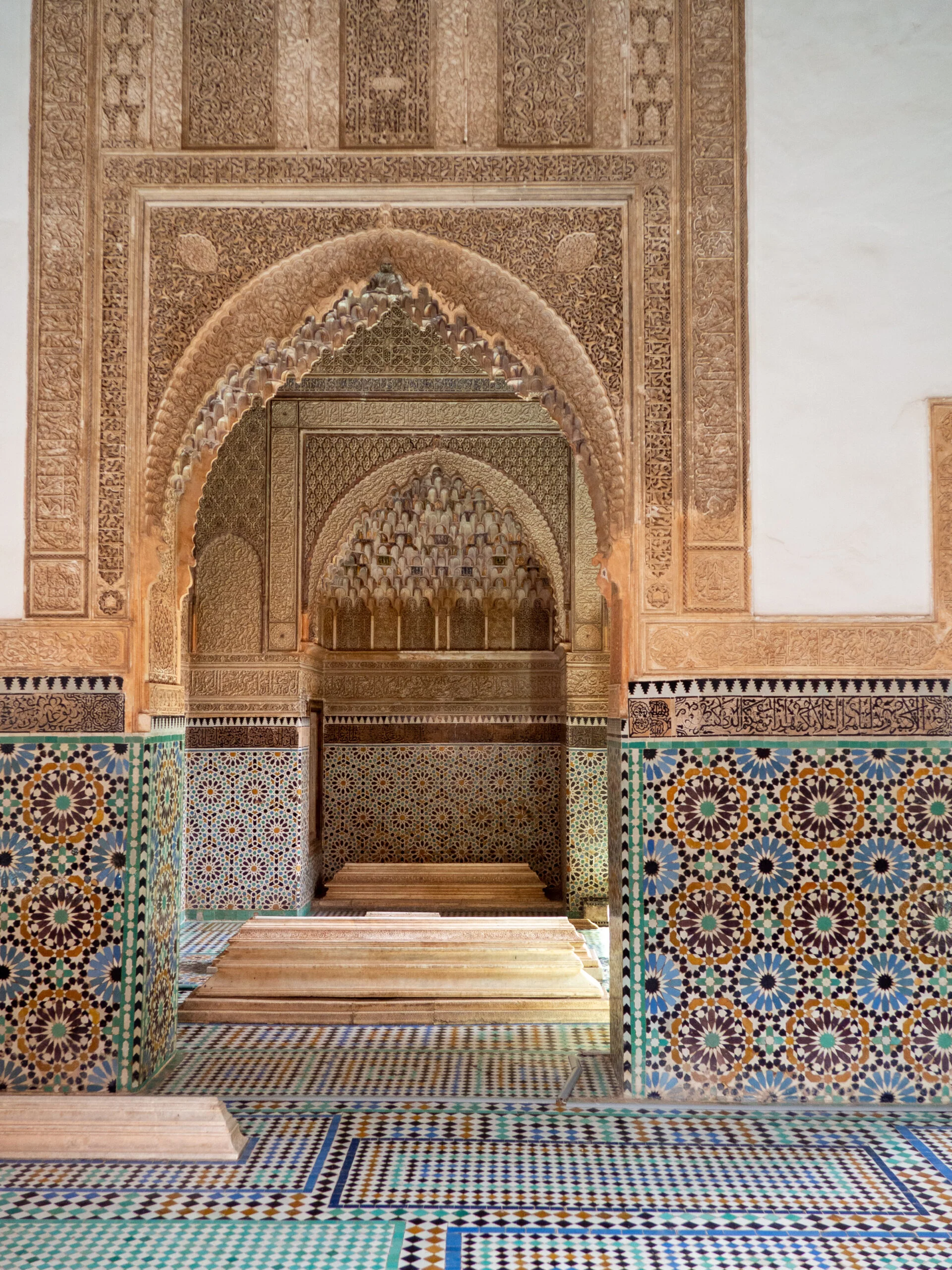
Walled up for centuries and rediscovered in the early 20th century, these royal tombs hide some of the finest zellige and carved marble in the city. The famous Chamber of the Twelve Columns is photographed from a single doorway, one group at a time — so be there at opening. Early light through the small windows is soft and even, and you’ll get three unhurried frames instead of one rushed one.
7. The Koutoubia from the Rose Gardens
Marrakech’s medina has been a UNESCO World Heritage site since 1985, and its most reliable landmark is the Koutoubia minaret. Skip the front entrance crowds; walk into the rose gardens on the mosque’s south side during golden hour. Palms, roses, pink walls, and the minaret catching the last warm light — it’s the postcard, and somehow it’s never crowded.
Chefchaouen and the Rif: Spots 8–10
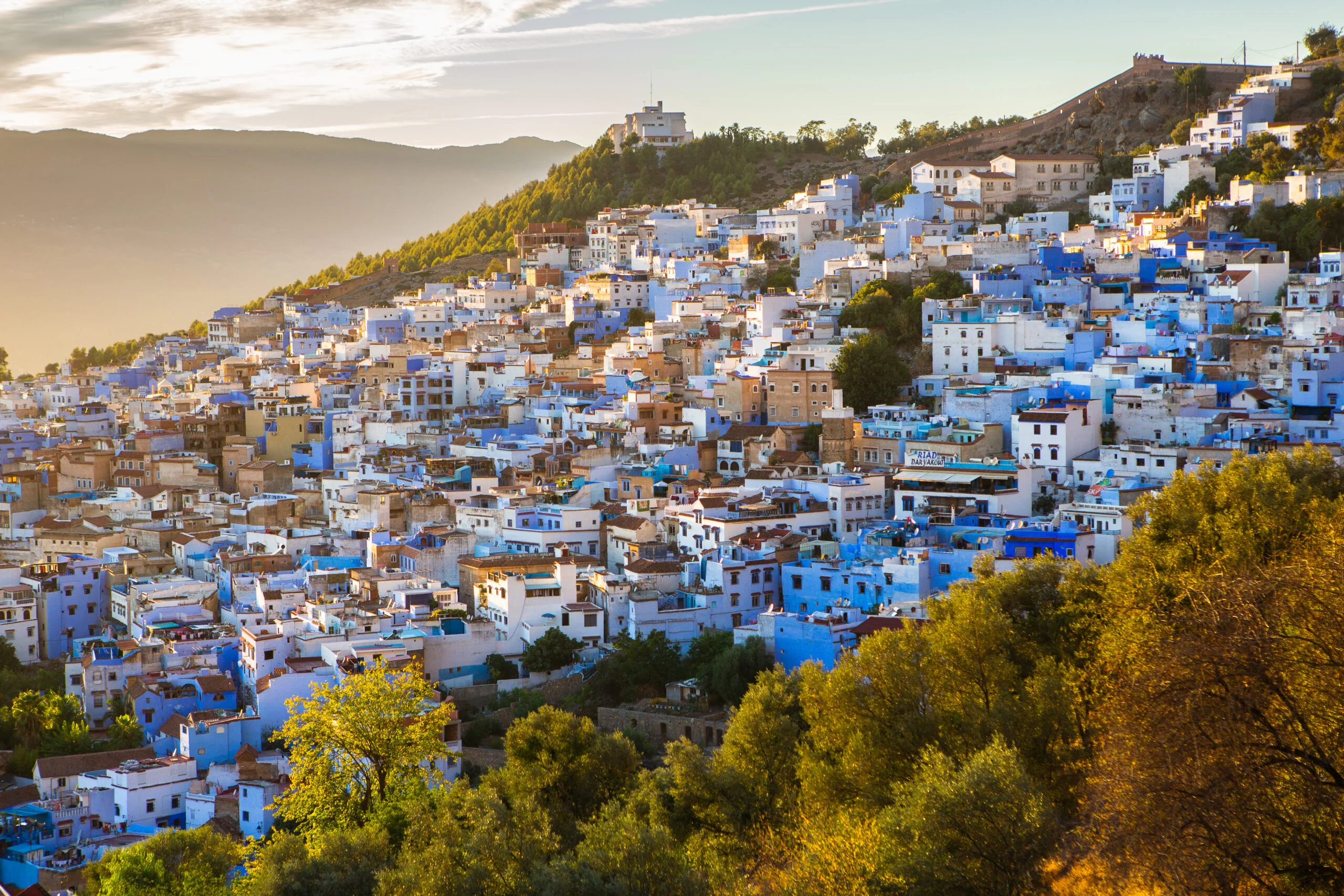
8. The Blue Alleys of Chefchaouen
Every shade of blue, on every wall, door, and staircase. The medina is small enough to wander without a map — which is exactly how to shoot it. Go before 9 a.m., when the shops are still shuttered and the alleys are empty except for cats and bread deliveries. Overcast mornings are a gift here: the blue goes deeper without harsh shadows. Our full Chefchaouen travel guide covers how to get there and where to stay.
9. The Spanish Mosque Viewpoint
A 30–40 minute walk east of the medina, the hillside Spanish Mosque is where the whole town arranges itself into one frame: a wash of blue and white against the green Rif mountains. Sunset is the classic — the town lights flicker on as the sky goes pink — but sunrise gives you the same view with nobody on the trail. Bring a light layer; the wind picks up on the ridge.
10. The Staircases with the Flowerpots
You’ve seen them on every Morocco feed: blue steps lined with potted geraniums, rugs hanging on the walls, brass lanterns for sale. Several shop owners maintain these corners and ask a small tip to photograph their displays — pay it cheerfully, it keeps the whole street photogenic. Shoot low from the bottom step and let the staircase pull the eye upward.
Fes: Spots 11–13
11. Chouara Tannery from the Leather Terraces
The centuries-old tannery pits — round stone vats of dye in ochre, white, and brown — are viewed from the terraces of the surrounding leather shops. Go in the morning, when the vats are busiest and the light rakes across them. You’ll be handed a sprig of mint for the smell. Take it. A wide shot from the highest terrace captures the honeycomb pattern; a tighter frame catches workers mid-step between colors.
12. Bab Boujloud, the Blue Gate
Fes’s most famous gateway is blue zellige on the outside and green on the medina side — one gate, two photos. Frame the arch so the minaret of the Bou Inania Madrasa rises through it. Late afternoon light favors the blue face; step through and turn around for the green one. Then let the medina swallow you, because that’s what it does.
13. The Medina Rooftops at Sunset
Fes el-Bali has been a UNESCO World Heritage site since 1981, and from a riad rooftop at sunset it looks like it hasn’t changed since inscription: a grey-green sea of rooftops, satellite dishes, minarets, and storks. Most riads and several cafés near the tanneries let you up with the price of a tea. Our Fes travel guide lists the neighborhoods where the views are best.
The Atlas and the Kasbah Route: Spots 14–18
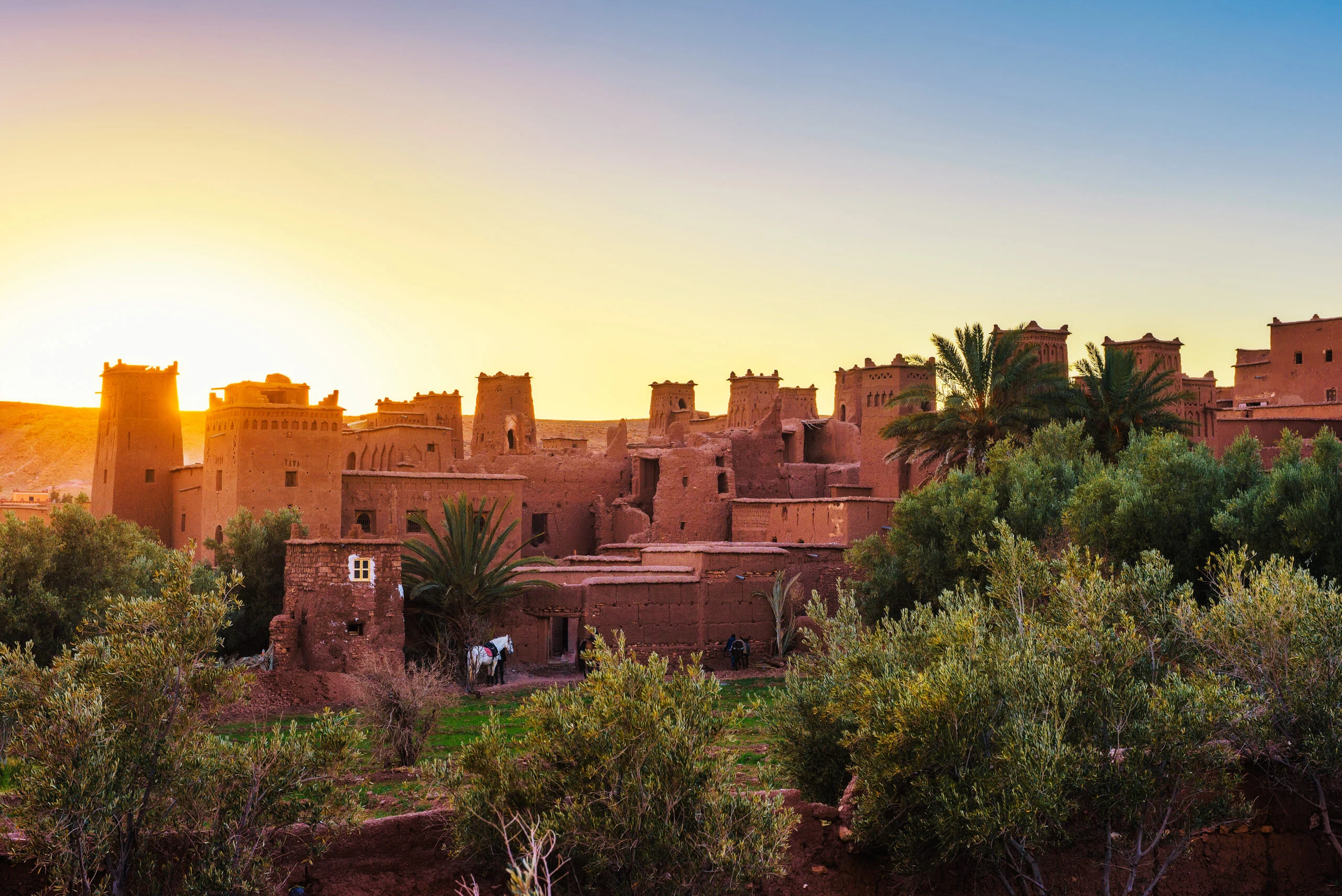
14. Aït Benhaddou
The most filmed village in Morocco, and a UNESCO World Heritage site since 1987. The classic shot is from across the riverbed on the new-village side: the whole earthen ksar stacked up the hillside, glowing amber in the last hour of daylight. Then cross over and climb to the granary at the top for the reverse view across the valley. Late afternoon is everything here — at noon the pisé walls flatten into beige. We cover the history and logistics in our Aït Benhaddou guide.
15. The Tizi n’Tichka Pass
The road from Marrakech to Ouarzazate climbs to roughly 2,260 meters over the High Atlas — the highest major mountain pass in North Africa. The switchbacks themselves are the subject: ribbons of asphalt folded into red rock. Use the marked pull-offs (there are several near the summit) and never shoot from the roadway. Morning eastbound gives you clean light on the Marrakech-side hairpins.
16. Kasbah Taourirt, Ouarzazate
On the edge of Morocco’s film-studio town stands one of its most photogenic kasbahs: a crumble-and-restore maze of earthen towers and crenellations. The exterior shoots best in early morning, when low light deepens every carved groove in the walls. Inside, narrow stairways open suddenly onto bright terraces — lens-cap-off territory the whole way up.
17. The Dades Gorge Hairpins
The serpentine road climbing out of the Dades Gorge is one of Morocco’s most shared road photographs — a perfect S of tarmac stitched into the canyon wall. There’s a café at the top of the climb whose terrace overlooks the whole sequence. Golden hour adds long shadows that make the curves pop, but honestly, this one works at any hour with a sky behind it.
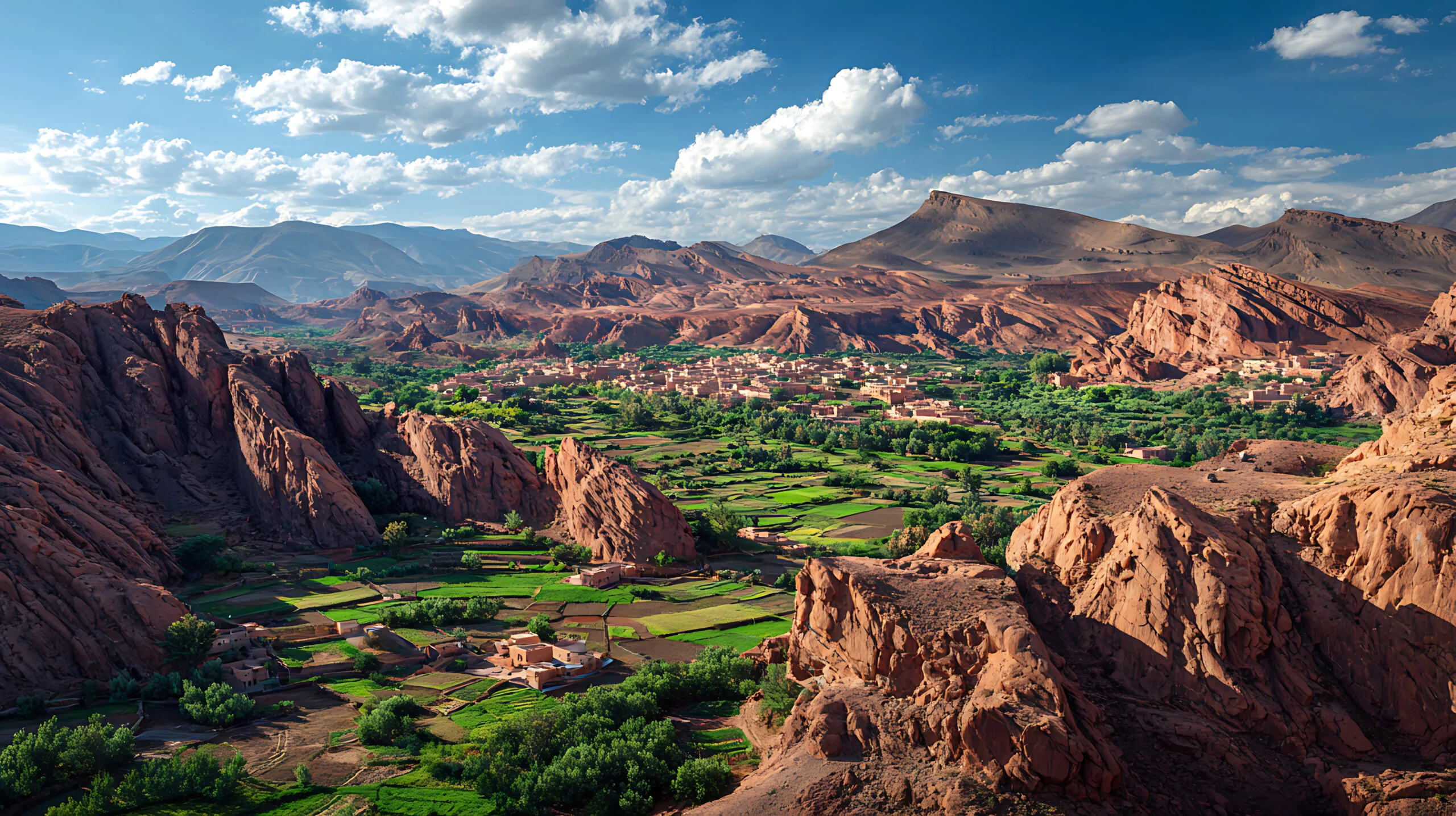
18. Todra Gorge
Canyon walls rise to around 160 meters and squeeze to a corridor only about 10 meters wide at the narrowest point, with a shallow river running through. Counterintuitively, midday is prime time — it’s the only window when sun reaches the canyon floor and the walls light up in layers of orange. Shoot a person small against the rock for scale; this is one place where wide-angle earns its keep.
The Sahara: Spots 19–21
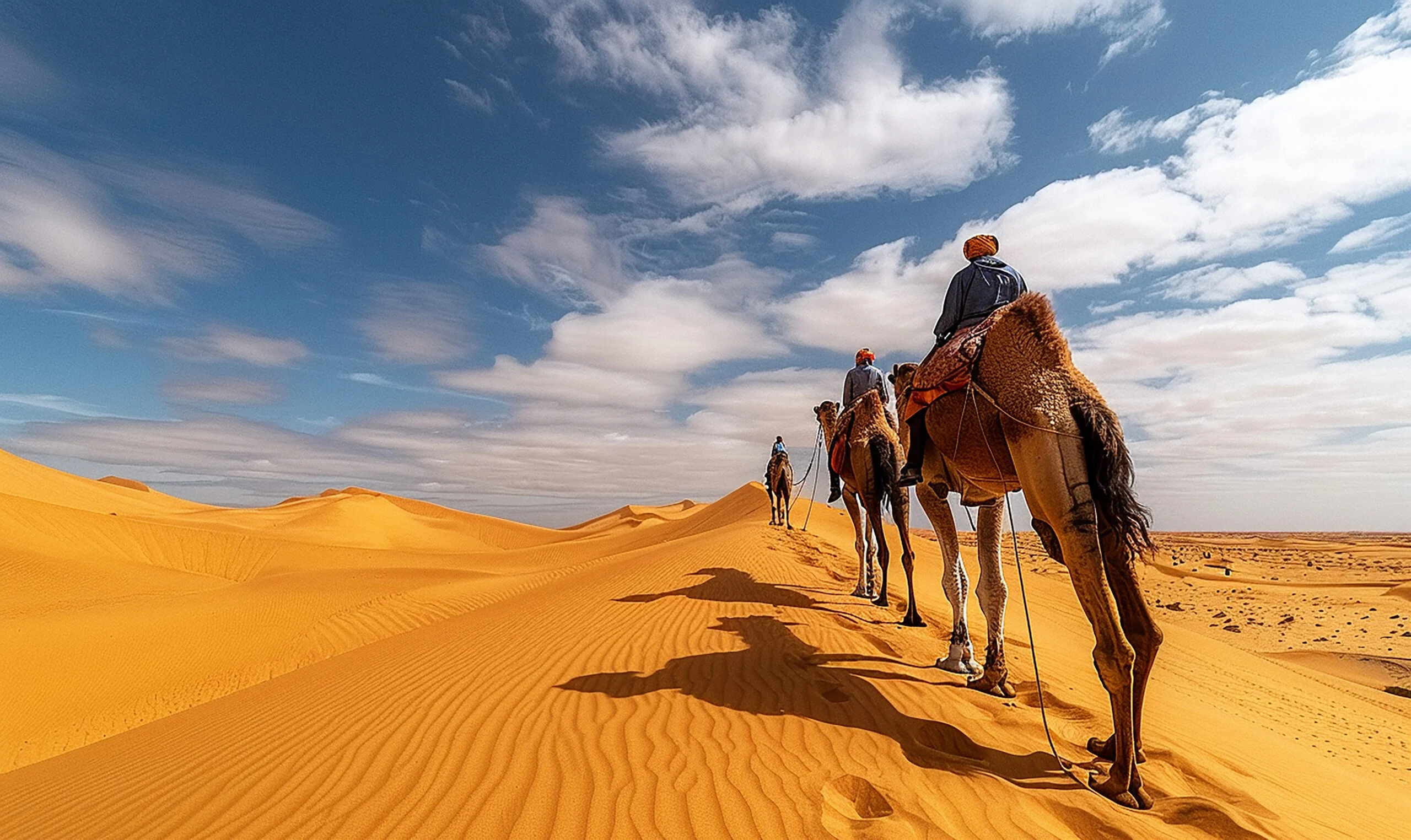
19. Erg Chebbi at Sunrise
The great dune sea outside Merzouga stretches about 28 kilometers north to south, with crests reaching roughly 150 meters. Climb a high dune in the dark (your camp guide will point the way) and watch the first light turn the sand from grey to rose to copper in the space of twenty minutes. Tracks, ripples, and knife-edge crests — sunrise sidelight is what those textures were waiting for.
20. The Camel Caravan Silhouette
The classic Sahara frame: a line of camels and riders along a dune ridge, low sun behind them. Shoot it side-on rather than from within the caravan — ask your guide to walk you thirty meters off the line at the right moment; they do this every day and know the spot. Expose for the sky and let the camels go full silhouette. Phones handle this beautifully on HDR; cameras want a touch of underexposure.
21. The Desert Camp After Dark
Far from any city, the Saharan night sky needs no editing. Lantern-lit camp tents in the foreground, dunes behind, stars above — prop your phone on a cushion for night mode, or give a camera 15–25 seconds on any steady surface. Moonless nights win for stars; moonlit nights win for glowing dunes. Either way, step away from the campfire and let your eyes adjust first. For deeper technique, our Sahara desert photography guide goes spot by spot and setting by setting.
The Coast and Casablanca: Spots 22–24
22. The Ramparts of Essaouira
A fortified Atlantic town built in the late 18th century along European military lines — and a UNESCO World Heritage site since 2001. The sea-facing cannons of the Sqala line up into a perfect leading-line shot down the ramparts, whitecaps crashing below. Late afternoon brings the warm light; the gulls work the frame for free.
23. Essaouira’s Blue Fishing Boats
In the working port south of the medina, hundreds of small wooden boats sit hull-to-hull in one shade of bright cobalt. Mornings are the show: nets unloaded, gulls swarming, fishermen calling prices. It’s a real workplace, so shoot from the edges, ask before close portraits, and mind the puddles — that famous blue reflects out of every one of them.
24. Hassan II Mosque, Casablanca
Completed in 1993 on a platform over the Atlantic, with room for around 105,000 worshippers in the prayer hall and esplanade, this is one of the few mosques in Morocco that non-Muslims can visit on a guided tour. Photograph the minaret from the far end of the esplanade with the ocean in frame, then go at low tide for the reflection shots in the wet sand below the mosque’s seawall — the building doubles itself for you.
Spot 25: The High Atlas Villages Above Imlil
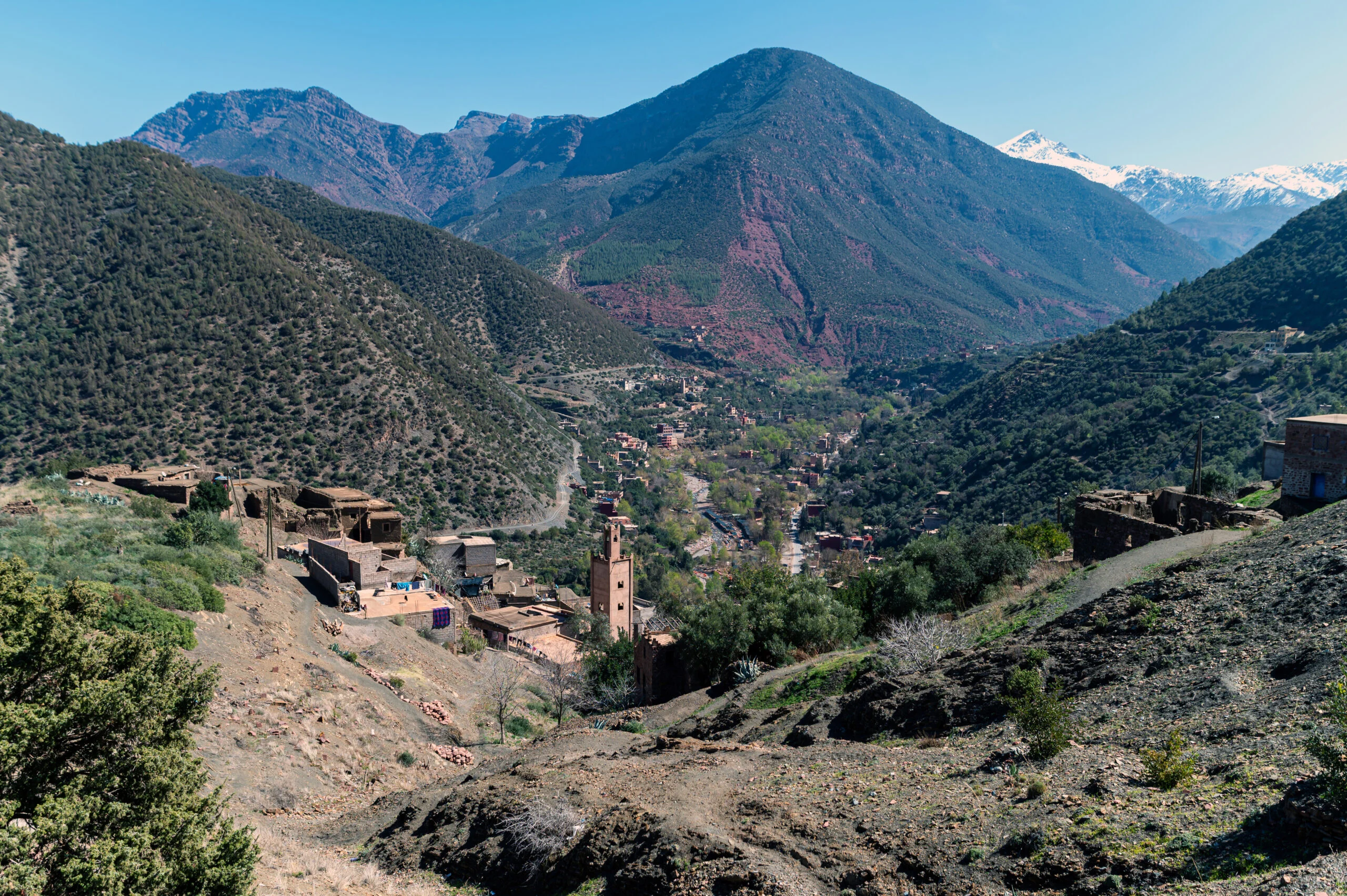
The one almost nobody posts — which is exactly why you should. An hour and a half south of Marrakech, the Imlil valley stacks earthen Amazigh villages up green terraced hillsides beneath the highest peaks of the High Atlas. Walk twenty minutes up any mule track and turn around: walnut groves, flat rooftops drying corn, and snow on the summits for much of the year. Golden hour here feels like a secret.
When to Go for the Best Light
Morocco’s photography clock is simple: shoot mornings and late afternoons, rest at midday. The exceptions are listed above — Todra’s canyon floor and Bahia’s courtyards actually want the high sun.
Season-wise, spring and autumn give clear air, green valleys, and comfortable hiking light. Winter brings snow to the Atlas — the dream backdrop for Marrakech rooftop shots — and the desert stays crisp and shootable all day. Summer is workable if you embrace the early-morning rule, though heat haze softens the long mountain views by noon.
Planning a Photo-First Route
The 25 spots above fall naturally into one loop: Marrakech, north to Chefchaouen and Fes, then south over the Atlas along the kasbah route to the dunes, and back west to the coast. Doing it justice takes ten days to two weeks; with less time, pick one region and go deep rather than wide.
This is also where we should introduce ourselves: at Moratra, we plan and run private Morocco tours, and photographer travelers are some of our favorites — we time drives around the light, not the lunch stops. If Marrakech is your base, our Marrakech photography tour covers spots 1–7 with a guide who knows when each courtyard goes quiet.
Frequently Asked Questions
What is the most instagrammable place in Morocco?
Chefchaouen is the consensus answer — an entire town painted in blues photographs well from every angle, at almost any hour. But Jardin Majorelle in Marrakech and the Erg Chebbi dunes at sunrise run it close, and they’re far easier to combine with a classic southern route.
When is the best time of day for photos in Morocco?
The hour after sunrise and the two hours before sunset do most of the work: low, warm light, long shadows, and fewer people. Sunrise is especially valuable at crowded spots like Chefchaouen’s alleys and the Majorelle garden, where being first through the gate matters more than your gear.
Is it okay to photograph people in Morocco?
Only with permission. Always ask first — a gesture with your camera and a smile is enough — and accept a no gracefully. Performers in places like Jemaa el-Fnaa earn their living from photos, so tip them if you shoot. Avoid photographing anyone in uniform or any security infrastructure.
Do I need a professional camera, or is a phone enough?
A recent phone covers almost everything on this list — the wide courtyards, the blue alleys, even night mode at a desert camp. A camera earns its weight in two situations: long-lens compression for camel caravans and dune ridges, and low-light interiors like the Saadian Tombs where sensors matter.
How many days do I need to photograph all 25 spots?
Plan on ten days to two weeks for the full loop — Marrakech, Chefchaouen, Fes, the kasbah route, the Sahara, and the coast — without rushing the light. In a single week, combine Marrakech, Aït Benhaddou, and the dunes; they sit on one road and cover the widest visual range.
Bring the Photos Home
One small disclaimer before you pack: opening hours, access rules, and entry conditions at monuments change — confirm locally on the day, and treat every “best time” above as a starting point for your own version of the shot.
If you’d like the rest of your Morocco photo trip planned with the same care — routes timed for golden hour, riads with rooftops worth waking up for, drivers who know exactly which pull-off has the view — that’s what we do. Browse our complete guide to the best Morocco tours, request a quote, or simply message us with a question — we’ll answer for free, no obligation. Either way: charge the batteries, clear the memory card, and take the early slot. Morocco rewards both.
