
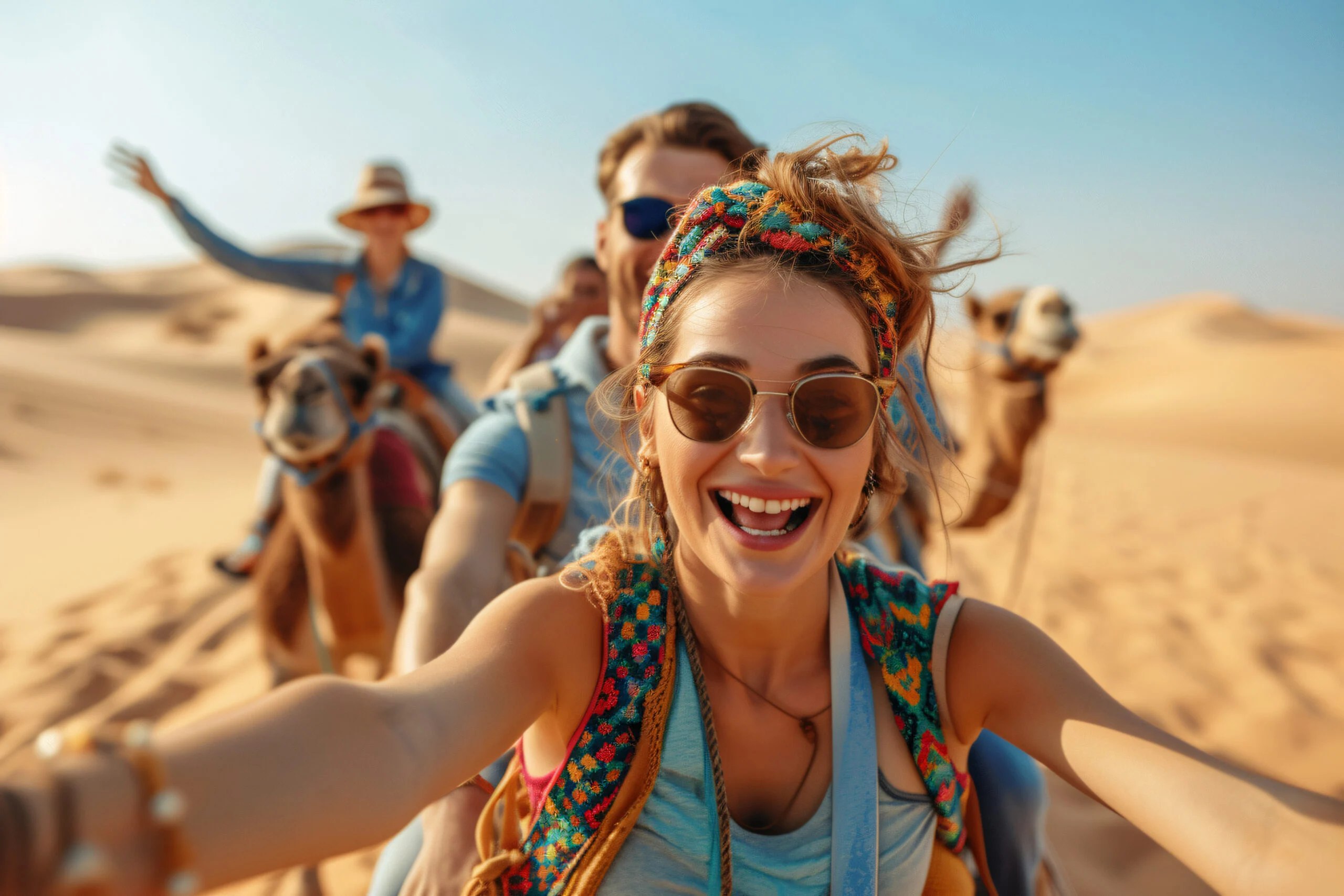
Certains pays ont une ou deux vues de carte postale. Le Maroc, lui, a un problème d’abondance : une ville bleue dans les montagnes, une ville rouge aux portes du désert, des dunes hautes comme des immeubles et des ruelles médiévales où la lumière fait la moitié du travail. Si votre pellicule est votre façon de vous souvenir d’un voyage, peu d’endroits au monde la remplissent aussi vite.
This guide collects the 25 most instagrammable spots in Morocco — not just the famous ones, but the exact corners, the right time of day, and the small tricks that separate the photo you imagined from the one you actually take. Every spot here is real, reachable, and worth the detour. No studio sets, no places we haven’t researched properly.
Comment utiliser ce guide (et photographier le Maroc avec respect)
For each spot you’ll find where it is, when the light is best, and one practical tip — phone or camera, it doesn’t matter. The spots are grouped by region so you can string them into a route rather than a scavenger hunt.
Deux règles de base avant de commencer à photographier. D’abord, les personnes : demandez toujours avant de photographier quelqu’un, surtout dans les souks et les villages. Un sourire et un « Photo possible ? » fonctionnent dans toutes les langues. Les artistes et les porteurs d’eau des grandes places posent pour gagner leur vie : si vous les photographiez, laissez un pourboire. Ensuite, le matériel : le Maroc encadre strictement les drones, alors n’en emportez pas sans vérifier la réglementation en vigueur ; nombre de voyageurs se sont vu confisquer le leur à la douane. La bonne nouvelle : aucun lieu de cette liste n’en nécessite.
Marrakech : lieux 1 à 7
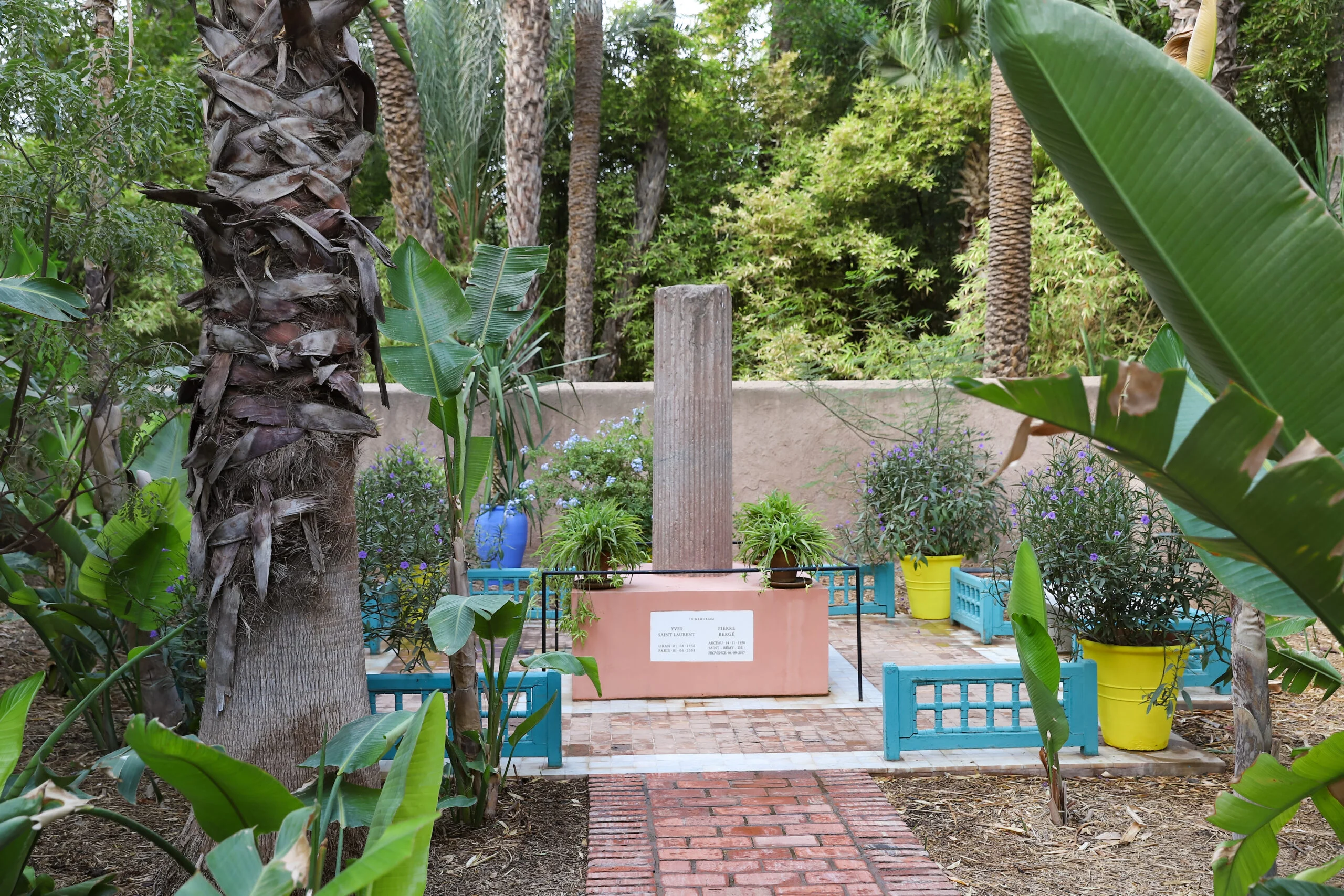
1. Le Jardin Majorelle
The French painter Jacques Majorelle began this garden in 1923 and spent almost forty years building it; in 1937 he mixed the intense ultramarine now known as Majorelle Blue, and in 1947 he opened the gates to the public. Yves Saint Laurent and Pierre Bergé bought and restored it in 1980, saving it from developers — the full story is on the Fondation Jardin Majorelle’s official site. Book the first time slot of the morning. By 10 a.m. every blue staircase has a queue; at opening, you get five quiet minutes with the cobalt villa, the bamboo grove, and nobody’s elbows.
Vous pouvez aussi le vivre avec nous grâce à notre circuit photo de Marrakech.
2. La médersa Ben Youssef
Reconstruite sous le sultan saadien Abdallah al-Ghalib et achevée en 1564-1565, cette ancienne école coranique comptait environ 130 chambres d’étudiants et fut autrefois la plus grande médersa du Maghreb. Aujourd’hui, c’est de la géométrie pure : une cour de marbre enveloppée de cèdre sculpté, de stuc et de zelliges. Placez-vous exactement au centre du bassin et photographiez la symétrie de face. Montez ensuite à l’étage : les petites cellules des étudiants encadrent la cour à travers des moucharabiehs, et c’est la photo que la plupart des gens ratent.
3. Le palais de la Bahia
A late-19th-century palace built to be the most beautiful of its age — “Bahia” means brilliance. The painted cedar ceilings photograph best around midday, when overhead sun fills the open courtyards and bounces warm light into the salons. Look up more than you look ahead. The honeycomb of color above the Grand Courtyard’s private apartments embarrasses most filters.
4. Jemaa el-Fnaa au crépuscule
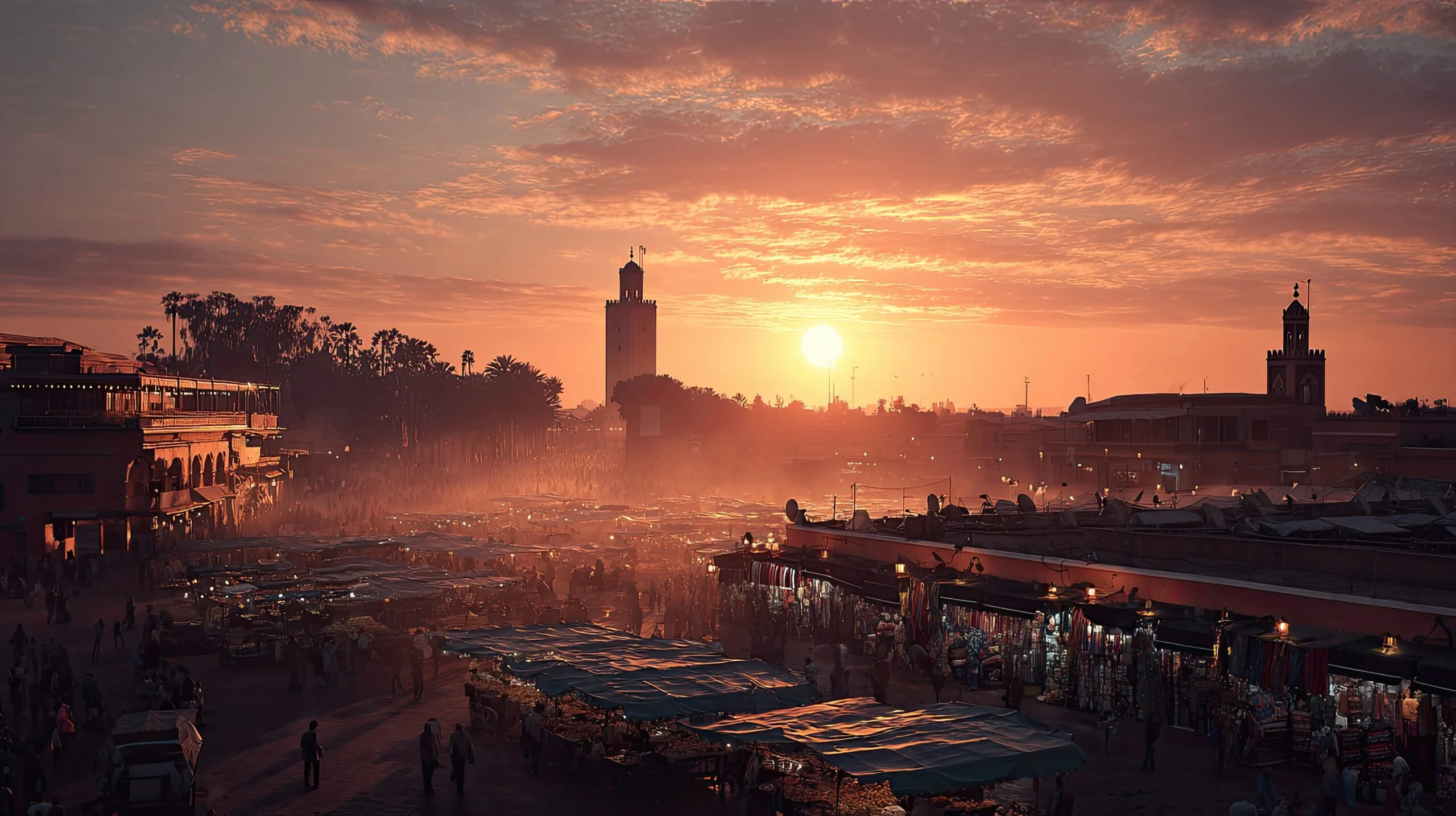
UNESCO recognized the cultural space of Jemaa el-Fnaa in 2001 as a masterpiece of intangible heritage — and from a rooftop café at dusk, you see why. Grab a terrace table on the square’s east side about 45 minutes before sunset, order a mint tea, and wait. The food-stall smoke rises, the lanterns switch on, the Koutoubia silhouettes against orange, and the square turns into the busiest long-exposure subject in North Africa.
5. The Souk Alleys and the Dyers’ Quarter
The covered souks north of the square are a tunnel of hanging lamps, dyed yarns, and slatted light. Shoot into the shafts of sun that cut through the reed roofing around mid-morning. In Souk Sebbaghine — the dyers’ quarter — skeins of wool hang overhead in saturated reds and yellows. Keep your shutter ready and your bargaining face on; you’ll be invited into every second shop, which is half the fun.
6. Les tombeaux saadiens
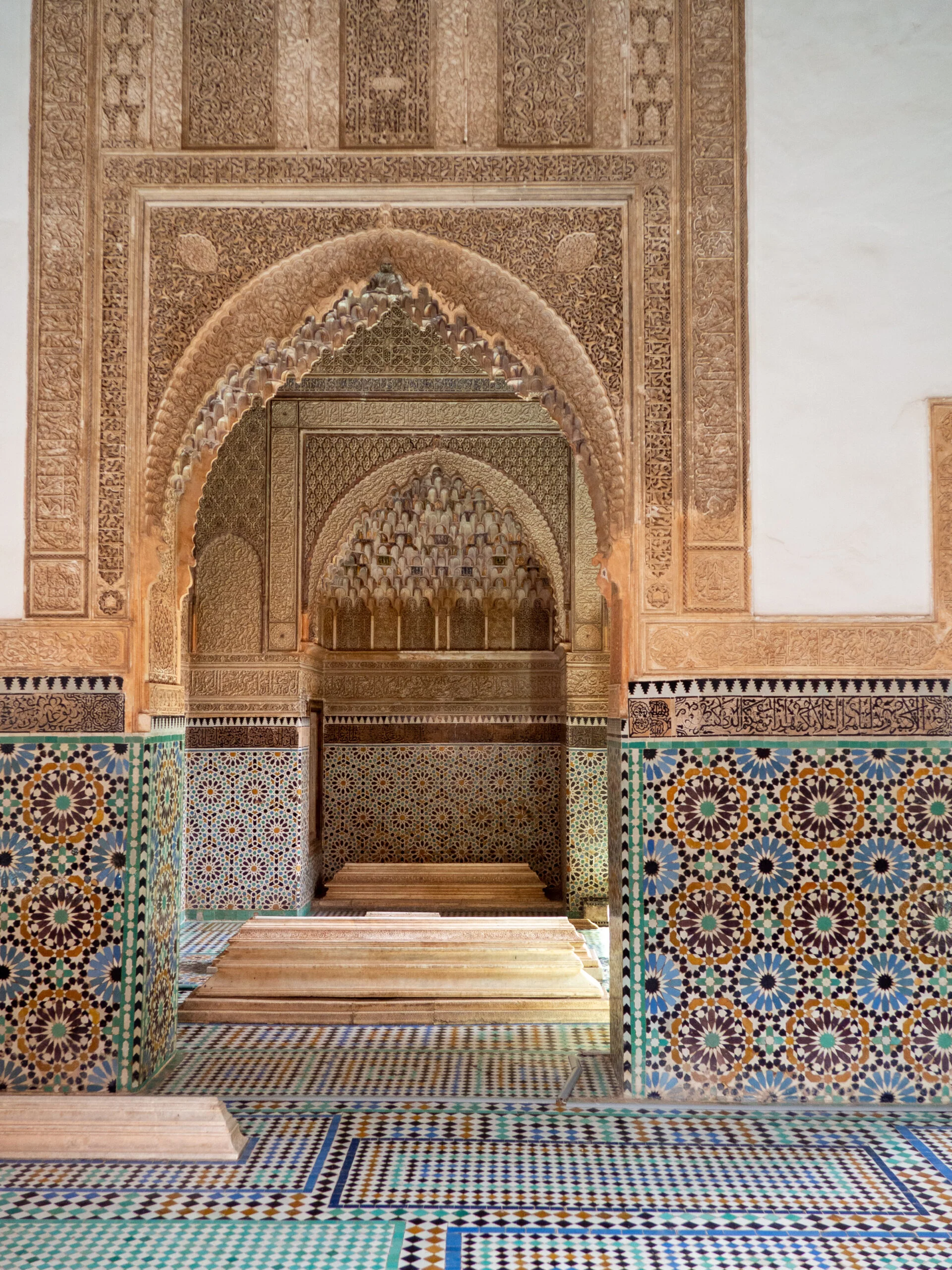
Walled up for centuries and rediscovered in the early 20th century, these royal tombs hide some of the finest zellige and carved marble in the city. The famous Chamber of the Twelve Columns is photographed from a single doorway, one group at a time — so be there at opening. Early light through the small windows is soft and even, and you’ll get three unhurried frames instead of one rushed one.
7. La Koutoubia depuis les jardins de roses
Marrakech’s medina has been a UNESCO World Heritage site since 1985, and its most reliable landmark is the Koutoubia minaret. Skip the front entrance crowds; walk into the rose gardens on the mosque’s south side during golden hour. Palms, roses, pink walls, and the minaret catching the last warm light — it’s the postcard, and somehow it’s never crowded.
Chefchaouen et le Rif : lieux 8 à 10
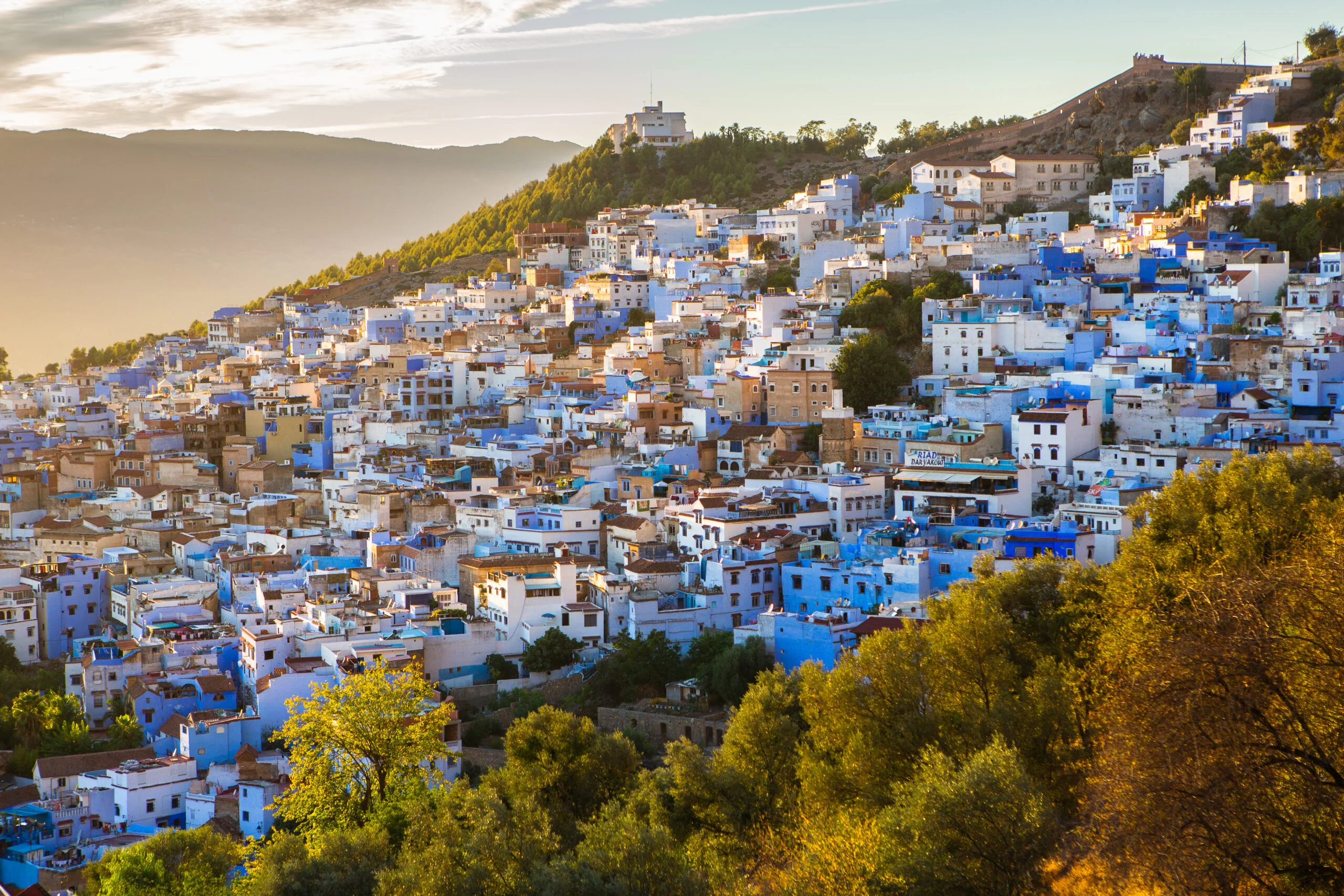
8. Les ruelles bleues de Chefchaouen
Every shade of blue, on every wall, door, and staircase. The medina is small enough to wander without a map — which is exactly how to shoot it. Go before 9 a.m., when the shops are still shuttered and the alleys are empty except for cats and bread deliveries. Overcast mornings are a gift here: the blue goes deeper without harsh shadows. Our full guide de voyage de Chefchaouen covers how to get there and where to stay.
9. Le point de vue de la mosquée espagnole
À 30-40 minutes de marche à l’est de la médina, la mosquée espagnole, à flanc de colline, est l’endroit où toute la ville tient dans un seul cadre : un lavis de bleu et de blanc sur fond de montagnes vertes du Rif. Le coucher du soleil est le grand classique (les lumières de la ville s’allument pendant que le ciel rosit), mais le lever du soleil offre la même vue sans personne sur le sentier. Prenez une couche légère : le vent se lève sur la crête.
10. Les escaliers aux pots de fleurs
Vous les avez déjà vues dans tous les fils consacrés au Maroc : des marches bleues bordées de géraniums en pot, des tapis suspendus aux murs, des lanternes en laiton à vendre. Plusieurs commerçants entretiennent ces recoins et demandent un petit pourboire pour photographier leurs étalages : payez-le de bon cœur, c’est ce qui garde toute la rue photogénique. Photographiez en contre-plongée depuis la première marche et laissez l’escalier guider le regard vers le haut.
Fès : lieux 11 à 13
11. La tannerie Chouara depuis les terrasses des maroquiniers
The centuries-old tannery pits — round stone vats of dye in ochre, white, and brown — are viewed from the terraces of the surrounding leather shops. Go in the morning, when the vats are busiest and the light rakes across them. You’ll be handed a sprig of mint for the smell. Take it. A wide shot from the highest terrace captures the honeycomb pattern; a tighter frame catches workers mid-step between colors.
12. Bab Boujloud, la porte bleue
Fes’s most famous gateway is blue zellige on the outside and green on the medina side — one gate, two photos. Frame the arch so the minaret of the Bou Inania Madrasa rises through it. Late afternoon light favors the blue face; step through and turn around for the green one. Then let the medina swallow you, because that’s what it does.
13. Les toits de la médina au coucher du soleil
Fes el-Bali has been a UNESCO World Heritage site since 1981, and from a riad rooftop at sunset it looks like it hasn’t changed since inscription: a grey-green sea of rooftops, satellite dishes, minarets, and storks. Most riads and several cafés near the tanneries let you up with the price of a tea. Our guide de voyage de Fès lists the neighborhoods where the views are best.
L'Atlas et la route des kasbahs : lieux 14 à 18
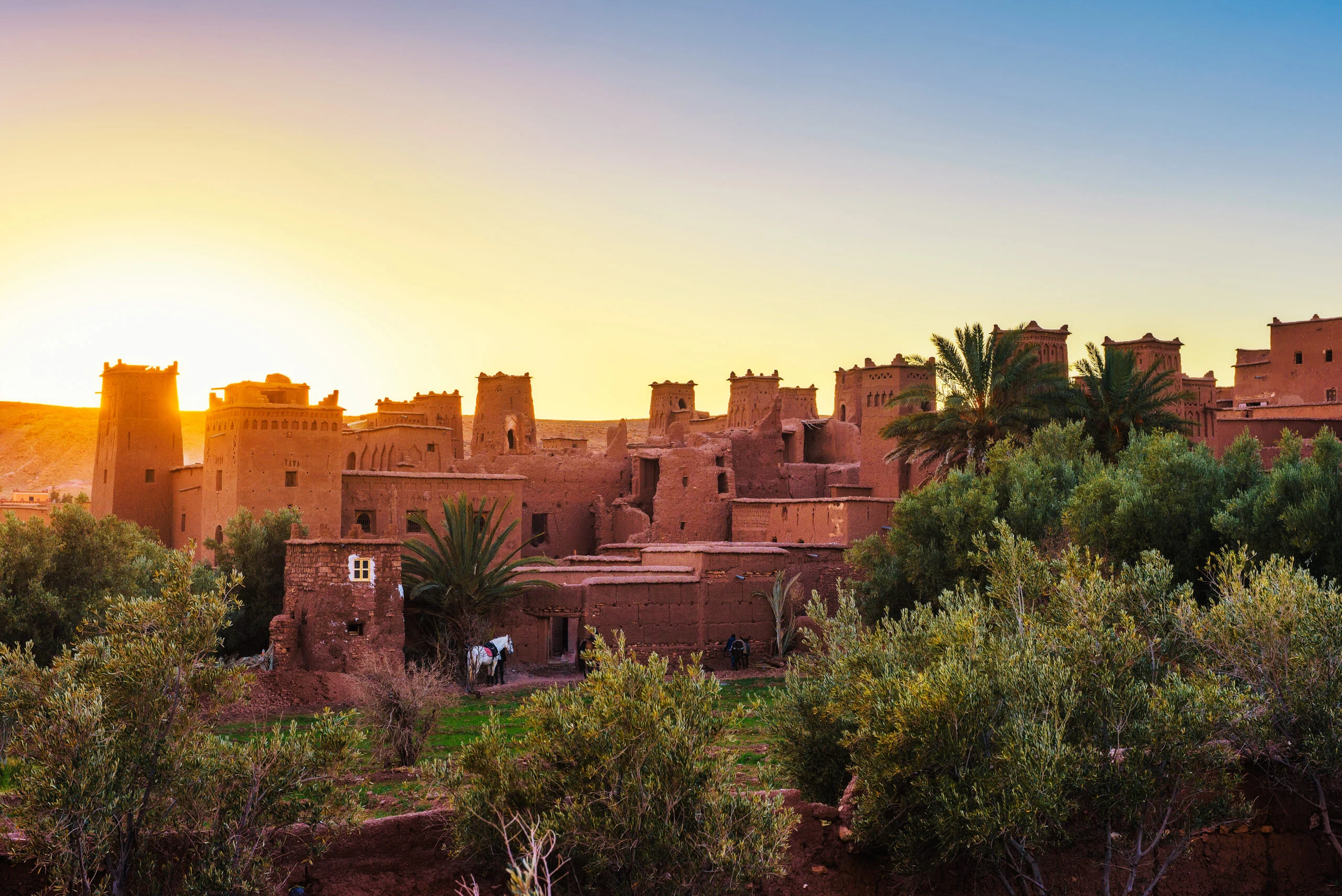
14. Aït Benhaddou
The most filmed village in Morocco, and a UNESCO World Heritage site since 1987. The classic shot is from across the riverbed on the new-village side: the whole earthen ksar stacked up the hillside, glowing amber in the last hour of daylight. Then cross over and climb to the granary at the top for the reverse view across the valley. Late afternoon is everything here — at noon the pisé walls flatten into beige. We cover the history and logistics in our Aït Benhaddou guide.
15. The Tizi n’Tichka Pass
The road from Marrakech to Ouarzazate climbs to roughly 2,260 meters over the High Atlas — the highest major mountain pass in North Africa. The switchbacks themselves are the subject: ribbons of asphalt folded into red rock. Use the marked pull-offs (there are several near the summit) and never shoot from the roadway. Morning eastbound gives you clean light on the Marrakech-side hairpins.
16. La kasbah de Taourirt, à Ouarzazate
On the edge of Morocco’s film-studio town stands one of its most photogenic kasbahs: a crumble-and-restore maze of earthen towers and crenellations. The exterior shoots best in early morning, when low light deepens every carved groove in the walls. Inside, narrow stairways open suddenly onto bright terraces — lens-cap-off territory the whole way up.
17. Les lacets des gorges du Dadès
The serpentine road climbing out of the Dades Gorge is one of Morocco’s most shared road photographs — a perfect S of tarmac stitched into the canyon wall. There’s a café at the top of the climb whose terrace overlooks the whole sequence. Golden hour adds long shadows that make the curves pop, but honestly, this one works at any hour with a sky behind it.
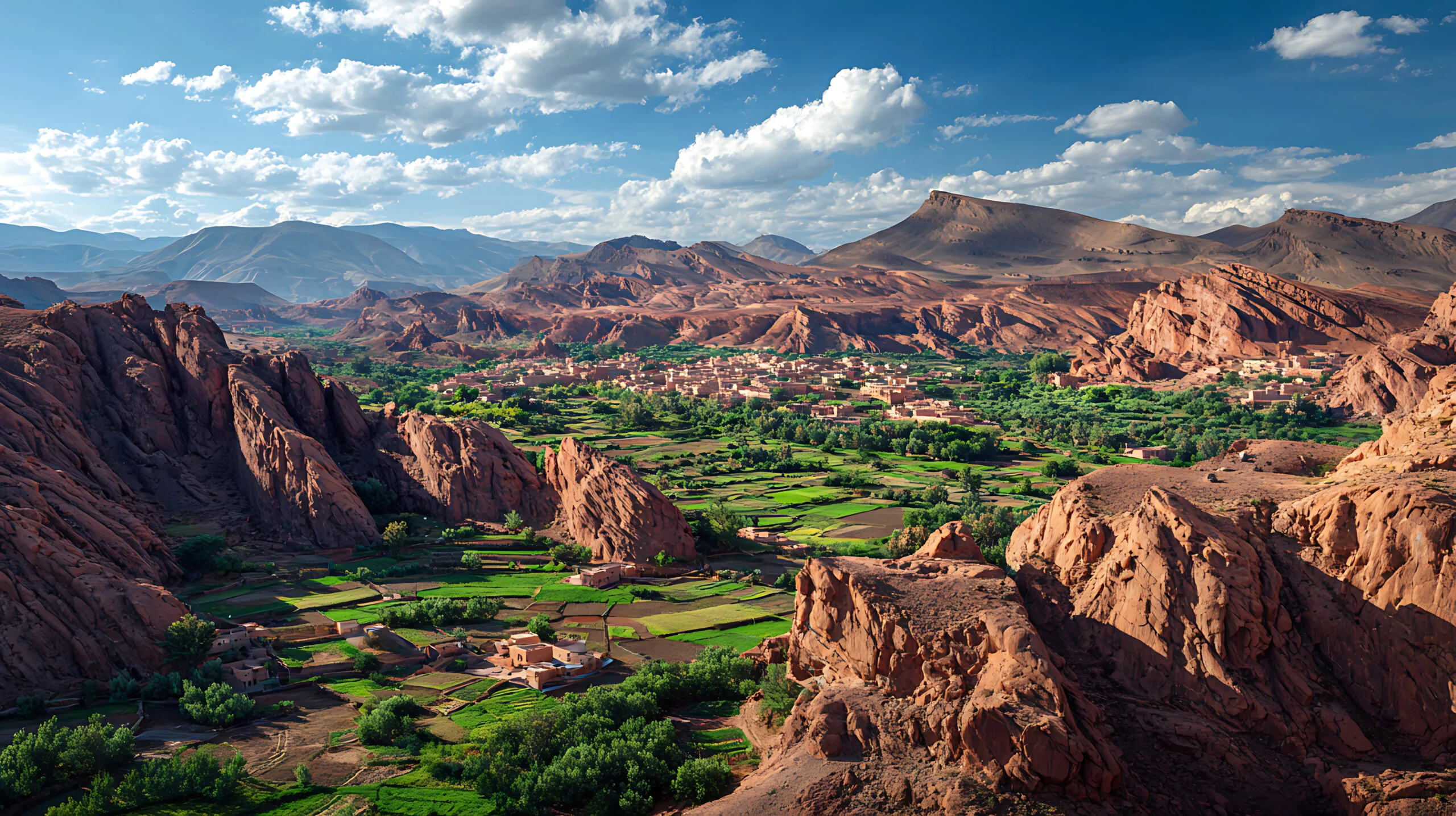
18. Les gorges du Todra
Canyon walls rise to around 160 meters and squeeze to a corridor only about 10 meters wide at the narrowest point, with a shallow river running through. Counterintuitively, midday is prime time — it’s the only window when sun reaches the canyon floor and the walls light up in layers of orange. Shoot a person small against the rock for scale; this is one place where wide-angle earns its keep.
Le Sahara : lieux 19 à 21
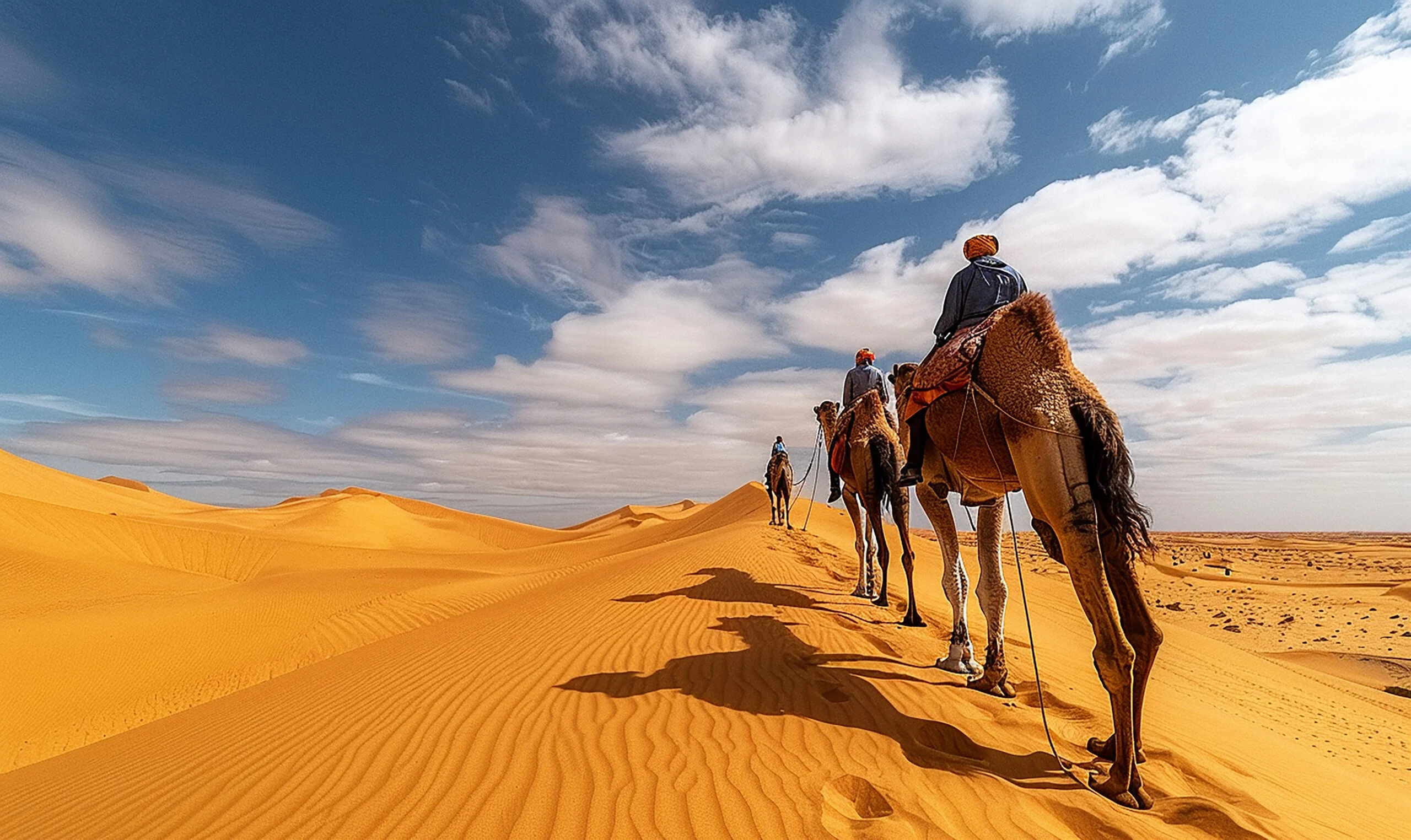
19. L'Erg Chebbi au lever du soleil
La grande mer de dunes aux portes de Merzouga s’étend sur environ 28 kilomètres du nord au sud, avec des crêtes qui atteignent près de 150 mètres. Gravissez une haute dune dans l’obscurité (le guide de votre camp vous indiquera le chemin) et regardez les premières lueurs faire passer le sable du gris au rose puis au cuivre en l’espace de vingt minutes. Traces, ondulations et crêtes en lame de couteau : la lumière rasante du lever du soleil est exactement ce que ces textures attendaient.
20. La caravane de dromadaires en silhouette
The classic Sahara frame: a line of camels and riders along a dune ridge, low sun behind them. Shoot it side-on rather than from within the caravan — ask your guide to walk you thirty meters off the line at the right moment; they do this every day and know the spot. Expose for the sky and let the camels go full silhouette. Phones handle this beautifully on HDR; cameras want a touch of underexposure.
21. Le campement du désert à la nuit tombée
Far from any city, the Saharan night sky needs no editing. Lantern-lit camp tents in the foreground, dunes behind, stars above — prop your phone on a cushion for night mode, or give a camera 15–25 seconds on any steady surface. Moonless nights win for stars; moonlit nights win for glowing dunes. Either way, step away from the campfire and let your eyes adjust first. For deeper technique, our Sahara desert photography guide goes spot by spot and setting by setting.
La côte et Casablanca : lieux 22 à 24
22. Les remparts d'Essaouira
A fortified Atlantic town built in the late 18th century along European military lines — and a UNESCO World Heritage site since 2001. The sea-facing cannons of the Sqala line up into a perfect leading-line shot down the ramparts, whitecaps crashing below. Late afternoon brings the warm light; the gulls work the frame for free.
23. Essaouira’s Blue Fishing Boats
In the working port south of the medina, hundreds of small wooden boats sit hull-to-hull in one shade of bright cobalt. Mornings are the show: nets unloaded, gulls swarming, fishermen calling prices. It’s a real workplace, so shoot from the edges, ask before close portraits, and mind the puddles — that famous blue reflects out of every one of them.
24. La mosquée Hassan II, à Casablanca
Completed in 1993 on a platform over the Atlantic, with room for around 105,000 worshippers in the prayer hall and esplanade, this is one of the few mosques in Morocco that non-Muslims can visit on a guided tour. Photograph the minaret from the far end of the esplanade with the ocean in frame, then go at low tide for the reflection shots in the wet sand below the mosque’s seawall — the building doubles itself for you.
Lieu n° 25 : les villages du Haut Atlas au-dessus d'Imlil
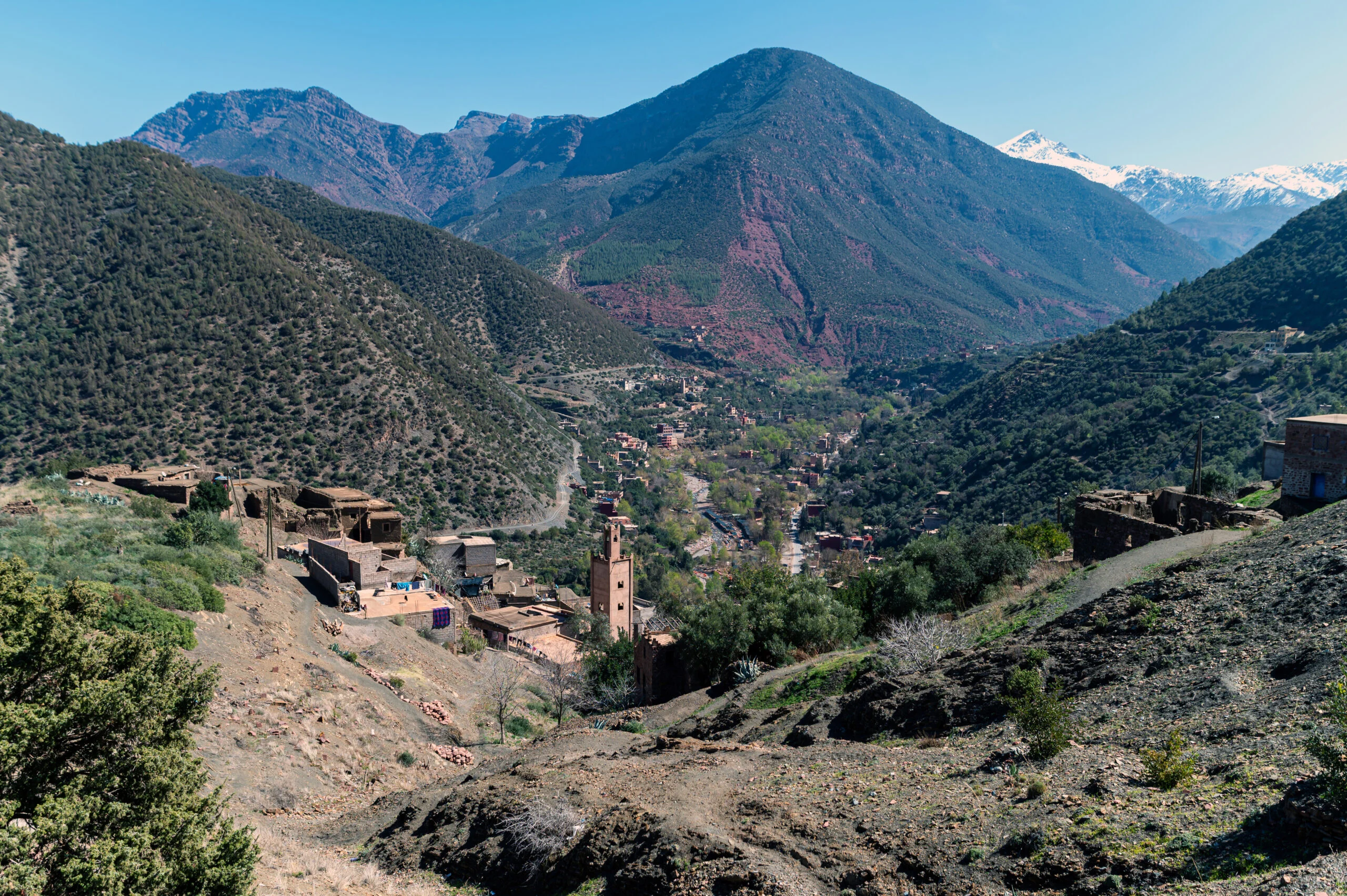
The one almost nobody posts — which is exactly why you should. An hour and a half south of Marrakech, the Imlil valley stacks earthen Amazigh villages up green terraced hillsides beneath the highest peaks of the High Atlas. Walk twenty minutes up any mule track and turn around: walnut groves, flat rooftops drying corn, and snow on the summits for much of the year. Golden hour here feels like a secret.
Quand partir pour la plus belle lumière
Morocco’s photography clock is simple: shoot mornings and late afternoons, rest at midday. The exceptions are listed above — Todra’s canyon floor and Bahia’s courtyards actually want the high sun.
Côté saisons, le printemps et l’automne offrent un air limpide, des vallées vertes et une lumière agréable pour marcher. L’hiver enneige l’Atlas — la toile de fond rêvée pour les photos de rooftop à Marrakech — et le désert reste net et photogénique toute la journée. L’été fonctionne si vous adoptez la règle du petit matin, même si la brume de chaleur adoucit les lointains dès midi.
Planifier un itinéraire pensé pour la photo
Les 25 lieux ci-dessus s’enchaînent naturellement en une boucle : Marrakech, le nord vers Chefchaouen et Fès, puis le sud par-dessus l’Atlas le long de la route des kasbahs jusqu’aux dunes, et retour vers la côte. Pour lui rendre justice, comptez dix jours à deux semaines ; avec moins de temps, choisissez une région et explorez-la en profondeur plutôt qu’en largeur.
C’est aussi le moment de nous présenter : chez Moratra, nous concevons et organisons des circuits privés au Maroc, et les voyageurs photographes font partie de nos préférés (nous calons les trajets sur la lumière, pas sur les pauses déjeuner). Si Marrakech est votre base, notre circuit photo de Marrakech covers spots 1–7 with a guide who knows when each courtyard goes quiet.
Questions fréquentes
Quel est le lieu le plus instagrammable du Maroc ?
Chefchaouen fait l’unanimité : une ville entière peinte en bleu est photogénique sous tous les angles, à presque toute heure. Mais le Jardin Majorelle à Marrakech et les dunes de l’Erg Chebbi au lever du soleil la talonnent, et ils sont bien plus faciles à combiner avec un itinéraire classique dans le Sud.
Quel est le meilleur moment de la journée pour photographier le Maroc ?
The hour after sunrise and the two hours before sunset do most of the work: low, warm light, long shadows, and fewer people. Sunrise is especially valuable at crowded spots like Chefchaouen’s alleys and the Majorelle garden, where being first through the gate matters more than your gear.
Peut-on photographier les gens au Maroc ?
Uniquement avec leur accord. Demandez toujours d’abord — un geste vers l’appareil et un sourire suffisent — et acceptez un refus avec le sourire. Les artistes de Jemaa el-Fnaa vivent de la photo : si vous photographiez, laissez un pourboire. Ne photographiez jamais les personnes en uniforme ni les infrastructures de sécurité.
Faut-il un appareil photo professionnel, ou un téléphone suffit-il ?
Un smartphone récent suffit pour presque tout ce qui figure dans cette liste : les grandes cours, les ruelles bleues, et même le mode nuit dans un camp du désert. Un appareil photo justifie son poids dans deux situations : l’effet de compression d’un téléobjectif pour les caravanes de chameaux et les crêtes de dunes, et les intérieurs peu éclairés comme les Tombeaux saadiens, où la taille du capteur compte.
Combien de jours faut-il pour photographier les 25 lieux ?
Comptez dix jours à deux semaines pour la boucle complète — Marrakech, Chefchaouen, Fès, la route des kasbahs, le Sahara et la côte — sans courir après la lumière. Sur une seule semaine, combinez Marrakech, Aït Benhaddou et les dunes : ils sont sur la même route et couvrent la plus grande variété visuelle.
Ramenez les photos à la maison
One small disclaimer before you pack: opening hours, access rules, and entry conditions at monuments change — confirm locally on the day, and treat every “best time” above as a starting point for your own version of the shot.
If you’d like the rest of your Morocco photo trip planned with the same care — routes timed for golden hour, riads with rooftops worth waking up for, drivers who know exactly which pull-off has the view — that’s what we do. Browse our guide complet des meilleurs circuits au Maroc, demandez un devis, ou écrivez-nous simplement posez-nous une question — we’ll answer for free, no obligation. Either way: charge the batteries, clear the memory card, and take the early slot. Morocco rewards both.
